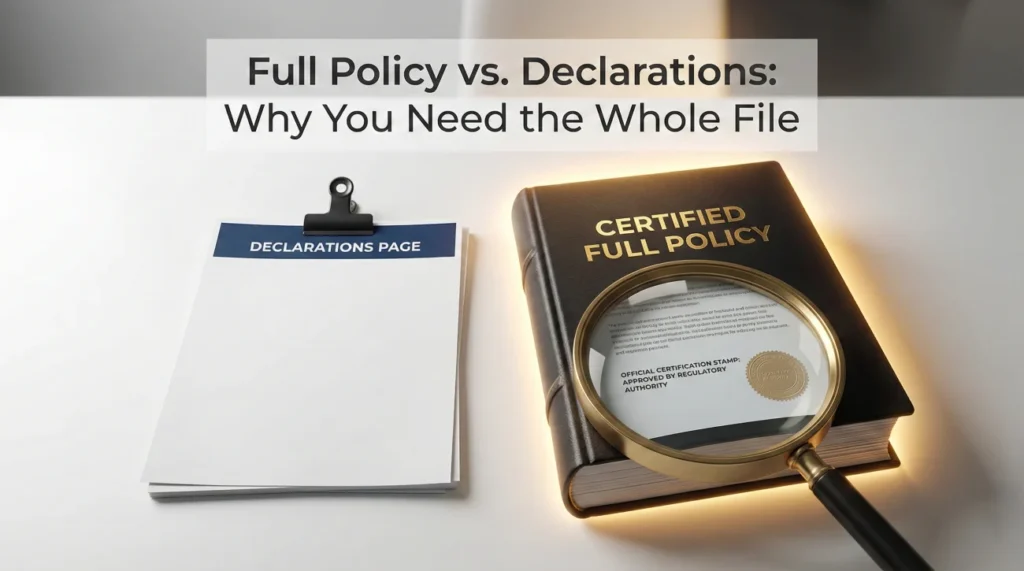
- The summary page you receive in the mail every year is not your complete policy. It is only the Declarations page.
- To understand your exact coverage, requirements, and exclusions, you must formally request a certified copy of your insurance policy.
- A complete policy includes the Declarations, the base policy form, all applicable endorsements, and any riders in effect on the date of loss.
- Always make this request in writing to create a documented paper trail, rather than relying on an online portal link that could expire or update.
- Do not assume the file is complete until you have verified that the endorsement form numbers listed on the summary match the actual attached documents.
Beyond the Summary: Why the Full File Matters First
When a property is damaged, it is completely natural to immediately grab whatever insurance paperwork you have on hand. Usually, what you pull out of the file cabinet is a two or three-page document titled “Declarations.” It lists your name, your address, the policy period, and some high-level coverage numbers. It feels like the policy, but in reality, it is just the cover sheet.
In my years working in claims operations, I have seen how this exact piece of paper causes some of the most frustrating early delays. I routinely see how claim files can be stalled for weeks because an adjuster is citing a specific deadline or limitation from page 42 of the actual contract, while the homeowner is staring at their 2-page summary, having no idea what the adjuster is talking about.
You cannot effectively navigate a major property claim if you and the adjuster are working from two completely different sets of documents. To level the playing field, you need the exact same paperwork the insurance company is using. That means you need to make a specific, written request for a complete, certified file right away.
Key Point: Asking for your complete policy is not an aggressive move or a sign that you are preparing for a dispute. In my experience, it is simply standard administrative hygiene. It ensures both sides are playing by the exact same rules.
The Difference Between a Dec Page and a Certified Copy
When I am asked to audit a messy, stuck claim file, the very first thing I look for is whether the policyholder ever secured the actual rulebook, or if they just relied on assumptions from the summary page.
Think of the Declarations page (the Dec page) as the receipt for your premium. It proves that a policy exists. But when an adjuster talks about your “duties after a loss” or asks for specific documentation, they are reading from the base policy and its endorsements, not your receipt.
A certified copy of an insurance policy is a complete, exact reproduction of the contract that was in force on the specific date your property was damaged. The word “certified” means an authorized representative of the insurance company has verified that this specific bundle of documents represents the true contract.
You see a line item that says “Personal Property: $50,000.” I often see homeowners assume this means they will simply be handed a $50,000 check, only to find out months later that they did not follow the strict inventory rules required to unlock those funds.
You have the base forms that clearly define exactly how that personal property is valued, the specific steps you must take to document it, and a clear list of any items that are capped at lower payout amounts.
The Completeness Checklist: What a Full Policy Actually Looks Like
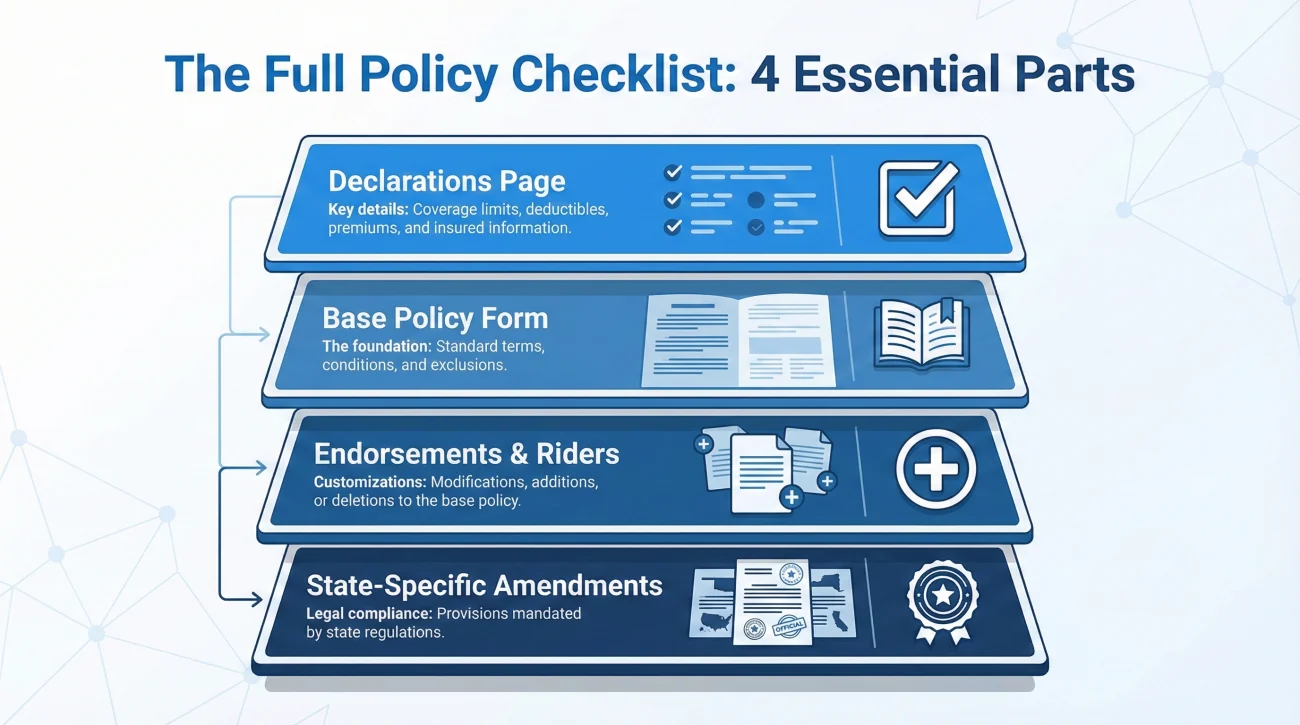
Insurance policies are not just one solid book. They are modular, built by stacking different forms together to create your specific coverage profile. I often see people receive a 30-page PDF in their email and assume it is the whole thing, completely missing the fact that critical add-ons were left out.
If you receive a file from your insurer, you need to verify that all of the following components are included.
| Document Component | What It Is and Why It Matters |
|---|---|
| Declarations Page | The summary sheet. Crucially, it lists the alphanumeric form numbers for every single document that should be attached. Treat this as your master checklist. |
| Base Policy Form | The main contract. It contains the core definitions, standard exclusions, and the “Duties After Loss” section which dictates your immediate operational responsibilities. |
| Endorsements & Riders | The modular add-ons. These modify the base policy. An endorsement always overrides the base policy if the two conflict, making them incredibly important. |
| State-Specific Amendments | Changes required by your local department of insurance. In some cases, these may alter the required timelines for how quickly an insurer must respond to your communications. |
A common operational mistake is assuming the base policy form is all you need. In reality, endorsements completely change how the base policy operates. If your Declarations page lists an endorsement code like “HO-04-90”, you must ensure there is a corresponding document attached with that exact code printed in the corner.
How to Request a Certified Copy of Your Insurance Policy
It is perfectly normal to want to pick up the phone, call the 1-800 customer service number, and ask for your policy. But from a claims management perspective, this is a dangerous habit. The representative will say “sure,” you will hang up feeling accomplished, and two weeks later, nothing will have arrived. A phone call leaves no audit trail.
Instead, use a structured email. The goal here is to leave no room for misinterpretation, so the recipient cannot simply bounce back a 2-page Dec page and consider their job done.
The Written Request Script
Here is a neutral, clear way to format your request. Send this directly to your assigned desk adjuster. If an adjuster has not been assigned yet, send it to the main customer service email for the claims department.
Subject: Request for Certified Policy Copy – Claim #[Your Claim Number]
Hello [Name or Claims Department],
To ensure I am strictly following all required procedures and documenting my file correctly, I am requesting a complete, certified copy of my policy that was in force on the date of loss ([Date of Incident]).
Please ensure this certified copy includes:
1. The Declarations page
2. The base policy jacket/form
3. All endorsements, riders, and state amendments listed on the Declarations page
Could you please provide this complete PDF via email by [Date, a reasonable timeframe]? If any part of this request needs to be routed to a different department, please let me know so I can document my records accordingly.
Thank you for your assistance,
[Your Name]
[Your Contact Information]
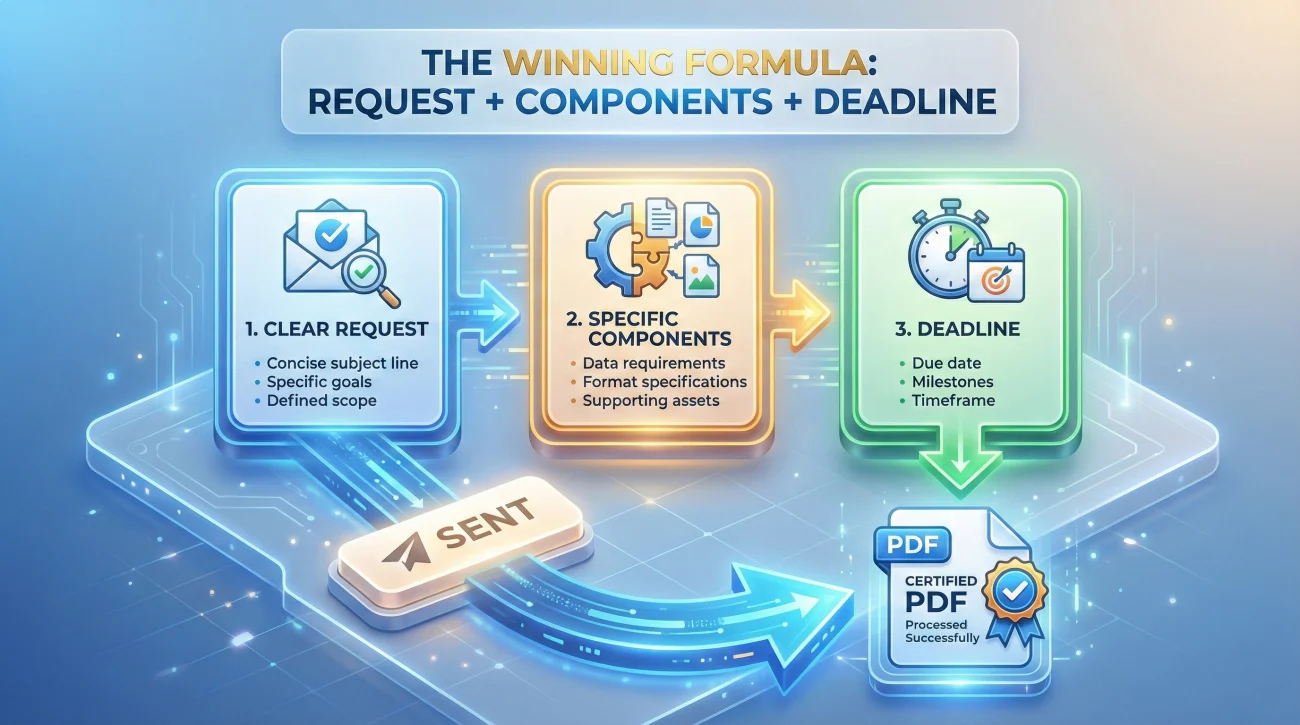
When I coach property owners on claims communication, I always have them build their requests using this exact formula:
[Clear Request] + [Specific Components Required] + [Deadline for Reply]
By explicitly listing the three core components, you are sending a quiet signal to the representative that you know exactly what a complete file looks like. This drastically reduces the chances of them sending back a useless summary page.
Operational Reality: The Portal Link Trap
There is a very common administrative trap you need to watch out for: the “portal redirection.” You send a perfectly clear request for a PDF, and the representative replies with: “You can view your policy documents anytime by logging into your online portal.”
While portals are convenient, they are terrible for permanent recordkeeping. I have personally reviewed cases where an online portal updated at the yearly renewal, and the specific endorsement tied to the old date of loss completely vanished from the user’s dashboard. Furthermore, if you switch carriers later on, you lose access to that portal entirely.
⚠️ Warning: Never accept a portal link as the final answer. You need a static PDF file saved locally. If they direct you to a portal, log in, download the complete PDF, and save it. Immediately add the “date of loss” to the filename so you do not mix it up with future renewals.
If the portal only allows you to view the documents in a browser window but not download a combined file, reply to the email and reiterate your request for a static PDF file for your records.
Verifying Your File: A Practical Scenario
Getting a 50-page PDF attachment in your inbox feels like a win. But when I teach file hygiene, this is the exact moment where I see people skip the most critical step: verification.
Imagine you receive the PDF. Open it and go straight to the Declarations page. Near the bottom, look for a section titled “Forms and Endorsements.” It will list a series of alphanumeric codes, such as:
- 📄 HO-3 (Base Form)
- 📄 HW-20 (Water Backup)
- 📄 SR-50 (State Required Notice)
(Note: Exact form codes vary by carrier; these are purely examples.)
To verify your file, you must scroll through the rest of the PDF and physically locate a page that has “HW-20” printed on it, and another with “SR-50.” If the Dec page lists 12 codes, you must find 12 distinct forms attached. I frequently see packets missing two or three critical forms.
If you find that “HW-20” is missing, you now have a specific, actionable follow-up:
“Thank you for the policy copy. I noticed the Declarations page lists endorsement HW-20, but that form does not appear to be included in the attached PDF. Could you please send over that specific form so my records are complete?”
Storage Rules for Your Baseline Documents
Once you have verified your certified copy, it must be stored correctly. From an operational standpoint, getting this file secure is the very first milestone in your property claim documents checklist.
Do not leave the file sitting in your email inbox. Searching for an email attachment while you are on a phone call with an adjuster only adds unnecessary stress to the process.
Implement these practical storage habits:
- Download and Rename: Save the PDF to your dedicated claim folder. A safe convention is:
[Year]-[PolicyNumber]-Certified-Policy.pdf. - Print a Working Copy: Property claims are highly tangible. Print the entire document and put it in a physical binder so you can easily reference it.
- Highlight the “Duties”: Grab a physical highlighter and locate the section called “Duties After Loss.” Highlight every action item. I always tell people: this is your immediate operational instruction manual. It outlines your notice requirements, mitigation duties, and proof of loss timelines.
Common Mistakes When Securing Your Policy
I see the same administrative mistakes happen every week. Being aware of them in advance will help you keep the process moving smoothly.
Mistake 1: Relying on the local sales agent.
Policyholders constantly call their local agent to ask for the policy. Your agent sells policies; they do not process claims. If the agent says “I’ll get that to you” and fails to send it within a practical deadline, escalate the request directly to the assigned desk adjuster or the corporate claims email. Do not wait weeks for a sales agent to do a claims task.
Mistake 2: Failing to log the request.
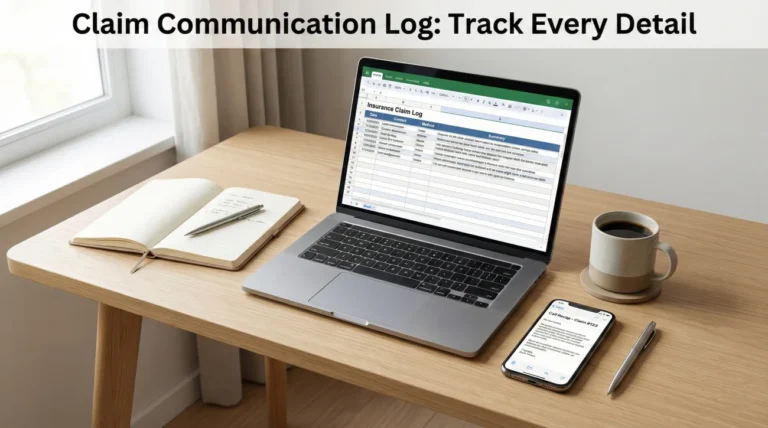
If you send the email script provided above, immediately open your claim communication log. Add a note: “Requested certified policy copy via email. Set follow-up for [Date].” If you do not track the outgoing request, you will not remember to follow up when the deadline passes.
Final Takeaway
Navigating a property claim without a complete, certified copy of your insurance policy is like trying to play a complex game without knowing the rules. I have seen too many claims go sideways simply because the property owner was working off assumptions instead of the actual contract.
By putting a formal, written request in immediately, verifying the form numbers against the attachments, and storing the final PDF securely, you eliminate a massive source of operational confusion. Secure this file first, log your request, and use the clarity it provides to organize the rest of your claim evidence.
❓ FAQ
📝 How do I get a copy of my homeowners insurance policy?
You must request it directly from your insurance carrier or your assigned adjuster. Send a written email requesting a “certified, complete copy of the policy” in effect on the date of your loss, rather than just asking for a summary or relying on a phone call.
🔍 What is a certified copy of an insurance policy?
A certified copy is a complete, officially verified reproduction of your exact insurance contract. It includes the Declarations page, the base policy forms, and every specific endorsement and rider that applies to your coverage.
📄 Why is my insurance declaration page not enough?
The Declarations page only provides a high-level summary of your coverage limits and deductibles. It does not contain the detailed rules, definitions, exclusions, or your specific requirements for documenting damage, which are all found in the full policy forms.
⏳ How long does it take to get a certified policy copy?
An insurer can typically provide a digital PDF copy within a reasonable timeframe of your written request. If it requires physical mailing or pulling older archived files, it may take slightly longer. Always set a specific deadline when you ask.
📑 What should a complete insurance policy include?
A complete file must include the Declarations page (summary), the main base policy jacket (the core rules), all attached endorsements (modifications to the rules), and any state-specific mandatory amendments.
💸 Does it cost money to request a certified policy?
In most cases, there is no charge. Your insurance company should provide a copy of your policy documents as a standard part of the claims and customer service process.
📧 Can I request my insurance policy via email?
Yes, and email is actually the preferred method. It creates a clear, timestamped paper trail proving exactly when you asked for the documents and exactly what components you requested.
🏷️ Where do I find my policy endorsements?
The form numbers for your endorsements are listed on your Declarations page. The actual text of those endorsements should be included as separate pages or sections attached to the back of your main policy document.
🛑 What if my insurance company won’t send my full policy?
If they ignore your request or only send the summary, follow up in writing. State clearly that the provided file is incomplete, reference the missing form numbers, and reiterate your request for the complete certified package for your records.
🏛️ Do I need a certified copy to file a claim?
You can usually start a claim with just your policy number from your Declarations page. However, you absolutely need the certified copy to understand your duties, verify your limits, and properly document your losses throughout the process.
⚠️ Disclaimer: PropertyClaimChecklist.com provides practical guidance, process checklists, and example follow-ups to help you organize a property claim and move it forward. It is not policy language, claim documentation, legal content, or a substitute for your insurer's instructions. Always rely on your carrier's requirements and your actual policy terms for what must be submitted and how decisions are made.