Claim Consistency Check: Finding Contradictions in Your Evidence

Consistency Check For Claim Evidence

A claim consistency check is a self-audit you perform before submitting documents to ensure your dates, locations, and descriptions align perfectly across all files. Contradictions in evidence rarely indicate fraud, but they frequently trigger administrative delays because the reviewer cannot confidently map the damage. Reviewing your evidence helps clarify the record, making it easier for … Read more

Evidence Timeline Log: Proving When Damage Occurred and Stopped

Evidence Timeline Log

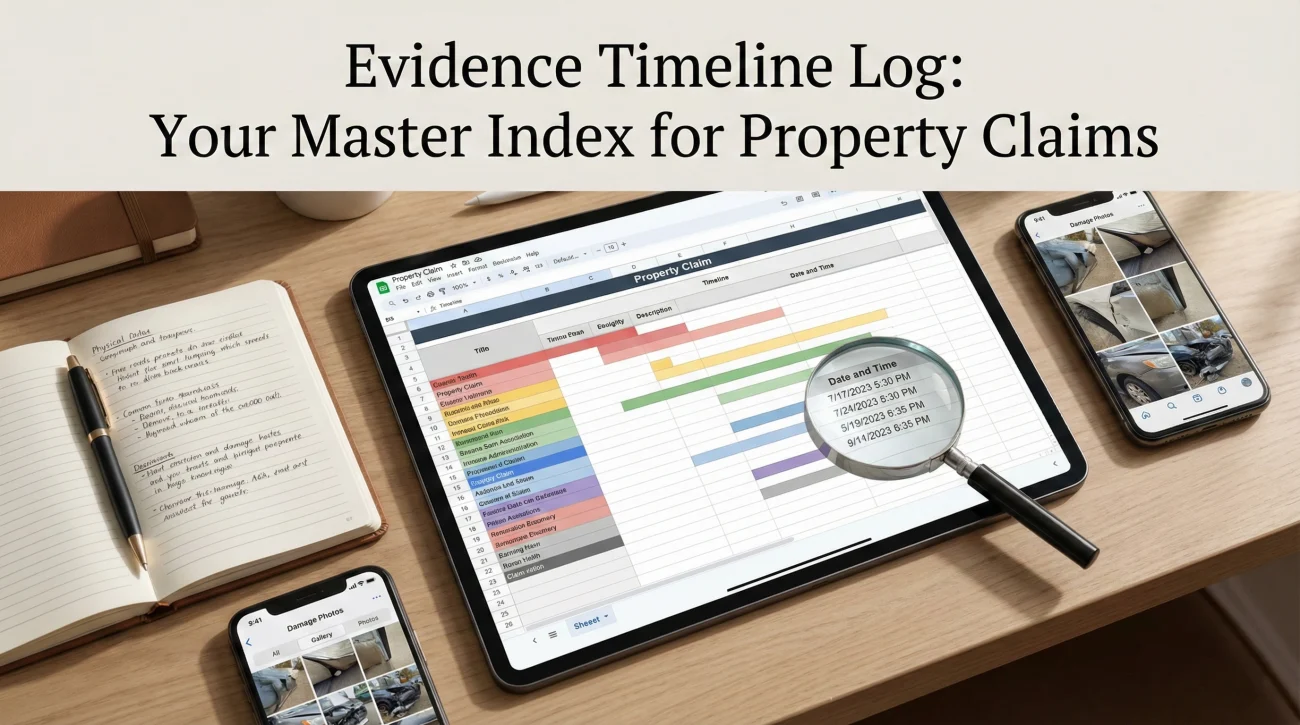
An evidence timeline log is a simple chronological record that proves exactly when damage occurred, when cleanup started, and when temporary repairs were made. Do not write paragraphs. Keep entries restricted to dates, times, brief factual actions, and reference numbers for your photos. Digital photo metadata can be changed or removed during compression and uploads, … Read more

Evidence Mapping: Linking Photos and Receipts to Inventory Items

Evidence Mapping Photos Inventory Receipts

Evidence mapping is the process of linking a specific item on your inventory to its corresponding photo and its receipt using a unique ID. Without a mapping system, reviewers are left guessing which photo belongs to which receipt, often leading to delays and requests for clarification. Keep it simple: assign a short alphanumeric tag (like … Read more

Missing Portal Uploads: How to Recover Lost Claim Evidence

Uploaded Photos Missing Insurance Claim

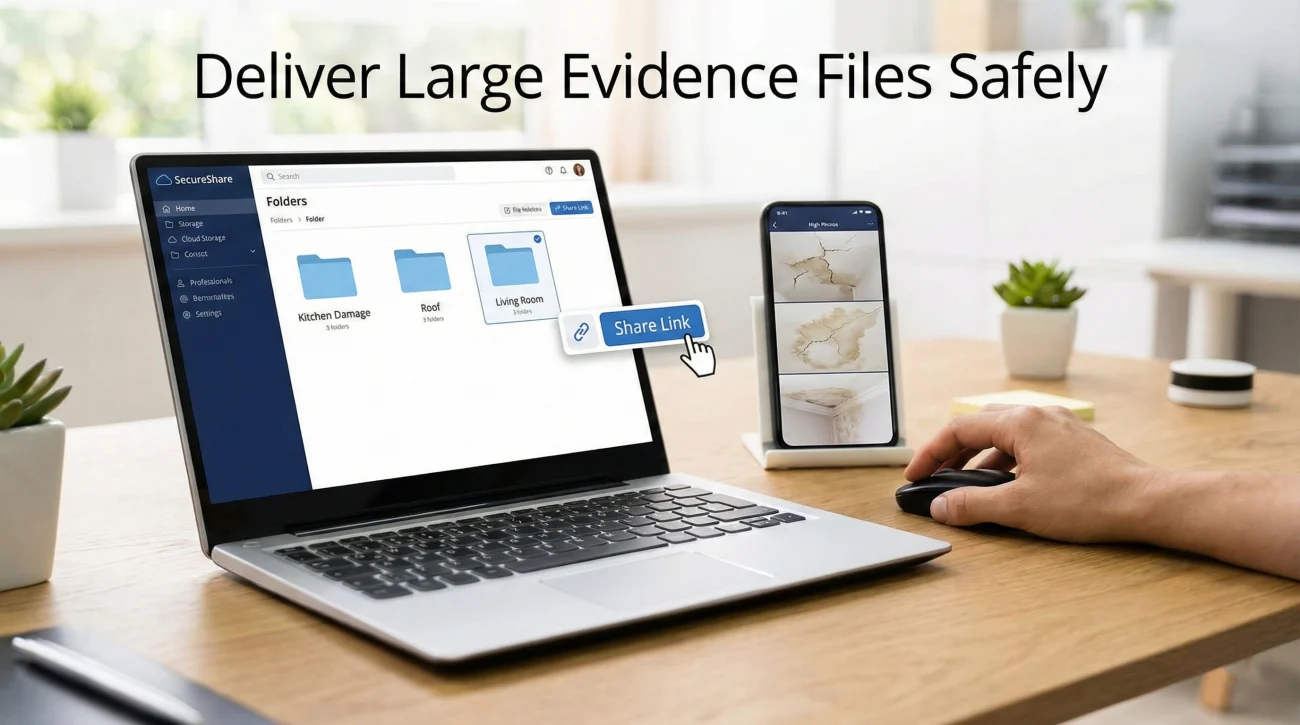
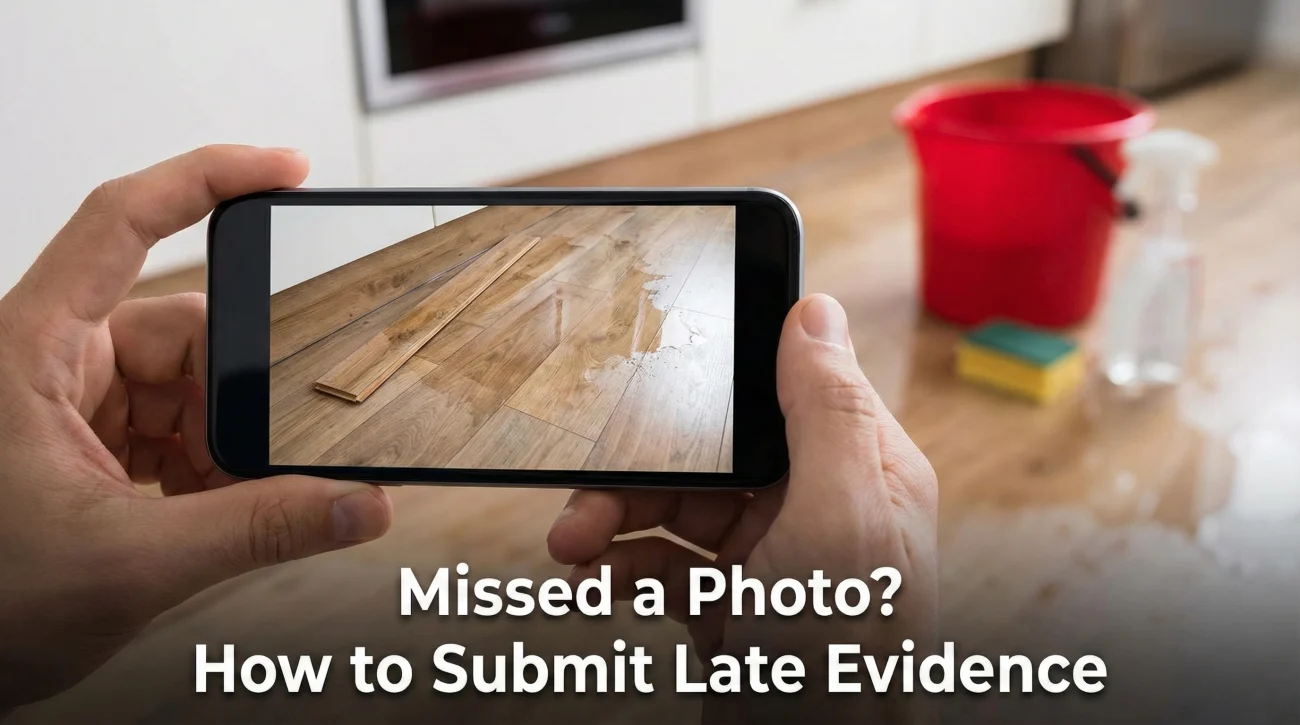
Portal glitches are a common operational reality; do not assume malice if your uploaded files disappear. Avoid deleting your original photos after hitting submit. Always maintain a local master folder of your evidence. When re-uploading, break your files into smaller batches and request a written confirmation of receipt from your reviewer. The Panic of the … Read more

Debris Evidence: What to Photograph Before Throwing Away Items

What To Photograph Before Throwing Away For Claim

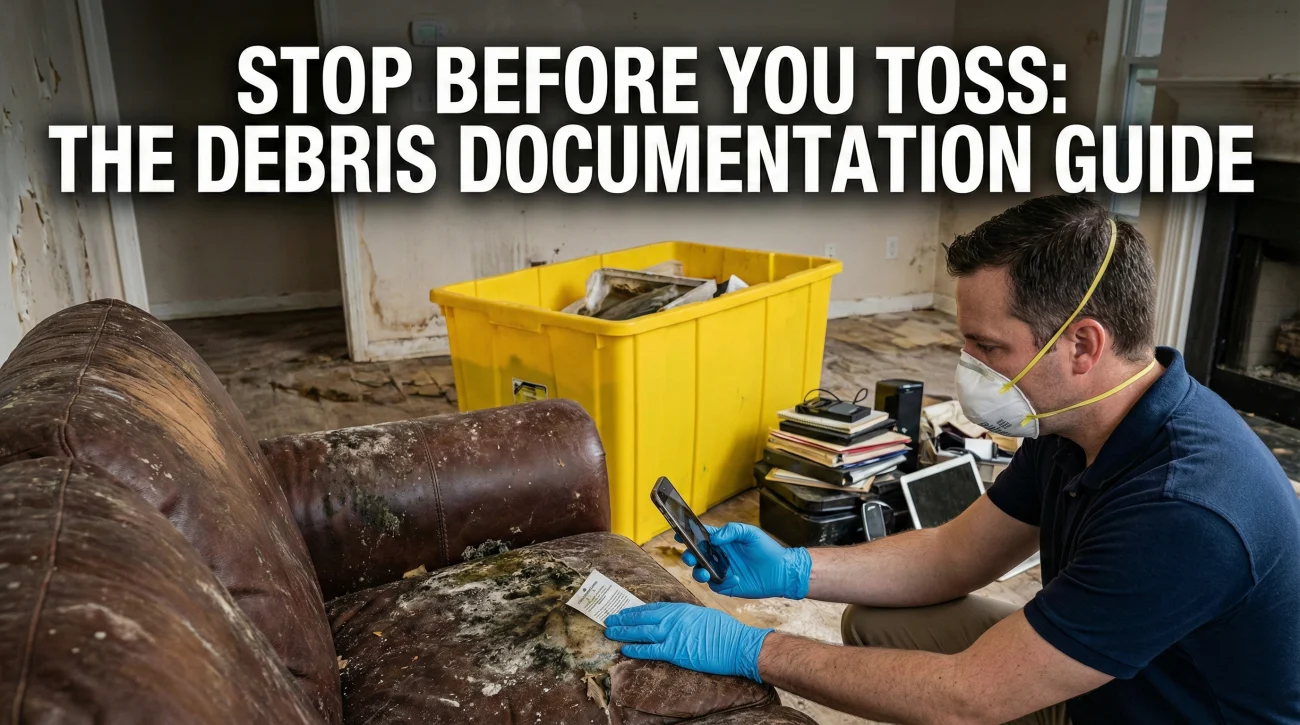
Prioritize your safety first. If an item is a severe health hazard, document it from a safe distance before removal. Use a minimum viable proof approach (one wide shot, one identifying tag) when rushed, or the ideal three-shot sequence for high-value items. Create a written disposal log that connects the discarded item to your main … Read more

Repair Completion Proof: What to Save So Final Review Does Not Stall

Repair Completion Proof For Insurance Claim

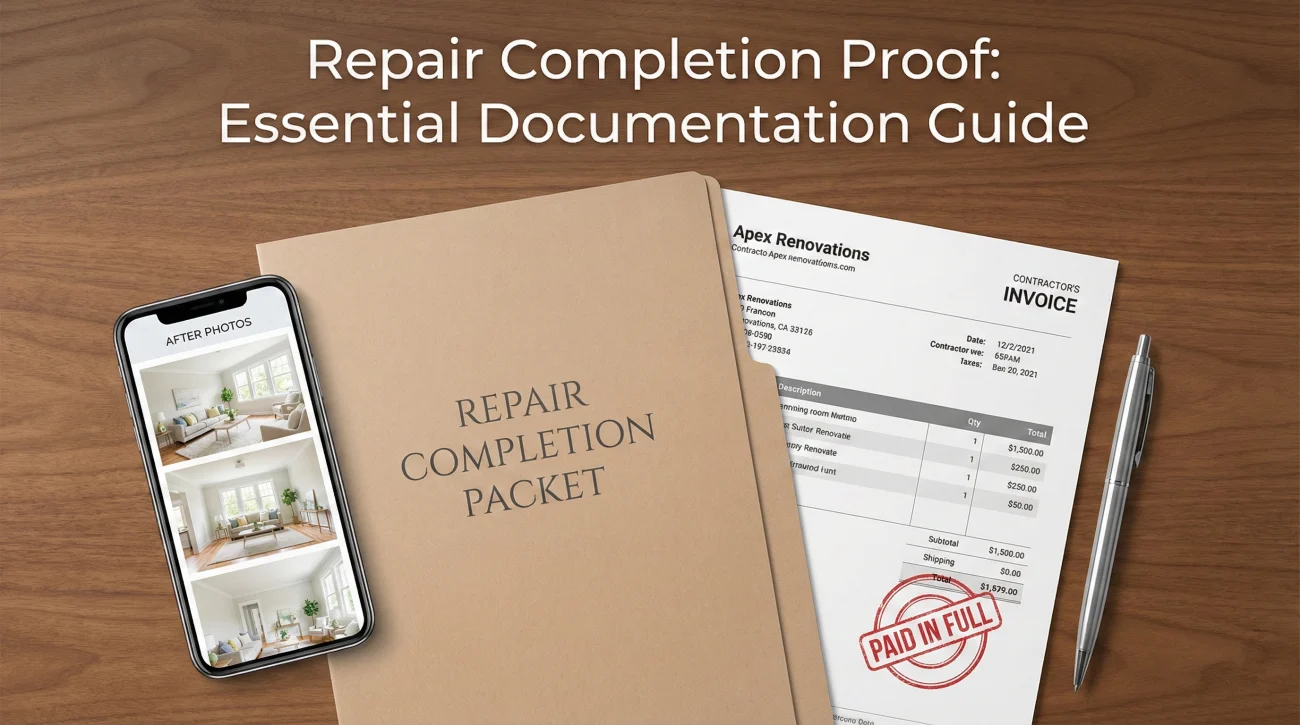
The goal: Provide verifiable documentation that repairs are finished so the adjuster can complete their final review without delays. The holdback: Insurance policies often withhold a portion of your settlement (recoverable depreciation) until you prove the work is done. Your completion packet unlocks these final funds. The method: Combine final contractor invoices, clear “after” photos, … Read more

Contractor Quotes for Insurance: Documents Your Adjuster Needs

Contractor Quote Documentation For Insurance Claim

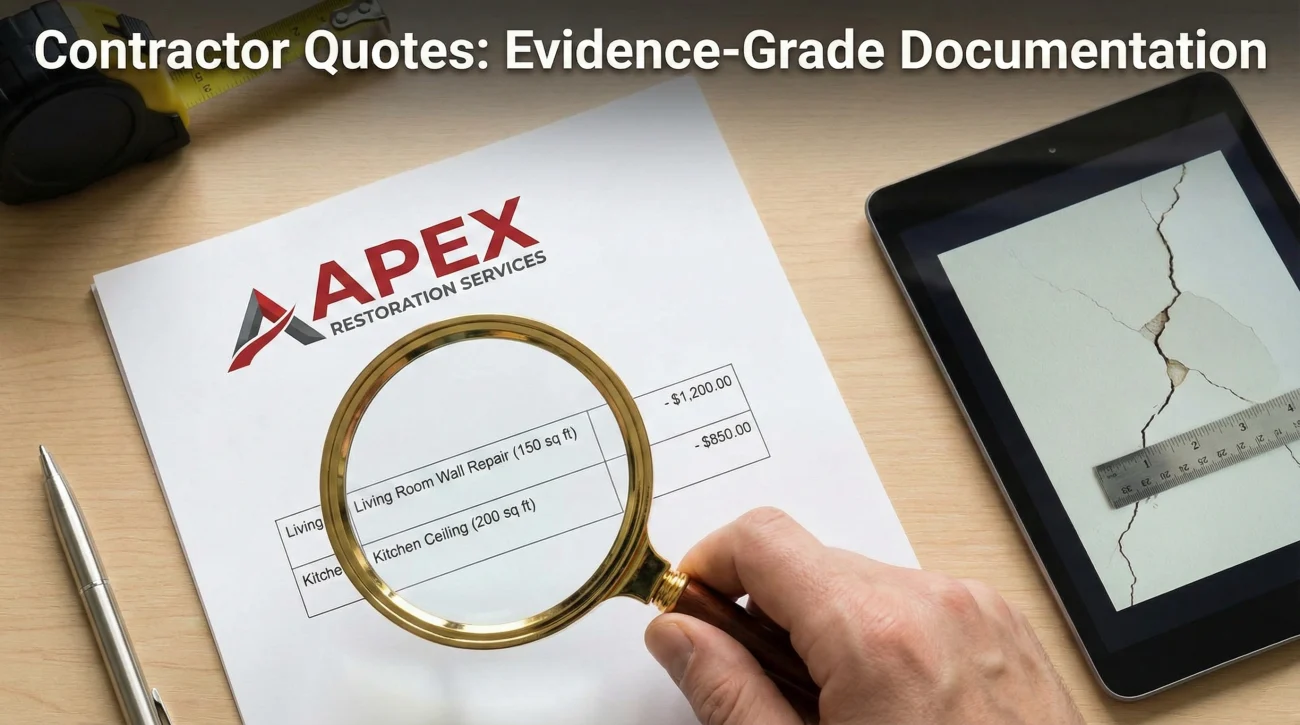
A standard “lump-sum” contractor quote is often not enough for a claim file; reviewers need detailed line items. Your contractor quote documentation for an insurance claim must clearly separate labor, materials, and scope of work room-by-room. Always ask contractors to include their license number, business details, and specific measurements on the written estimate. Use clear, … Read more

Measuring Property Damage: Recording Dimensions for Insurance Claims

Damage Measurements For Insurance Claim

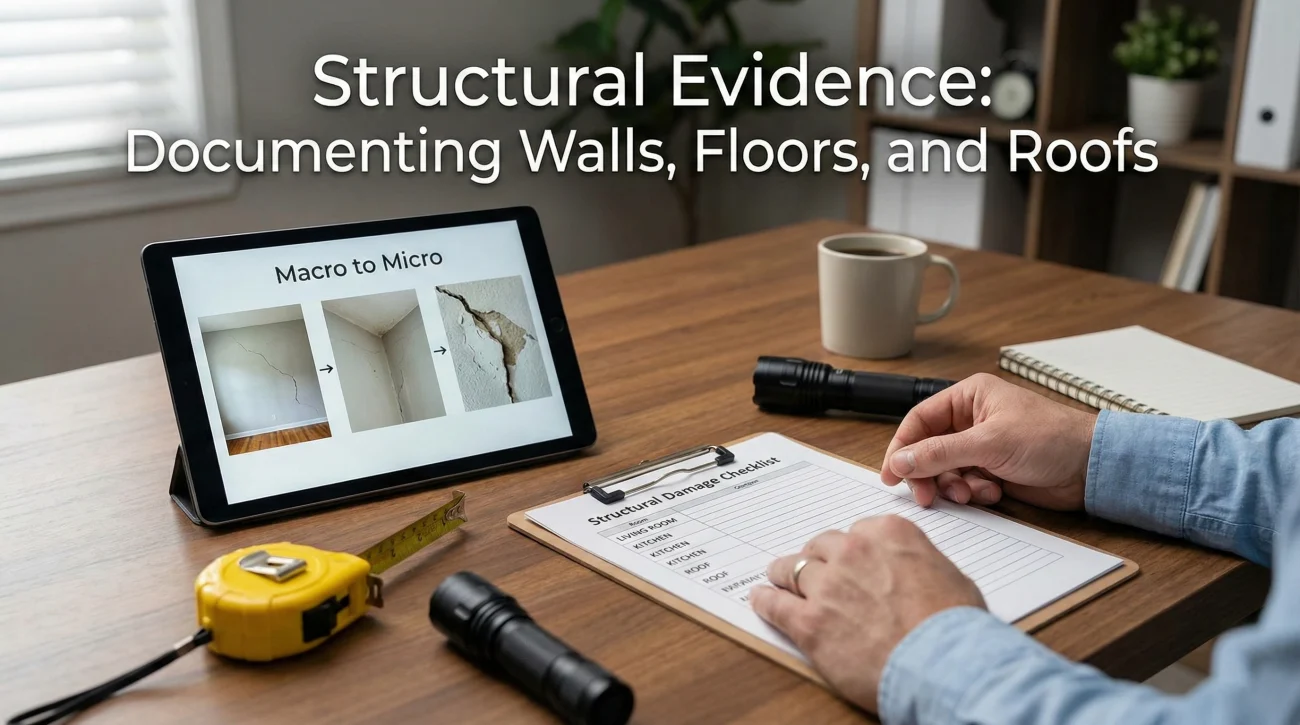
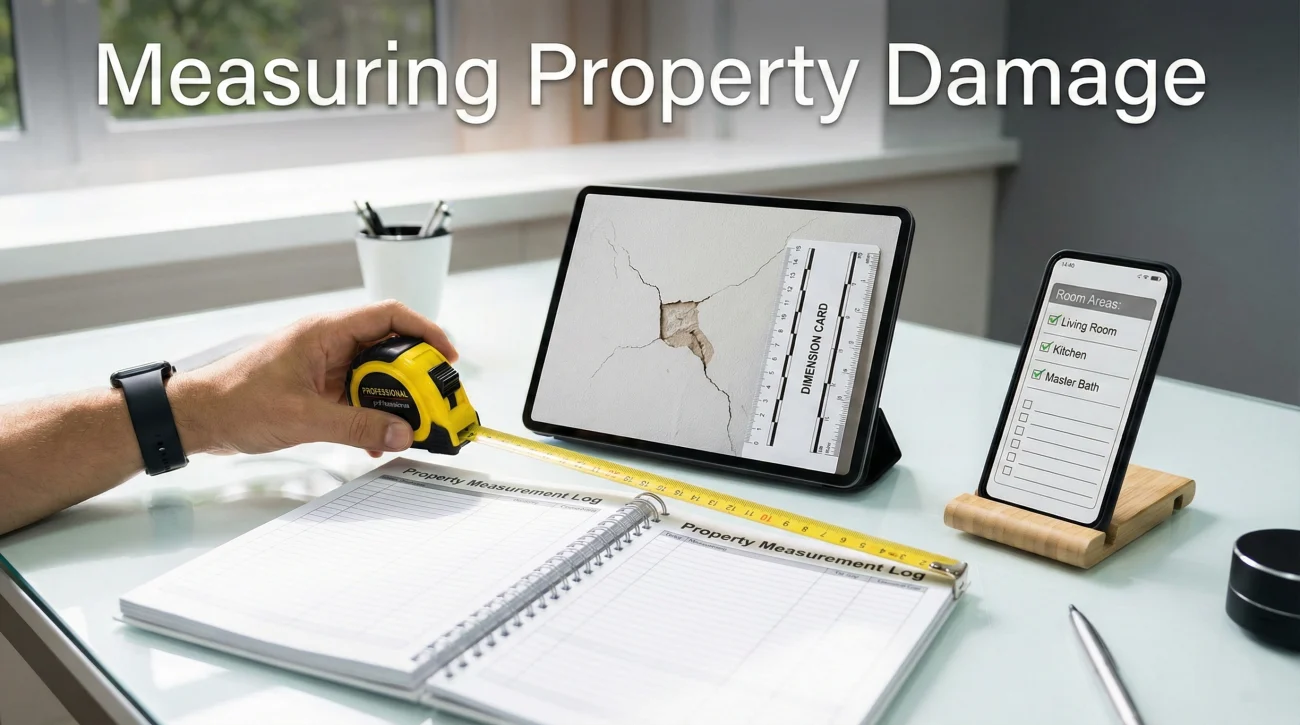
Photographs alone cannot provide the exact scale needed to build an accurate claim estimate. You must record specific dimensions of the affected areas. Always record two sets of numbers: the overall dimensions of the entire room and the specific measurements of the damaged area itself. Use the “link-to-photo” rule by physically placing a piece of … Read more

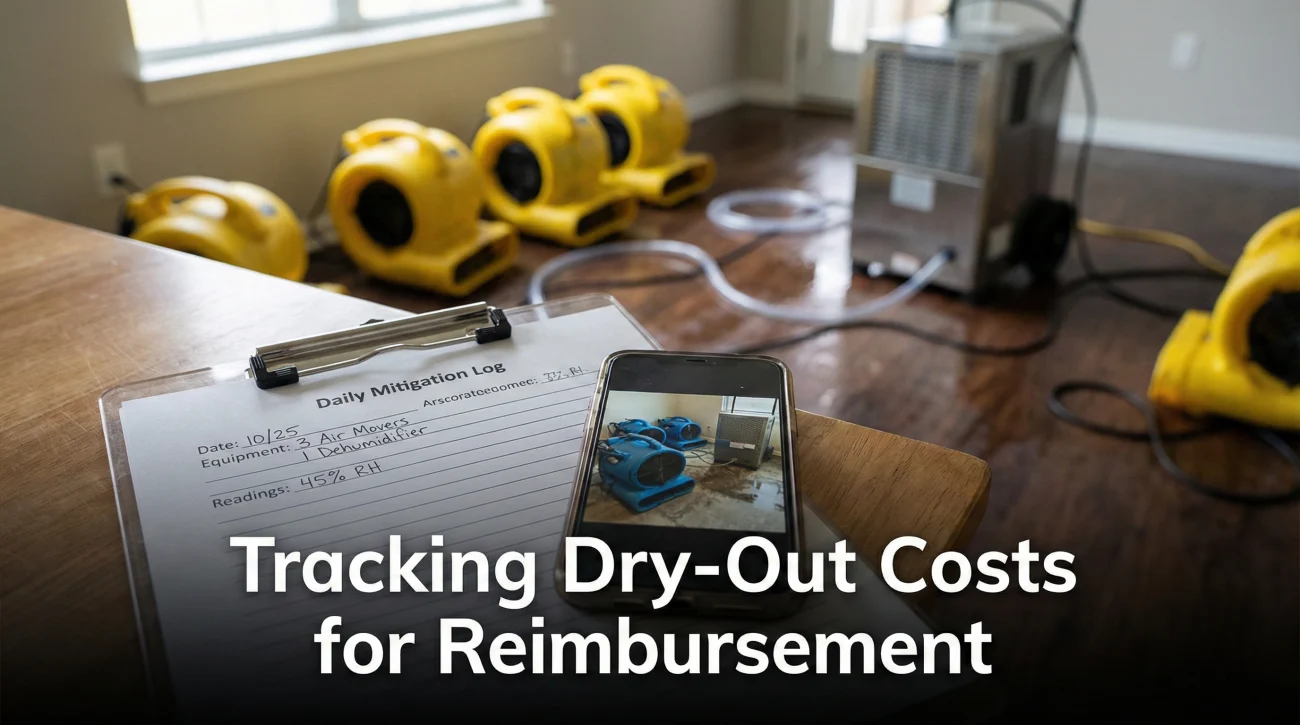
Mitigation Logs: Tracking Dry-Out Costs for Insurance Reimbursement

Mitigation Receipts And Logs Insurance Claim

Never accept a lump-sum invoice for emergency dry-out or mitigation; always request a daily breakdown of equipment, labor hours, and materials used. Keep your own daily log of how many fans and dehumidifiers are running in your home and take photos of them as secondary proof. Keep mitigation expenses strictly separated from permanent repair quotes … Read more

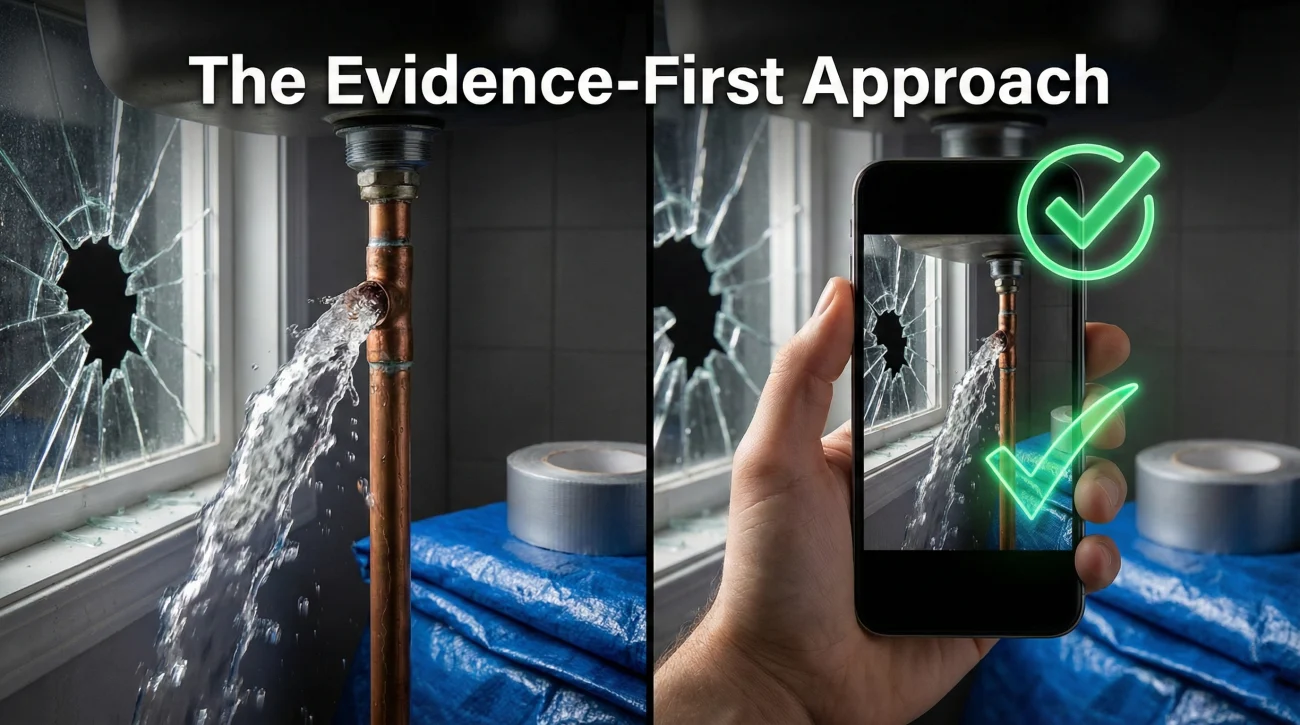
Temporary Repair Evidence: Documenting Fixes Before Inspection

Temporary Repairs Documentation For Insurance Claim

Document the damage completely before placing any tarp, board, or temporary patch. Keep the broken parts (like burst valves or shattered pipes) in a safe place instead of throwing them away. Log every expense and keep itemized receipts for materials used during emergency mitigation. Communicate your temporary repairs to the reviewer in writing, clearly stating … Read more

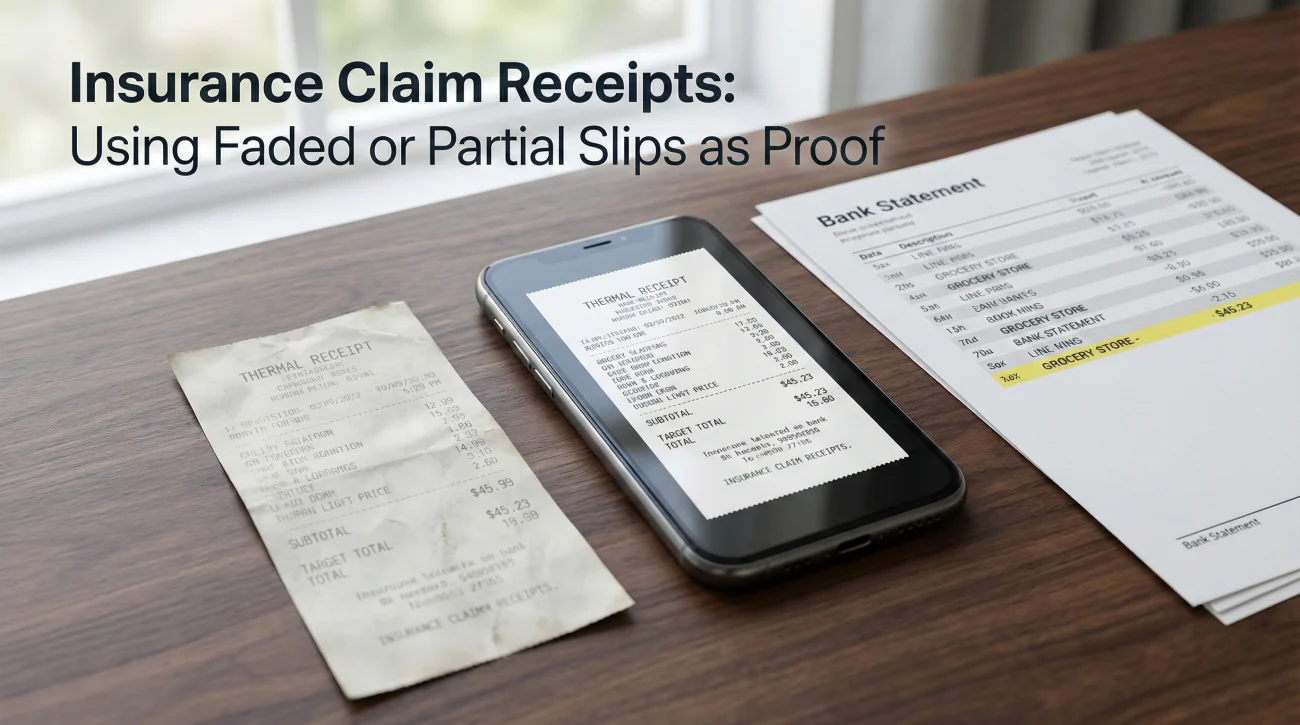
Insurance Claim Receipts: Using Faded or Partial Slips as Proof

Receipt Quality For Insurance Claim

Faded, ripped, or partial receipts can still be used as valid proof if you contextualize them correctly before submitting. It is best to avoid writing over the faded ink of an original receipt. Write your notes on a separate piece of paper and scan them together instead. A credit card statement alone is not a … Read more

Proof of Ownership Examples: Strong vs. Weak Evidence for Claims

Proof Of Ownership Examples For Insurance Claim

When you lose your belongings in a disaster, proving that you actually owned them is often one of the most stressful parts of the recovery process. I frequently see adjusters categorize proof into three levels. Strong evidence includes itemized receipts or appraisals. Medium evidence includes personal photos showing the item in your home. Weak evidence … Read more

No Receipts for Insurance Claim? How to Prove Ownership

Prove Ownership Without Receipts Insurance Claim

Losing paper receipts is incredibly common in property claims. Insurance companies process claims without original store receipts every single day. You can establish ownership through alternative financial trails, such as credit card statements, bank records, and digital purchase histories. Visual evidence is highly effective. Background elements in old family photos or video walkthroughs often serve … Read more

Insurance Inventory Cover Sheet: Summarize Your Loss in One Page

Inventory Index For Insurance Claim

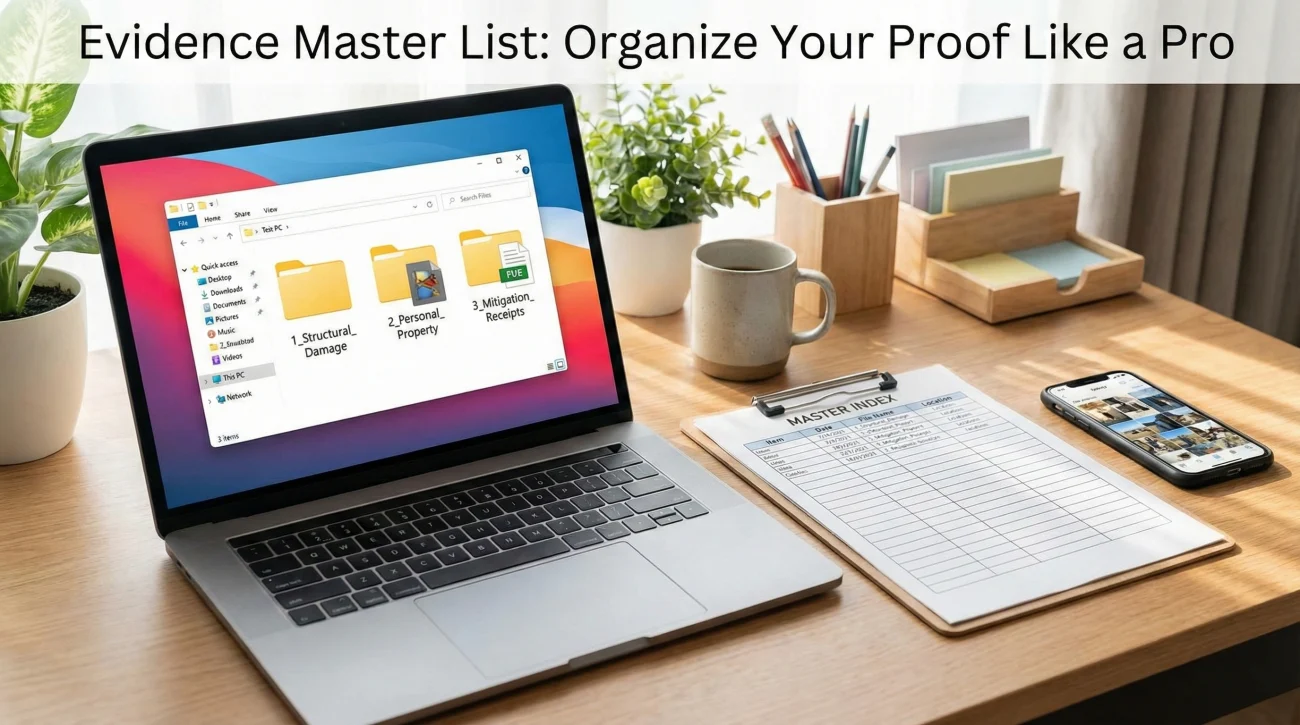
The Goal: Turn a chaotic list of items into a navigable map for your adjuster. The Method: Create a “Cover Sheet” or “Master Index” that links every item to its specific photo and receipt file. The Result: Faster review times because you remove the guesswork of “which receipt goes with which sofa.” The Difference Between … Read more

Home Inventory for a Claim: What to List and How Detailed It Needs to Be

Home Inventory For Insurance Claim

The “Specifics” Rule: “Toaster” gets you $20. “Breville Die-Cast 2-Slice Smart Toaster” gets you $180. Specificity is the difference between a partial payment and a full replacement. Digital Forensics: You don’t need memory alone. Use your Amazon order history, old credit card statements, and even photos in the background of your phone to reconstruct your … Read more