Recoverable Depreciation: The Checklist to Unlock Your Final Payout

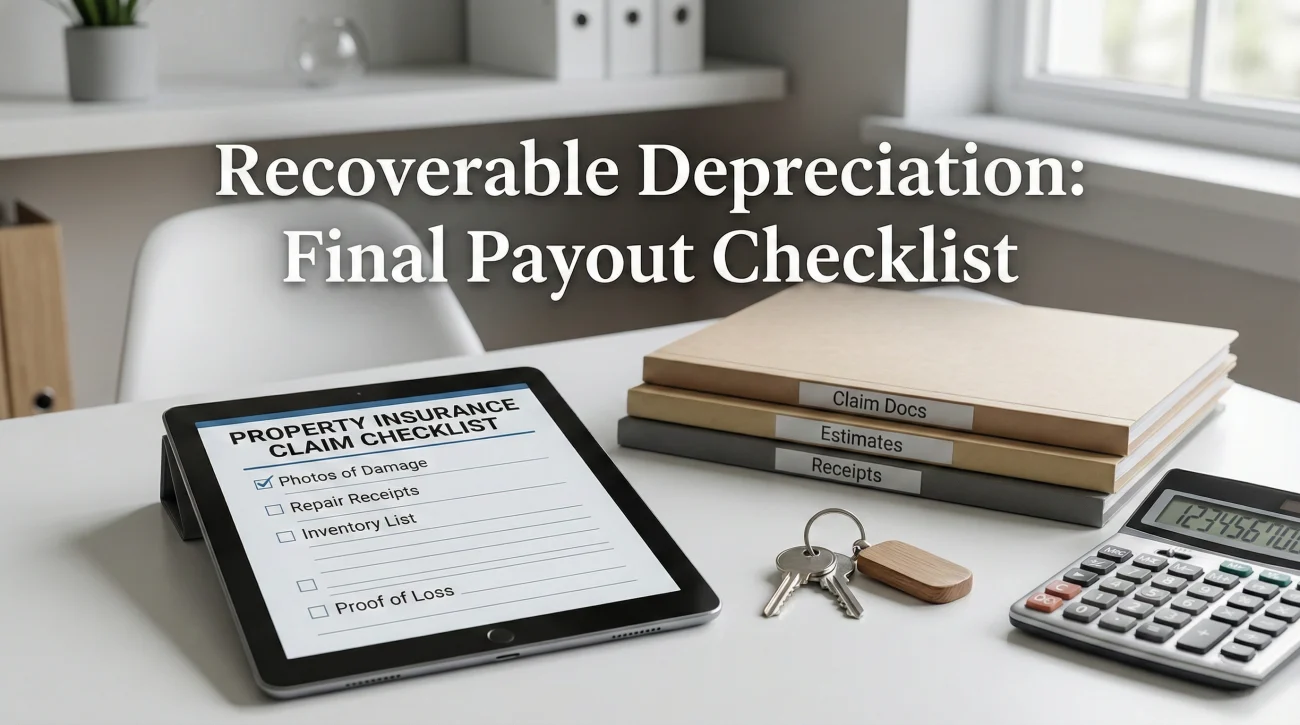
Recoverable Depreciation Process

The recoverable depreciation process requires you to prove that the repair work was actually completed and paid for as scoped. Vague contractor invoices frequently cause final payouts to get delayed. Invoices must be highly detailed and track back to the original estimate. You must organize a clear evidence pack containing itemized invoices, proof of payment, … Read more

Evidence Timeline Log: Proving When Damage Occurred and Stopped

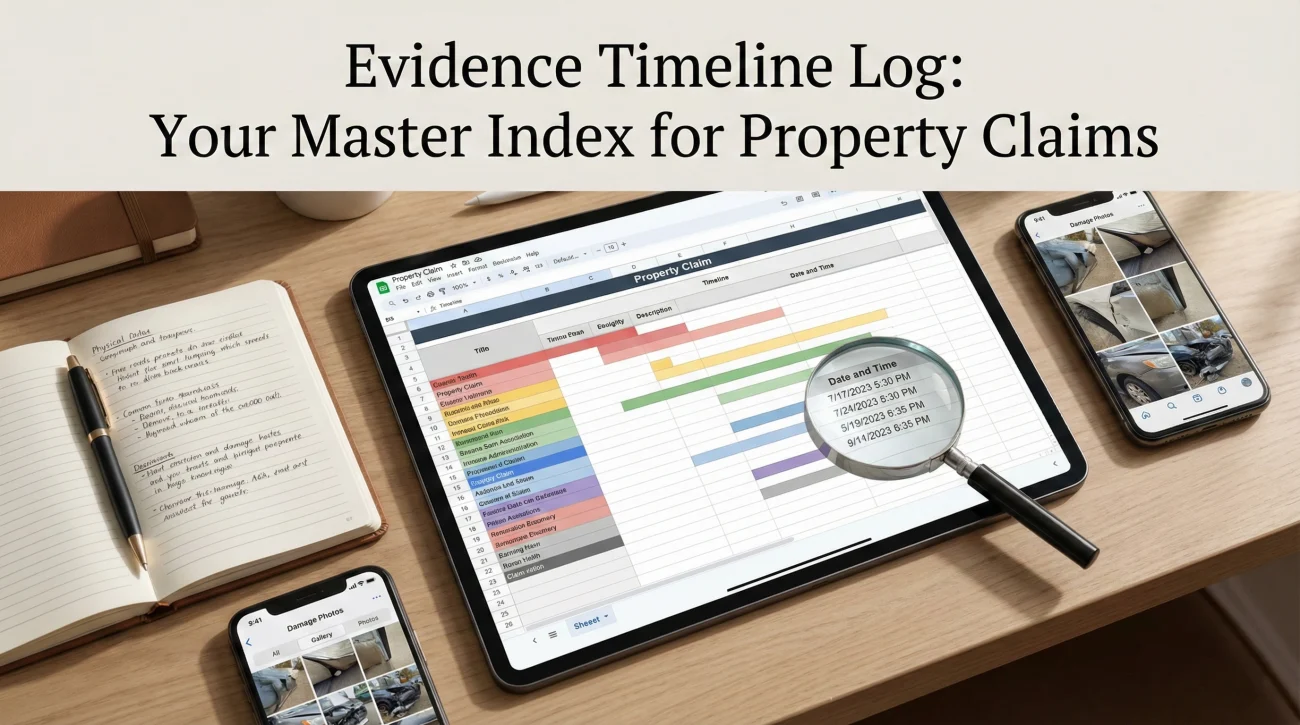
Evidence Timeline Log

An evidence timeline log is a simple chronological record that proves exactly when damage occurred, when cleanup started, and when temporary repairs were made. Do not write paragraphs. Keep entries restricted to dates, times, brief factual actions, and reference numbers for your photos. Digital photo metadata can be changed or removed during compression and uploads, … Read more

Insurance Payment Holdback: Why Your Final Check is Delayed

What Is Holdback In Insurance Claim

A holdback (often called recoverable depreciation) is a portion of your claim settlement that is held back until you prove the repair work is complete. To unlock these funds, you typically need to provide a final invoice from your contractor and clear photos showing the finished work. Avoid sending a final invoice with a blank … Read more

Mortgage Company on Insurance Check? Why You Can’t Cash It Yet

Insurance Check Made Out To Mortgage Company

An insurance check made out to your mortgage company alongside your name is standard procedure, not an adjuster error. Your lender holds a financial interest in the property and requires proof that repairs are being made before releasing funds. As a best practice, avoid mailing the physical check to your bank without first securing a … Read more

Evidence Mapping: Linking Photos and Receipts to Inventory Items

Evidence Mapping Photos Inventory Receipts

Evidence mapping is the process of linking a specific item on your inventory to its corresponding photo and its receipt using a unique ID. Without a mapping system, reviewers are left guessing which photo belongs to which receipt, often leading to delays and requests for clarification. Keep it simple: assign a short alphanumeric tag (like … Read more

Debris Evidence: What to Photograph Before Throwing Away Items

What To Photograph Before Throwing Away For Claim

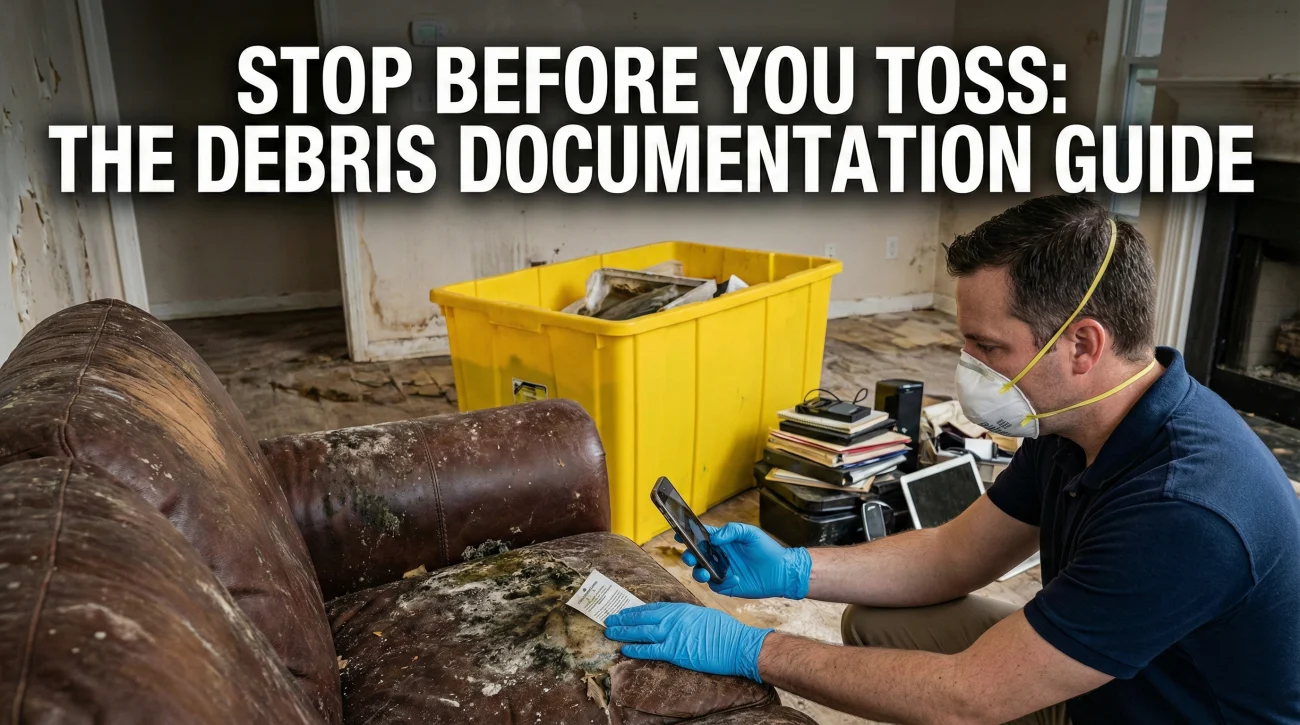
Prioritize your safety first. If an item is a severe health hazard, document it from a safe distance before removal. Use a minimum viable proof approach (one wide shot, one identifying tag) when rushed, or the ideal three-shot sequence for high-value items. Create a written disposal log that connects the discarded item to your main … Read more

Insurance Claim Forms: Tracking the Paperwork That Arrives Day 2

Forms Sent After Filing A Claim

The forms sent after filing a claim are usually standard templates, not immediate demands for data you do not have yet. Do not rush to fill out complex forms like a Proof of Loss before you understand your total damages. Track them instead. Set up a simple logging system to record what you received, the … Read more

Mapping Insurance Scope: Linking Line Items to Specific Rooms

Map Estimate Line Items To Rooms

Estimates are often organized in ways that make it difficult to spot missing items, grouping disparate repairs into confusing categories. A room-by-room map translates the insurer’s line items into a physical checklist, making missing scope visually obvious. By explicitly linking missing line items to existing photo IDs, you remove the guesswork for the desk adjuster … Read more

Measuring Property Damage: Recording Dimensions for Insurance Claims

Damage Measurements For Insurance Claim

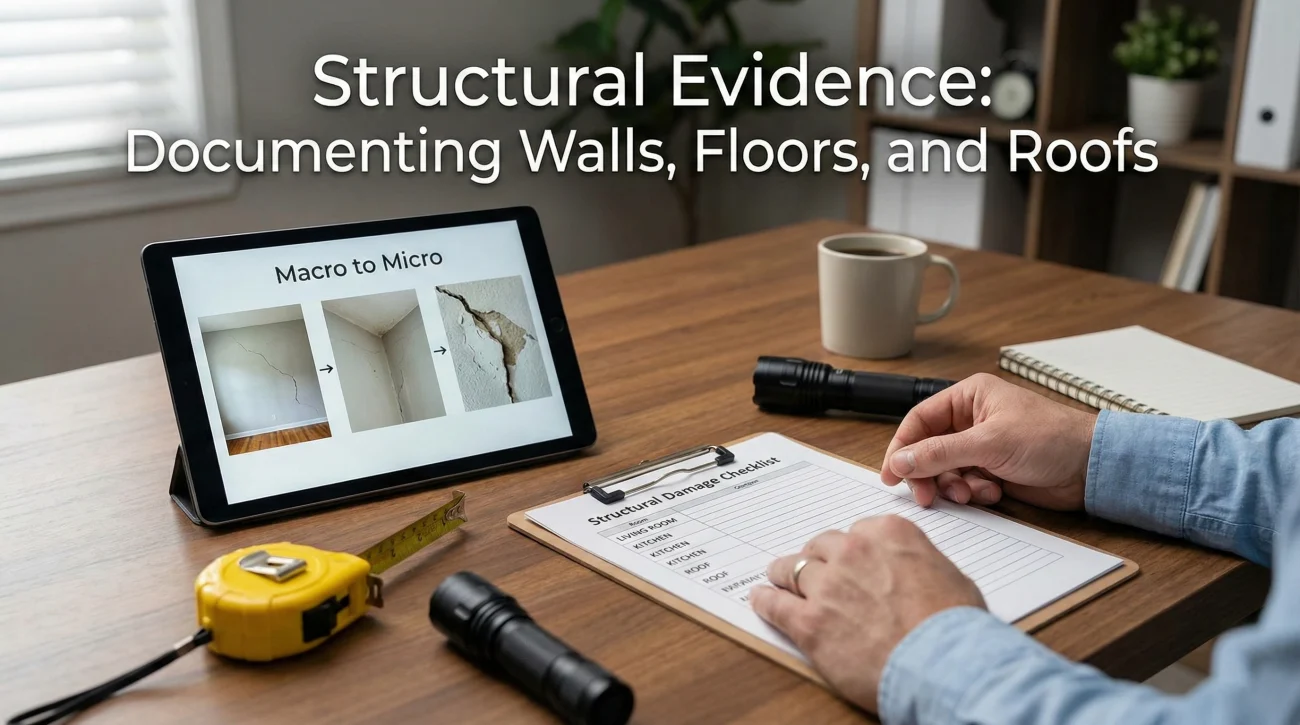
Photographs alone cannot provide the exact scale needed to build an accurate claim estimate. You must record specific dimensions of the affected areas. Always record two sets of numbers: the overall dimensions of the entire room and the specific measurements of the damaged area itself. Use the “link-to-photo” rule by physically placing a piece of … Read more

Mitigation Logs: Tracking Dry-Out Costs for Insurance Reimbursement

Mitigation Receipts And Logs Insurance Claim

Never accept a lump-sum invoice for emergency dry-out or mitigation; always request a daily breakdown of equipment, labor hours, and materials used. Keep your own daily log of how many fans and dehumidifiers are running in your home and take photos of them as secondary proof. Keep mitigation expenses strictly separated from permanent repair quotes … Read more