Recoverable Depreciation: The Checklist to Unlock Your Final Payout
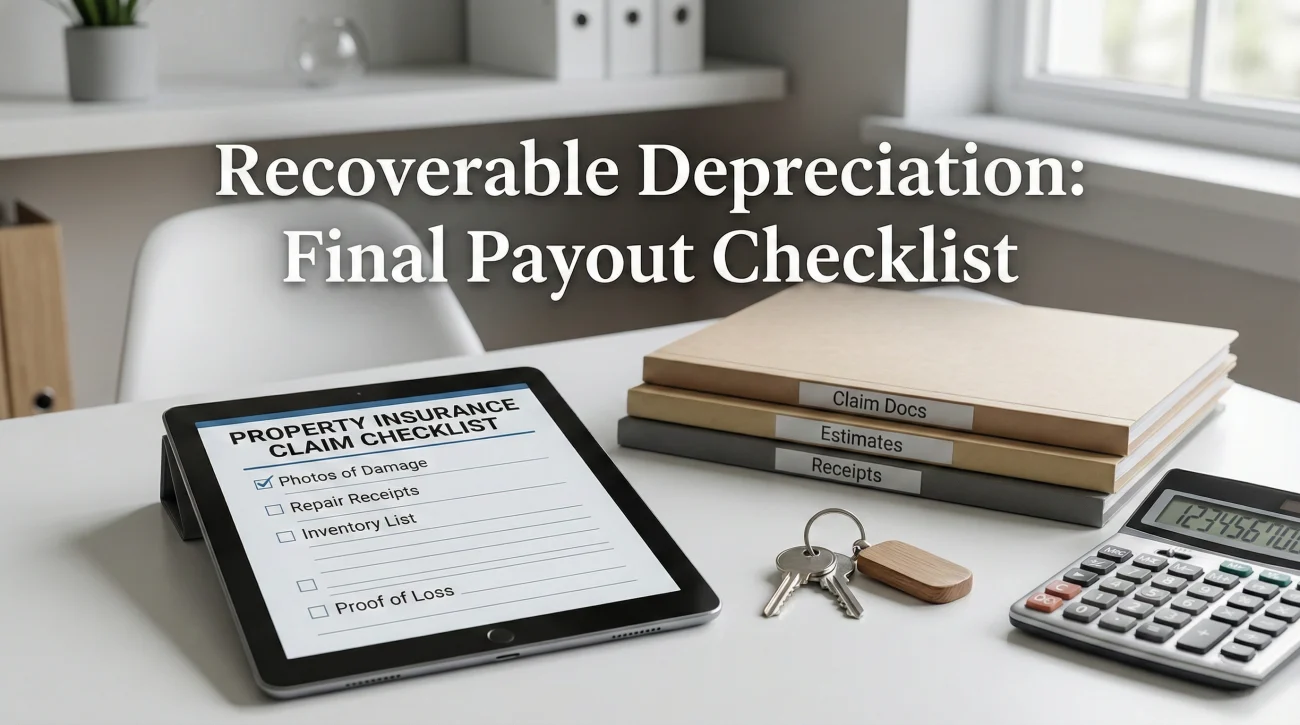
Recoverable Depreciation Process

The recoverable depreciation process requires you to prove that the repair work was actually completed and paid for as scoped. Vague contractor invoices frequently cause final payouts to get delayed. Invoices must be highly detailed and track back to the original estimate. You must organize a clear evidence pack containing itemized invoices, proof of payment, … Read more

Insurance Deductible: Where It Comes Out of Your Claim Check

Deductible Applied To Insurance Claim

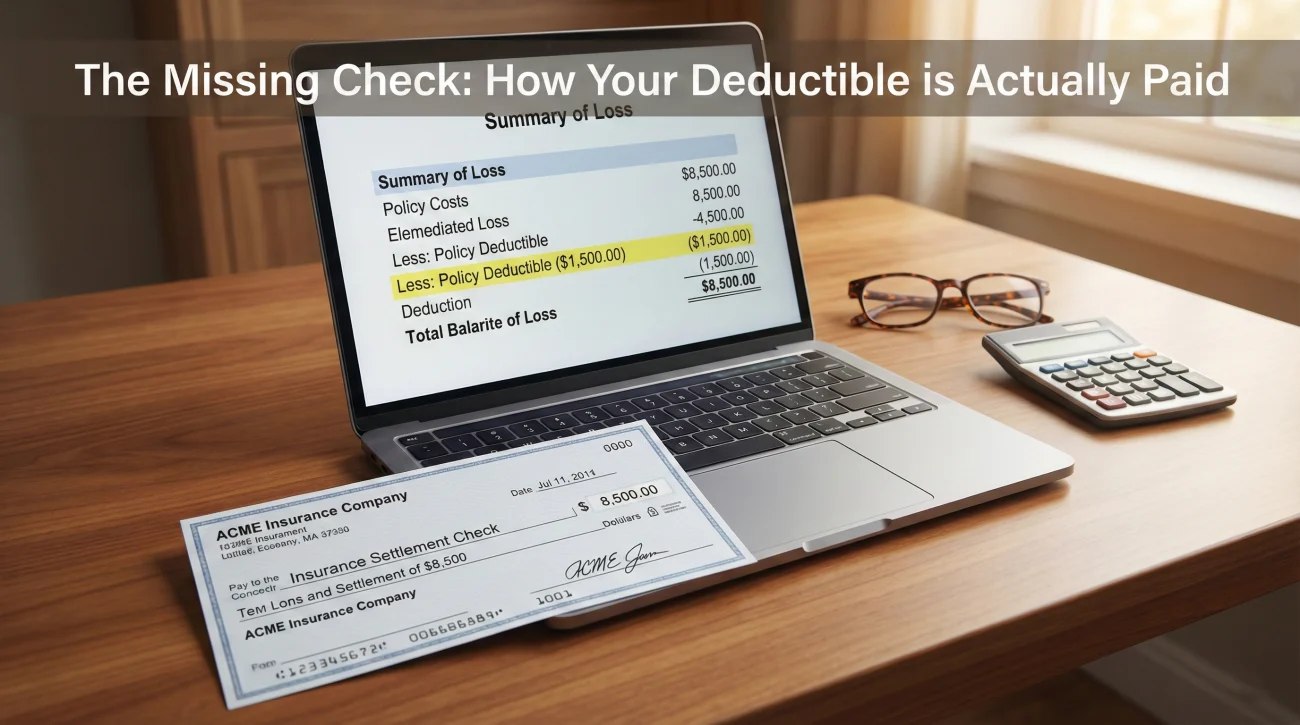
The most common misunderstanding in property claims is who you pay your deductible to. You do not mail a check to your insurance company; instead, the deductible amount is subtracted from your payout before the check is printed. In many claims, your contractor’s final bill will closely align with the insurance estimate total, but your … Read more

Insurance Payment Holdback: Why Your Final Check is Delayed

What Is Holdback In Insurance Claim

A holdback (often called recoverable depreciation) is a portion of your claim settlement that is held back until you prove the repair work is complete. To unlock these funds, you typically need to provide a final invoice from your contractor and clear photos showing the finished work. Avoid sending a final invoice with a blank … Read more

Claim Payment Breakdown: How Insurance Checks Are Calculated

How Are Insurance Claim Payments Calculated

The final check you receive is rarely the top-line number on your estimate; it is the result of a specific sequence of deductions that often vary by policy. Insurance payments commonly follow a standard calculation flow: Replacement Cost Value (RCV) minus Depreciation, minus your Deductible, equaling the Actual Cash Value (ACV) net payment. Understanding the … Read more

Insurance Supplement Timeline: How Long Does Review Take?

Supplement Review Timeline Questions

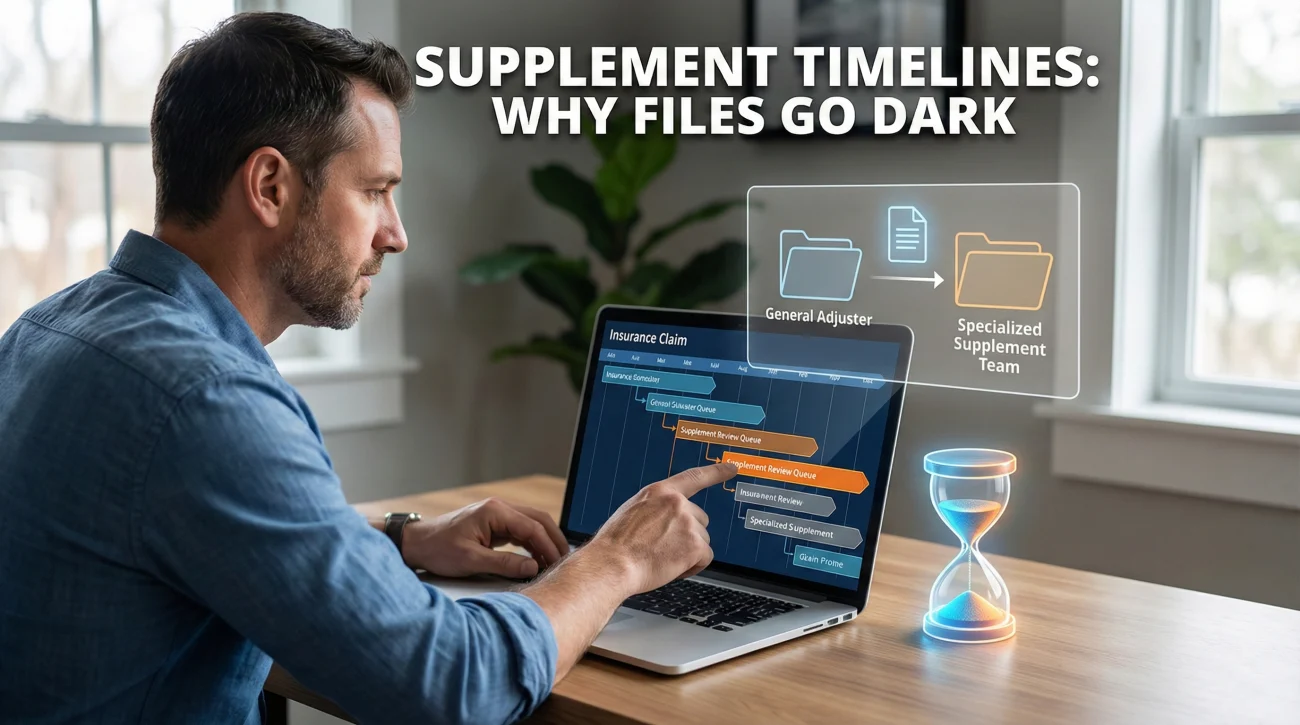
Filing a supplement often moves your claim out of your main adjuster’s hands and into a specialized review queue, which is why timelines suddenly become vague. To get a real timeline, you must ask specific supplement review timeline questions that identify the exact desk currently reviewing your file. Do not stop at “it is under … Read more

Repair vs. Replace: How to Argue for Replacement in Insurance Claims

Repair Vs Replace Decision Insurance Claim

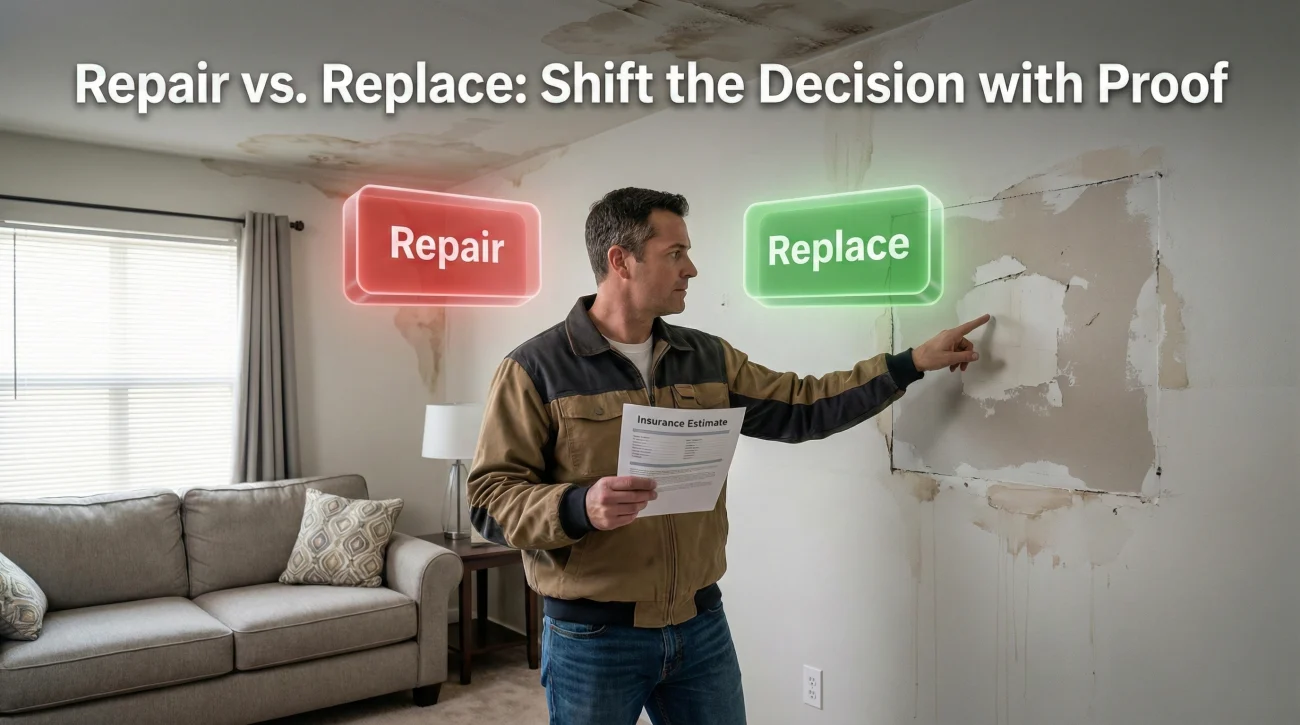
The Core Conflict: Estimates often default to “repair” because it is the baseline standard, but physical field constraints often make partial fixes impossible. Three Distinct Angles: Understand the difference between repairability (it physically breaks), matching (materials no longer exist), and code (local laws prevent partial fixes). The Domino Effect: Often, the process of repairing one … Read more

Final Invoice Higher Than Insurance Estimate: Proving the Difference

Final Invoice Higher Than Insurance Estimate

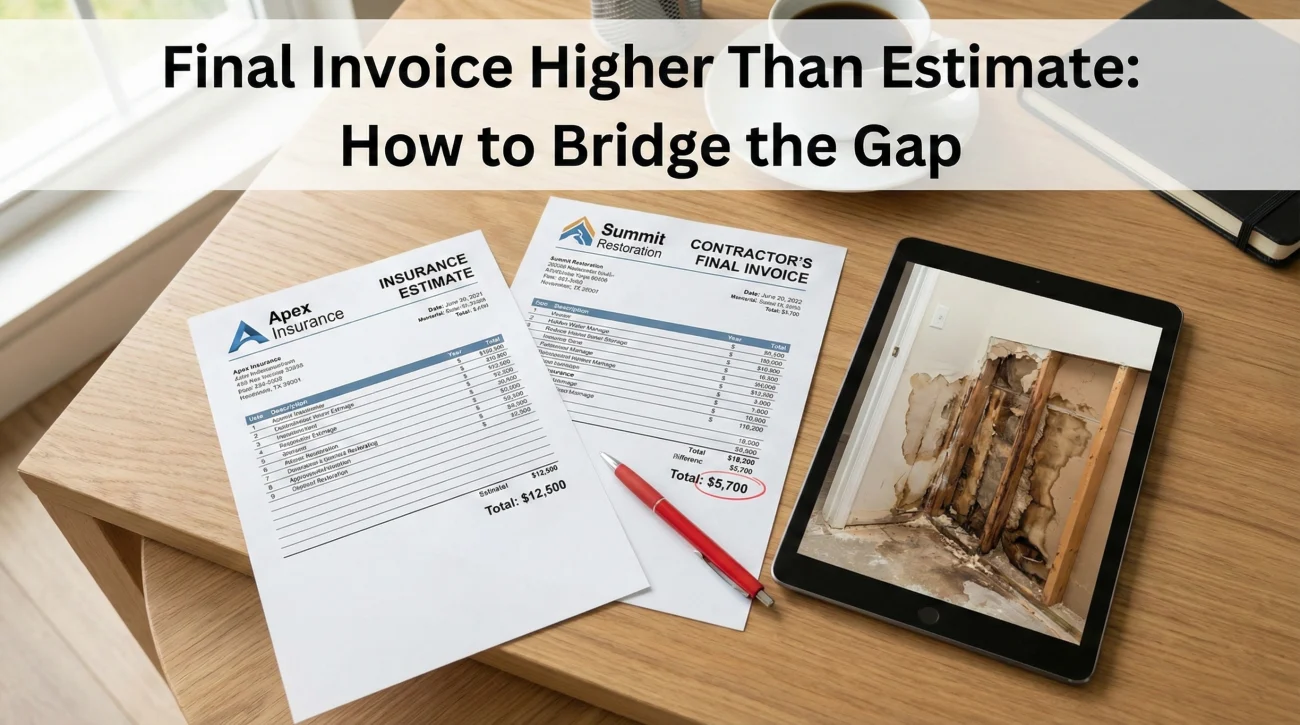
Reviewers cannot approve a higher final invoice based on price alone; you must categorize the difference as specific changes in the physical scope of work. Always separate your contractor’s final bill into clear “Delta Categories” such as hidden damage, code upgrades, or missing detach-and-reset operations. A higher final invoice is often ineffective without a supporting … Read more

Contractor vs. Adjuster: How the Insurance Supplement Workflow Works

Contractor Submits Supplement Workflow

An insurance supplement is a routine operational process, not a penalty. It is simply the formal workflow used to request funds for damage that was hidden or missed during the initial inspection. Adjusters and contractors speak different languages. A major cause of delayed supplements is when a contractor submits a standard lump-sum business invoice instead … Read more

Mapping Insurance Scope: Linking Line Items to Specific Rooms

Map Estimate Line Items To Rooms

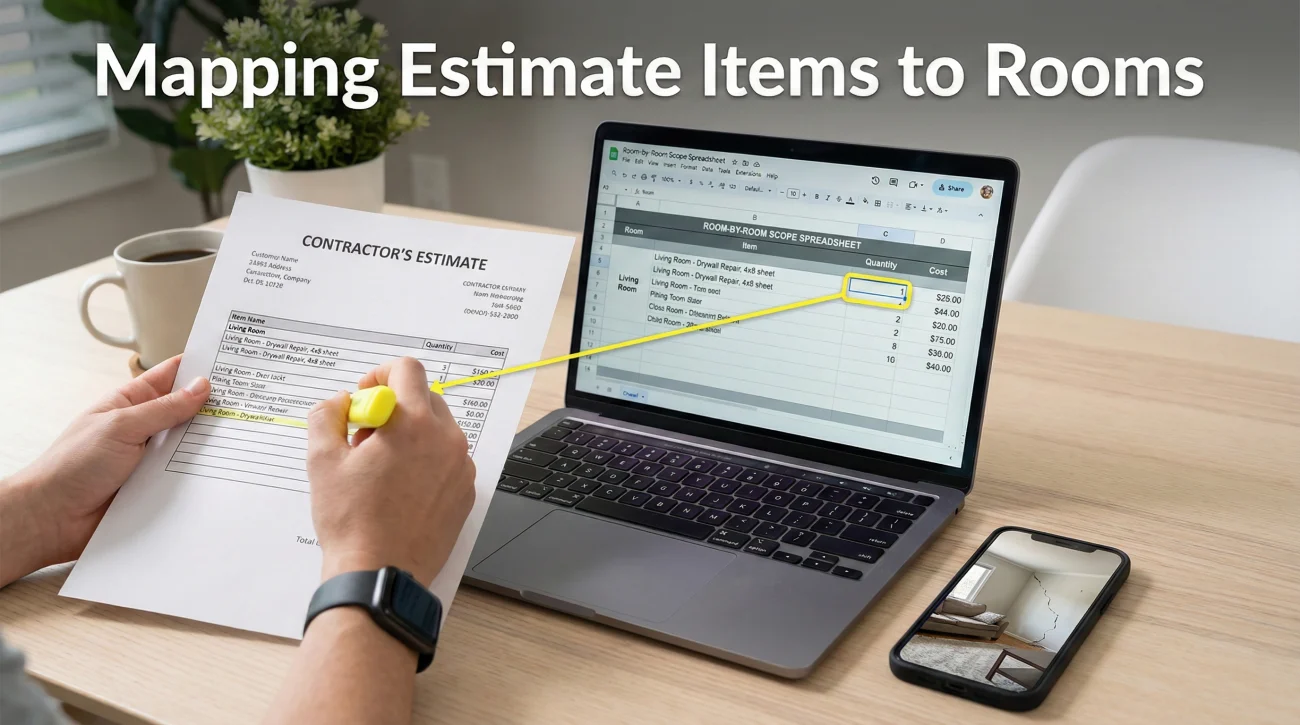
Estimates are often organized in ways that make it difficult to spot missing items, grouping disparate repairs into confusing categories. A room-by-room map translates the insurer’s line items into a physical checklist, making missing scope visually obvious. By explicitly linking missing line items to existing photo IDs, you remove the guesswork for the desk adjuster … Read more

Insurance Estimate Notes: Hidden Assumptions That Lower Your Payout

Insurance Estimate Notes And Assumptions

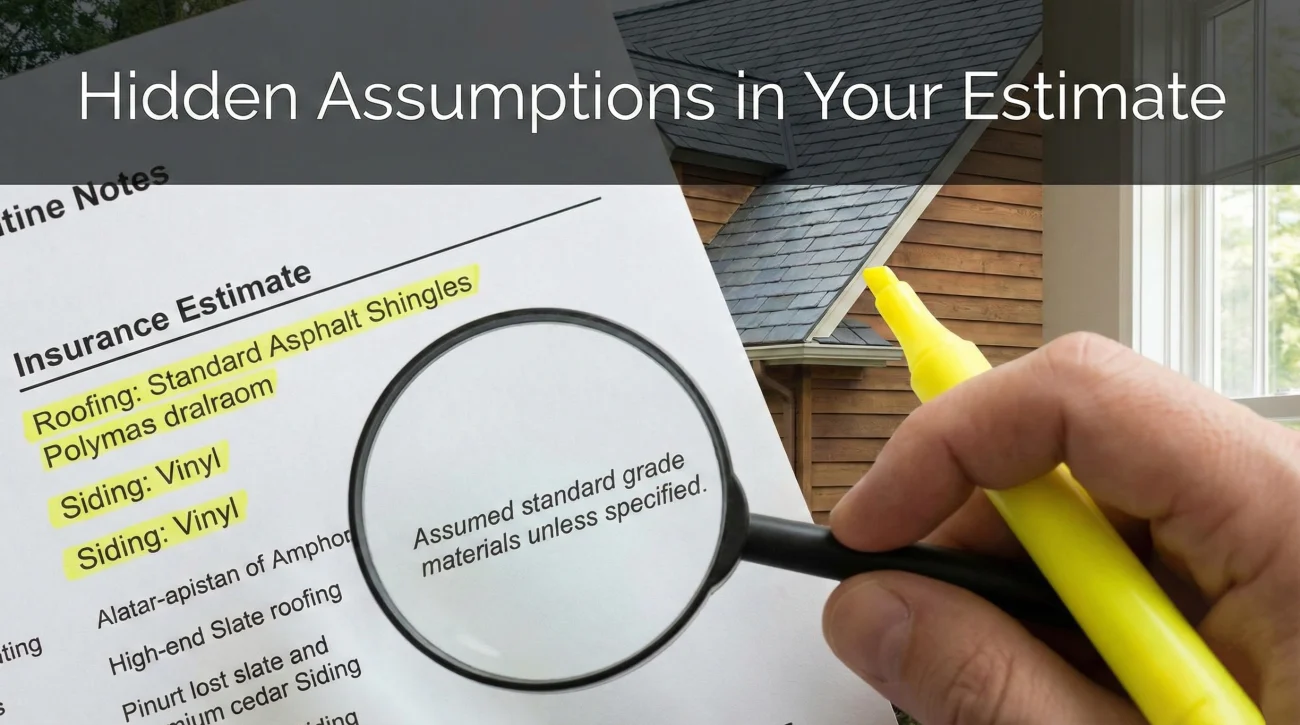
An insurance estimate is not just numbers; the text notes and assumptions often dictate why your payout is lower than expected. Common hidden assumptions include guessing the quality of materials, assuming items are salvageable, or leaving out dimensions entirely. Do not argue about the final dollar amount first. Instead, systematically address the incorrect assumptions by … Read more

Supplement Approved But Still Short: Do a Second Gap Check

Supplement Approved But Still Short

Do not panic if your first supplement is only partially approved; partial approvals are a completely normal part of the claims operation workflow. Stop looking at the bottom line total. You must compare the revised insurance estimate against your contractor’s bid line by line. Follow the 30-minute after-revision workflow to isolate a specific “Delta Scope … Read more

Partial Claim Denial? How to Read the Exclusions and Respond

Insurance Claim Partially Denied Explanation

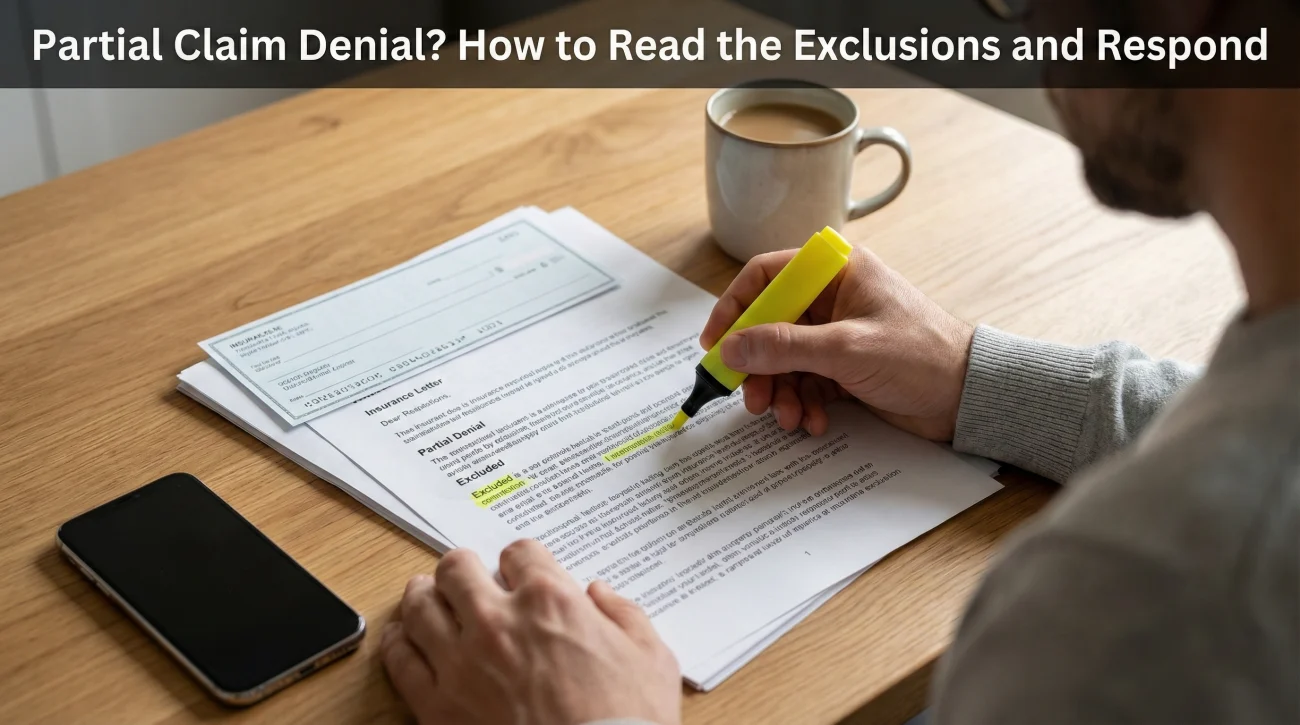
A partial denial is simply an operational boundary line; it means the carrier is separating the sudden damage they will pay for from the maintenance issue they will not. Stop arguing about fairness and start dissecting the letter to find the exact “Because” clause that triggers the exclusion. Respond by asking the adjuster to explicitly … Read more

Demo and Debris Removal: Finding Missing Costs in Your Estimate

Demo Disposal Debris Removal Missing Estimate

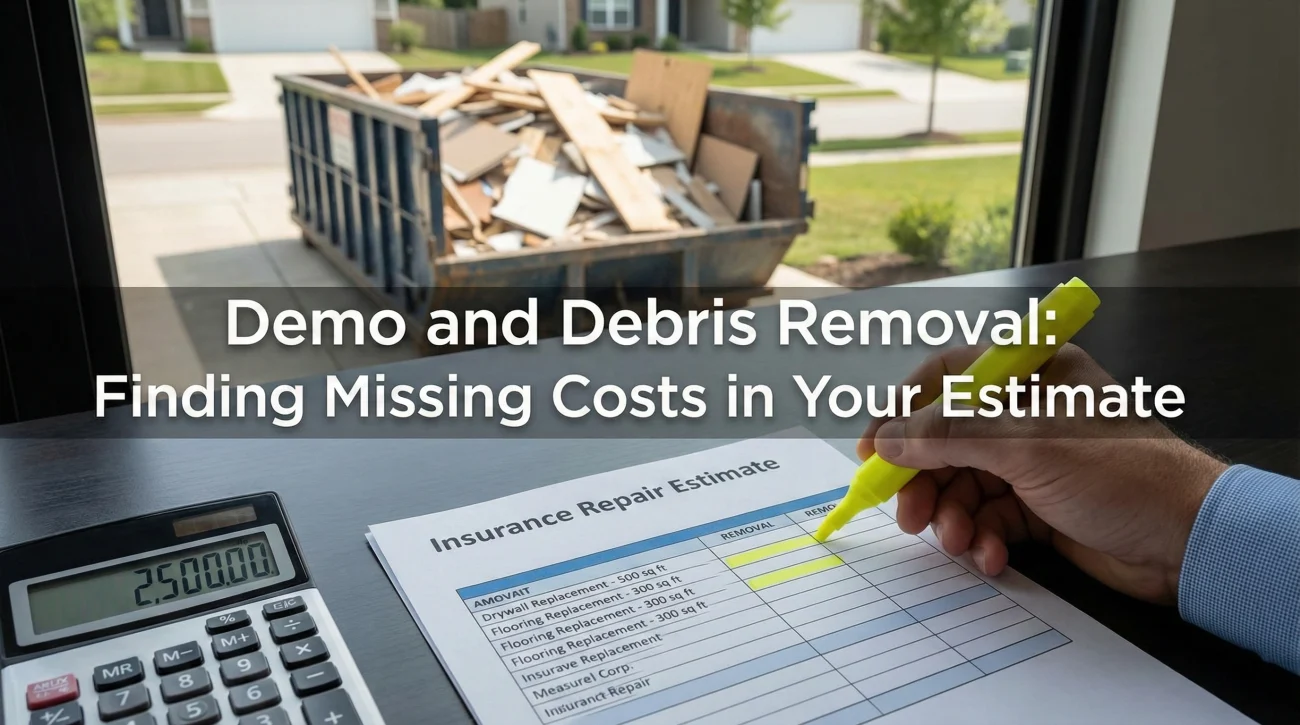
Demo and debris removal are frequently missing from initial estimates because estimating software often separates “remove” from “replace” line items. A complete scope must account for tear out labor, bagging materials, carrying debris, dumpster rental fees, and final dump weight tickets. Keep a structured gap log to track exactly which rooms are missing demolition costs … Read more

Detach and Reset: The Line Items Insurance Estimates Often Miss

Detach And Reset Missing Insurance Estimate

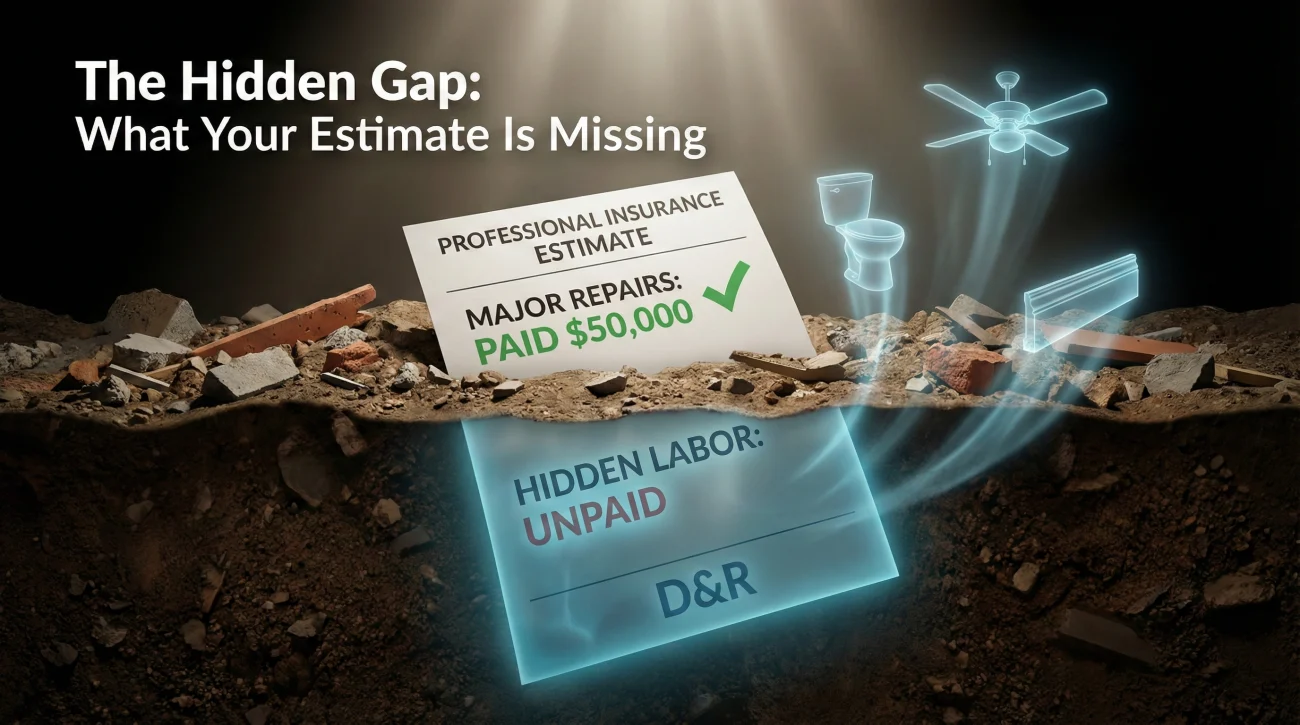
“Detach and reset” refers to the necessary labor to carefully remove an undamaged item, store it, and reinstall it so that repairs can happen behind or underneath it. In many estimates I review, I often see this labor missing because estimating software typically requires adjusters to manually click and add these line items one by … Read more

Code Upgrades and Ordinance and Law: The Operational Questions to Ask

Ordinance And Law Coverage Questions

The Trap: Insurance estimates usually pay to replace “Like Kind and Quality” (what you had). But local laws often mandate better, safer, and more expensive materials (what you need). The Gap: If your estimate covers the old standard but the city inspector demands the new standard, you pay the difference out of pocket unless you … Read more

Requesting an Insurance Reinspection: When to Ask and What to Have Ready

Reinspection Request Insurance Claim

Scope is the Only Trigger: Never ask for a reinspection to argue about price (like the cost of paint). Only ask if they physically missed damage (like a forgotten wall or hidden rot). The “Blue Tape” Method: Before they return, physically mark every missed item with blue painter’s tape. Make the damage impossible to ignore … Read more