Claim Payment Breakdown: How Insurance Checks Are Calculated

How Are Insurance Claim Payments Calculated

The final check you receive is rarely the top-line number on your estimate; it is the result of a specific sequence of deductions that often vary by policy. Insurance payments commonly follow a standard calculation flow: Replacement Cost Value (RCV) minus Depreciation, minus your Deductible, equaling the Actual Cash Value (ACV) net payment. Understanding the … Read more

Contractor vs. Adjuster: How the Insurance Supplement Workflow Works

Contractor Submits Supplement Workflow

An insurance supplement is a routine operational process, not a penalty. It is simply the formal workflow used to request funds for damage that was hidden or missed during the initial inspection. Adjusters and contractors speak different languages. A major cause of delayed supplements is when a contractor submits a standard lump-sum business invoice instead … Read more

Mapping Insurance Scope: Linking Line Items to Specific Rooms

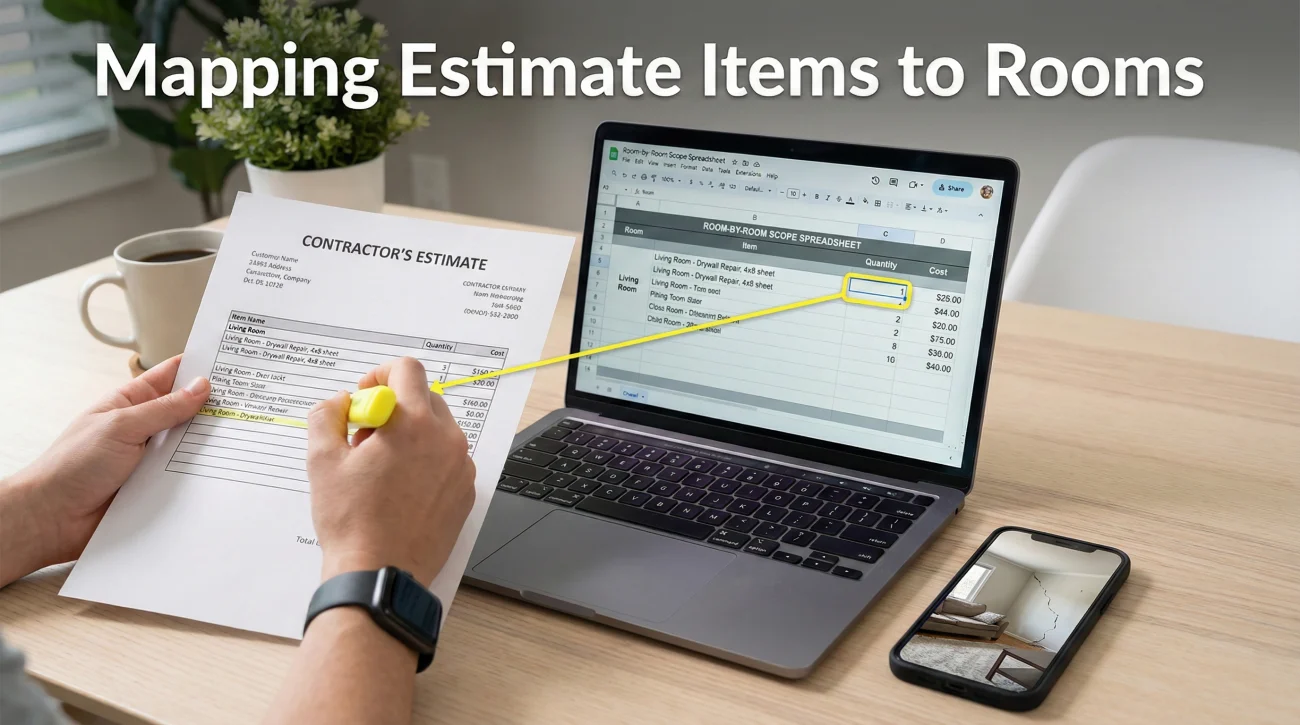
Map Estimate Line Items To Rooms

Estimates are often organized in ways that make it difficult to spot missing items, grouping disparate repairs into confusing categories. A room-by-room map translates the insurer’s line items into a physical checklist, making missing scope visually obvious. By explicitly linking missing line items to existing photo IDs, you remove the guesswork for the desk adjuster … Read more

Supplement Approved But Still Short: Do a Second Gap Check

Supplement Approved But Still Short

Do not panic if your first supplement is only partially approved; partial approvals are a completely normal part of the claims operation workflow. Stop looking at the bottom line total. You must compare the revised insurance estimate against your contractor’s bid line by line. Follow the 30-minute after-revision workflow to isolate a specific “Delta Scope … Read more

Partial Claim Denial? How to Read the Exclusions and Respond

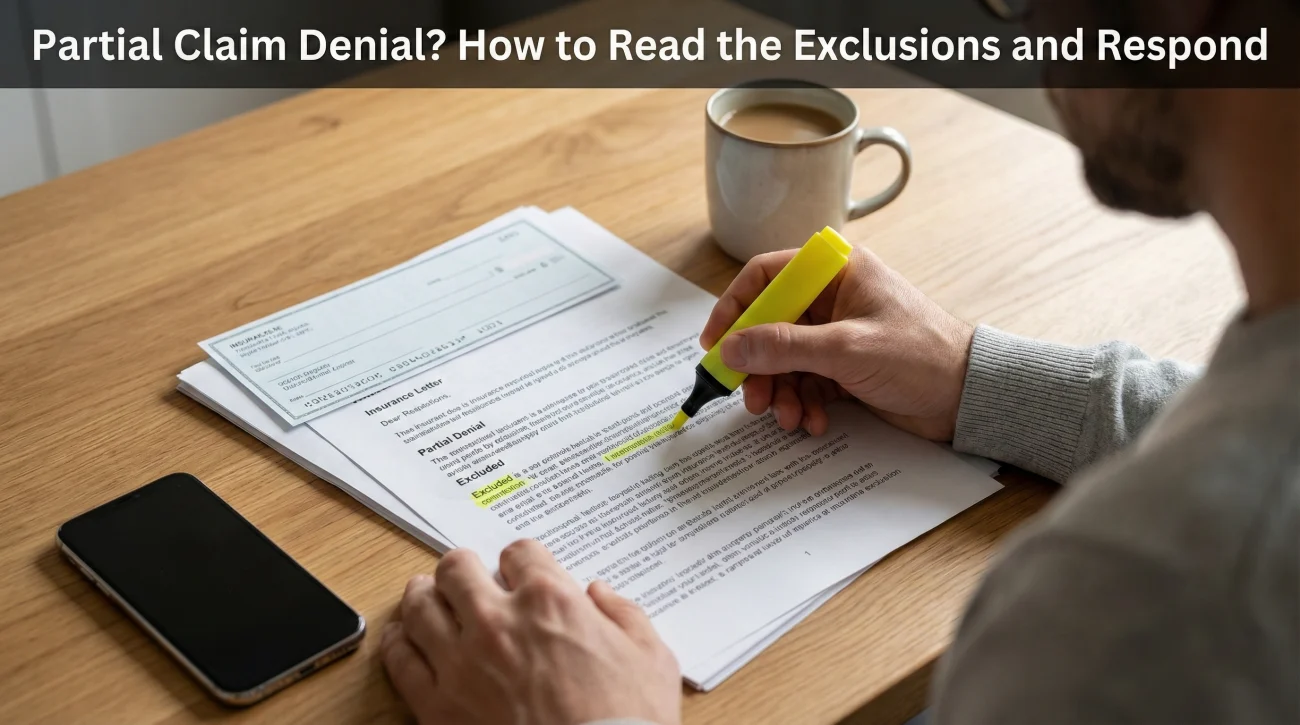
Insurance Claim Partially Denied Explanation

A partial denial is simply an operational boundary line; it means the carrier is separating the sudden damage they will pay for from the maintenance issue they will not. Stop arguing about fairness and start dissecting the letter to find the exact “Because” clause that triggers the exclusion. Respond by asking the adjuster to explicitly … Read more

Demo and Debris Removal: Finding Missing Costs in Your Estimate

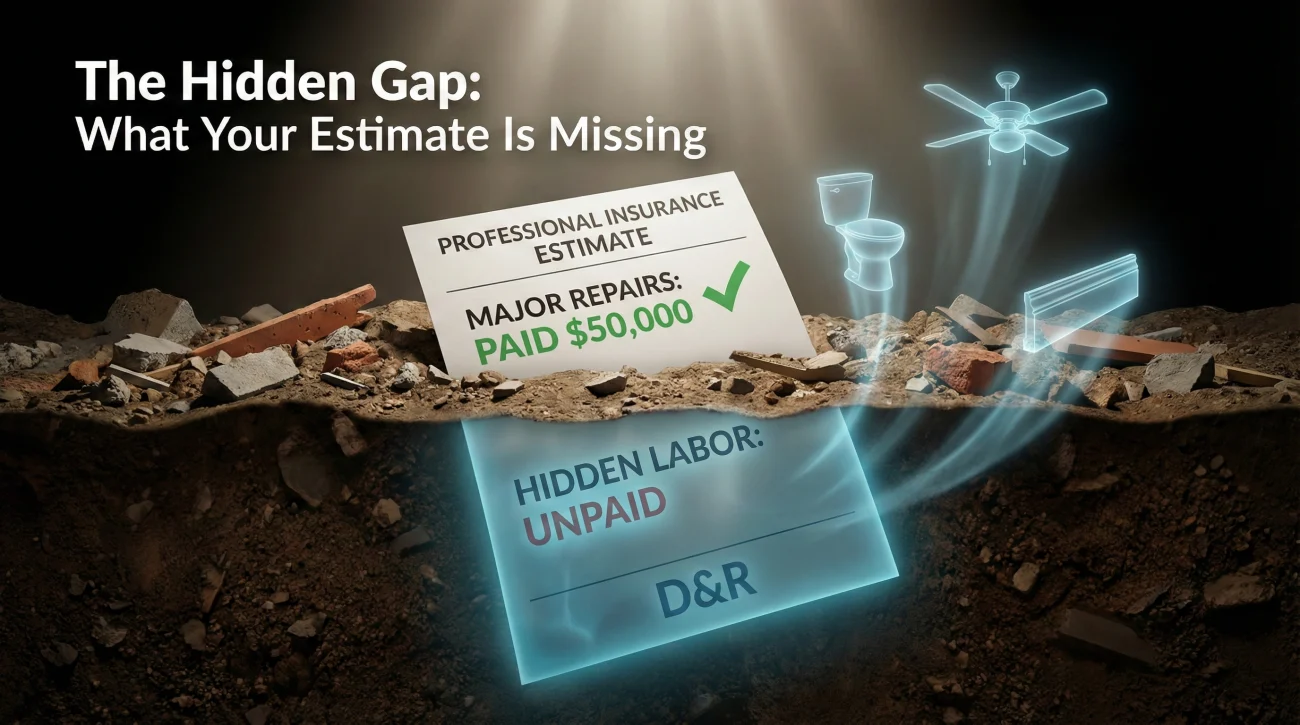
Demo Disposal Debris Removal Missing Estimate

Demo and debris removal are frequently missing from initial estimates because estimating software often separates “remove” from “replace” line items. A complete scope must account for tear out labor, bagging materials, carrying debris, dumpster rental fees, and final dump weight tickets. Keep a structured gap log to track exactly which rooms are missing demolition costs … Read more

Detach and Reset: The Line Items Insurance Estimates Often Miss

Detach And Reset Missing Insurance Estimate

“Detach and reset” refers to the necessary labor to carefully remove an undamaged item, store it, and reinstall it so that repairs can happen behind or underneath it. In many estimates I review, I often see this labor missing because estimating software typically requires adjusters to manually click and add these line items one by … Read more

Wrong Quantities: Spot Quantity Errors and Present Clean Corrections

Incorrect Quantities Insurance Estimate

The Core Strategy: Correcting “quantity errors” (missing square footage, missed waste factor) is often the fastest way to increase a low estimate because it relies on objective measurements. What to Look For: The most frequent errors are “Net vs. Gross” calculations (forgetting material waste), “phantom rooms” (missing closets), and ignored “labor minimums.” Action Step: Audit … Read more