
Repair vs. Replace: How to Argue for Replacement in Insurance Claims
Repair Vs Replace Decision Insurance Claim

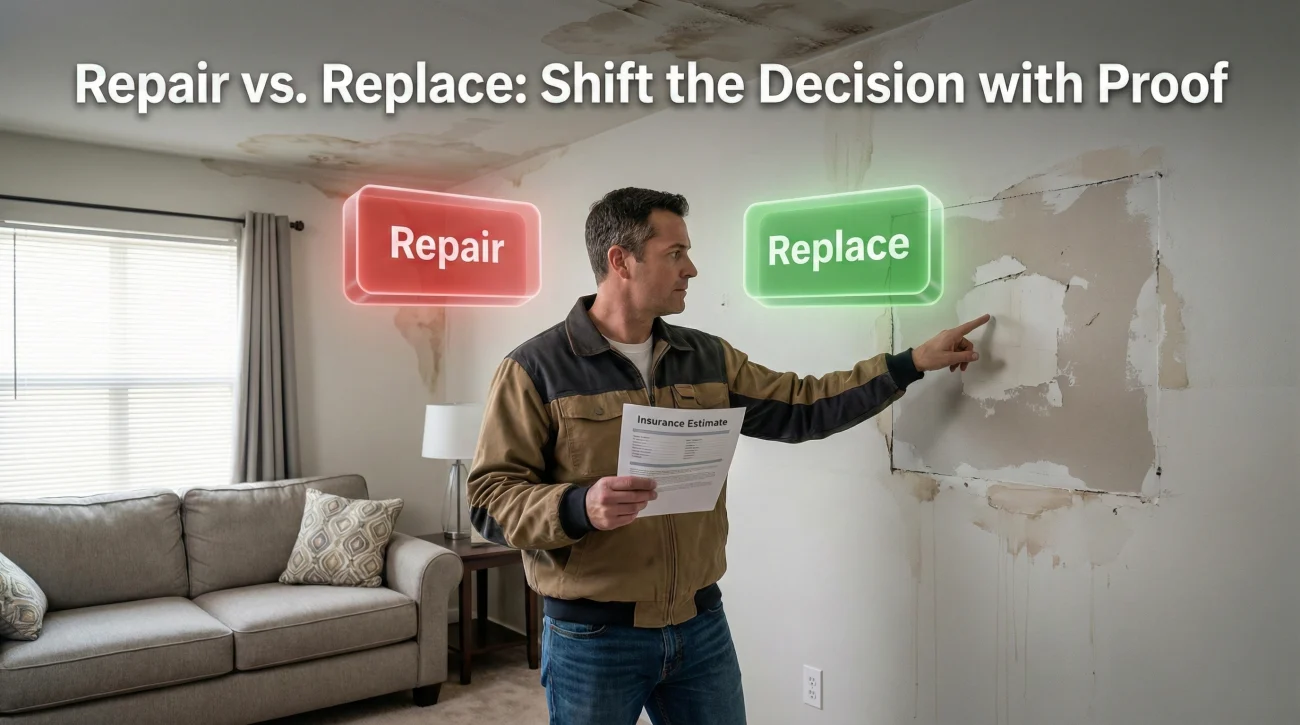
The Core Conflict: Estimates often default to “repair” because it is the baseline standard, but physical field constraints often make partial fixes impossible. Three Distinct Angles: Understand the difference between repairability (it physically breaks), matching (materials no longer exist), and code (local laws prevent partial fixes). The Domino Effect: Often, the process of repairing one … Read more
Insurance Estimate Notes: Hidden Assumptions That Lower Your Payout

Insurance Estimate Notes And Assumptions

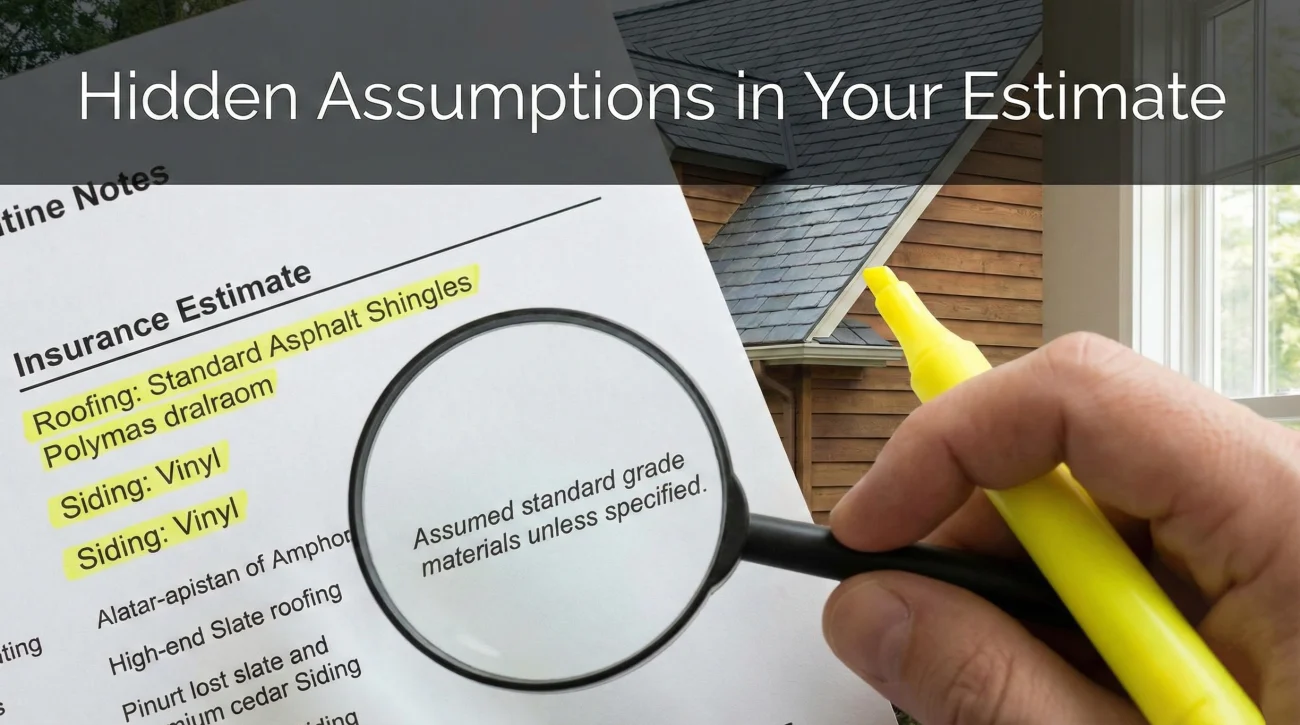
An insurance estimate is not just numbers; the text notes and assumptions often dictate why your payout is lower than expected. Common hidden assumptions include guessing the quality of materials, assuming items are salvageable, or leaving out dimensions entirely. Do not argue about the final dollar amount first. Instead, systematically address the incorrect assumptions by … Read more

Code Upgrades and Ordinance and Law: The Operational Questions to Ask

Ordinance And Law Coverage Questions

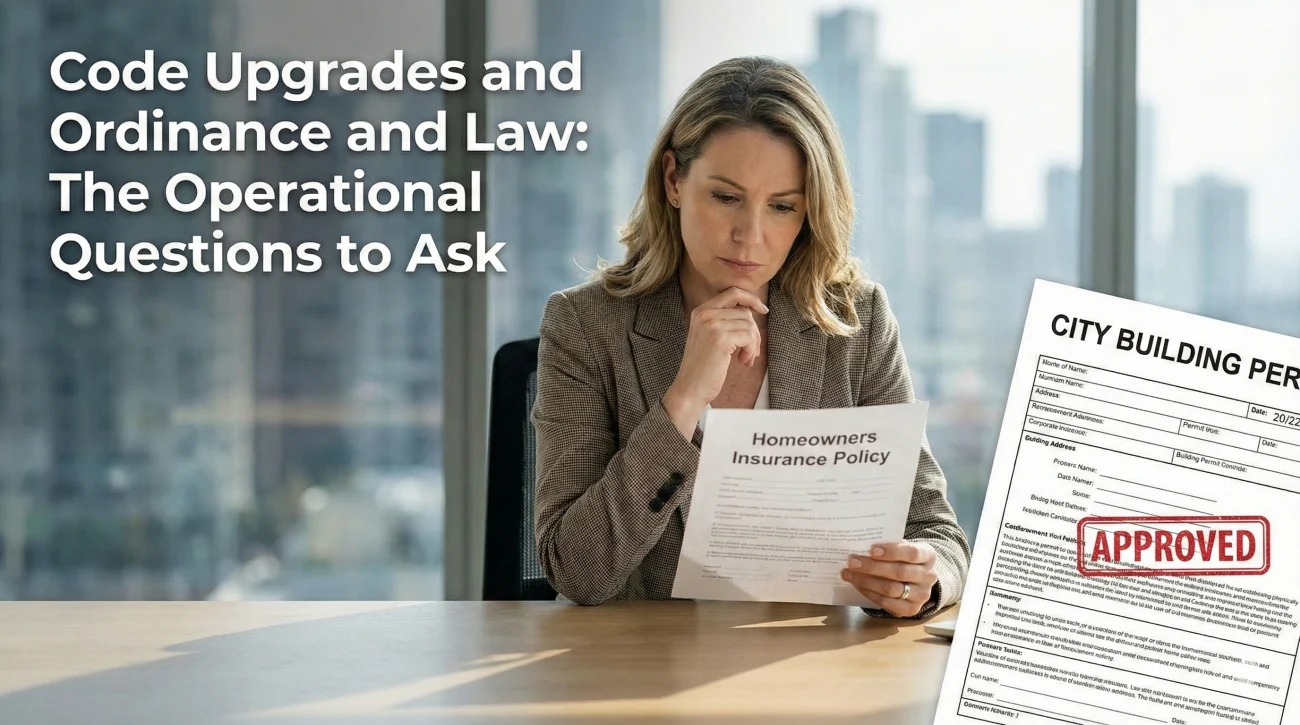
The Trap: Insurance estimates usually pay to replace “Like Kind and Quality” (what you had). But local laws often mandate better, safer, and more expensive materials (what you need). The Gap: If your estimate covers the old standard but the city inspector demands the new standard, you pay the difference out of pocket unless you … Read more