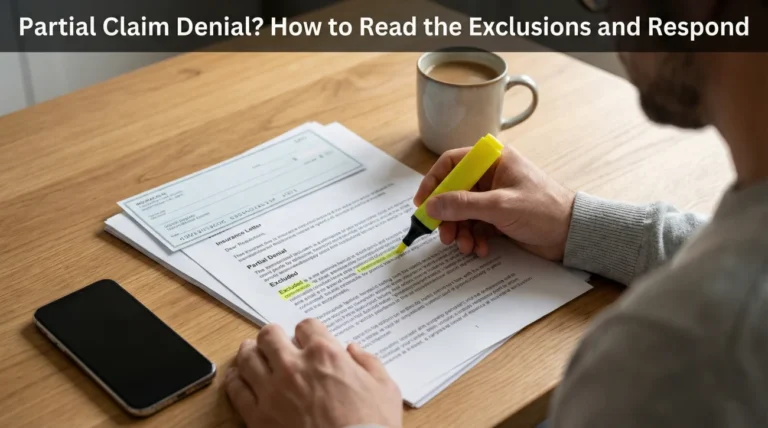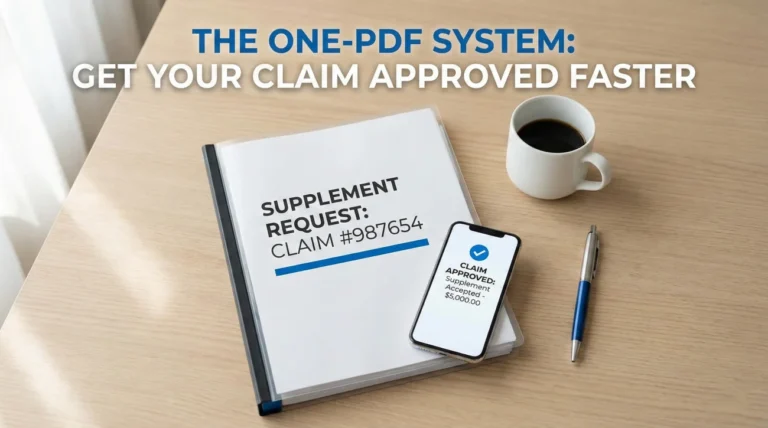
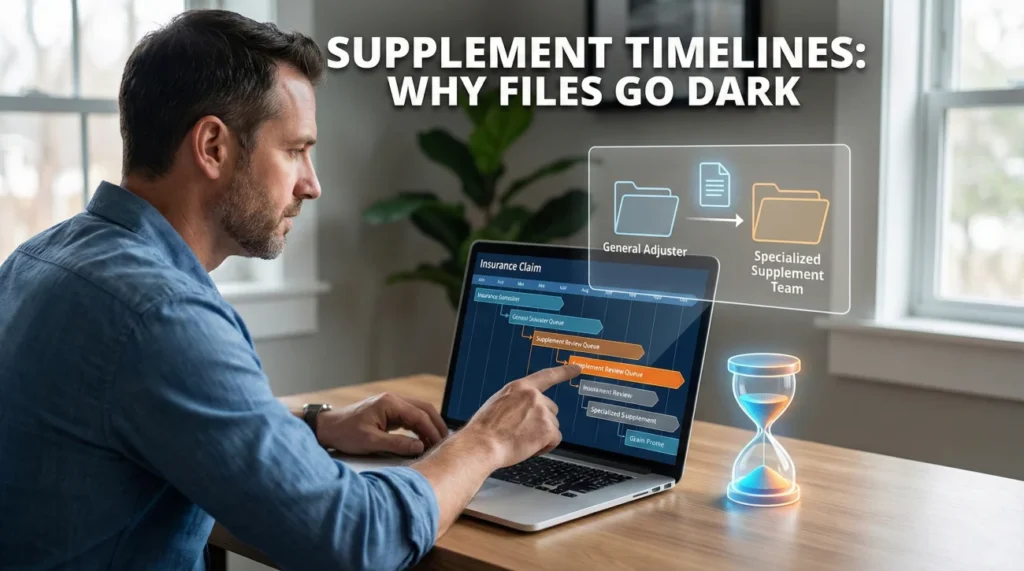
- Filing a supplement often moves your claim out of your main adjuster’s hands and into a specialized review queue, which is why timelines suddenly become vague.
- To get a real timeline, you must ask specific supplement review timeline questions that identify the exact desk currently reviewing your file.
- Do not stop at “it is under review.” Follow up by asking whether it is assigned to a specific desk or sitting unassigned in a general workflow pool.
- Proactively asking if any specific line items or documents are missing reduces the chance of silent pauses later.
- Focus your communication on operational clarity: discovering the assigned reviewer’s name, their authority limit, and the target completion date.
The Black Hole of Supplement Reviews
In my time working within claims operations, I have seen a very predictable pattern when a homeowner submits a contractor’s supplement. Up until that point, the primary desk adjuster may have been relatively communicative. But the moment that supplement packet is uploaded, the file often goes completely quiet. When the homeowner finally gets someone on the phone, the answer is usually a vague, “It is currently pending review.”
I understand why this drives people crazy. You have an open roof, a contractor waiting for a green light, and an insurance desk that suddenly cannot give you a straight answer about the calendar. The natural instinct is to assume they are deliberately stalling to avoid paying. While delays happen, the reality is usually much more bureaucratic.
While supplement workflows vary by carrier, state, and policy form, and sometimes involve outside third-party vendors, the core operational reality is the same: submitting a supplement often triggers a fundamental shift in how your file is routed internally. It frequently leaves the desk of the person you have been talking to and enters a specialized queue. If you want to unstick the process, you have to stop asking, “When will I get my money?” and start asking operational questions that force the carrier to look at exactly where your file is sitting.
Key Point: You cannot manage a timeline if you do not know who holds the file. The goal at the supplement stage is to extract the current desk assignment and a concrete target date.
In this guide, I will walk you through the internal routing of a supplement, why timelines become so opaque, and the exact supplement review timeline questions you need to ask to get a clear Estimated Time of Arrival (ETA) and identify the workflow owner.
How Supplements Are Routed (And Why They Stall)
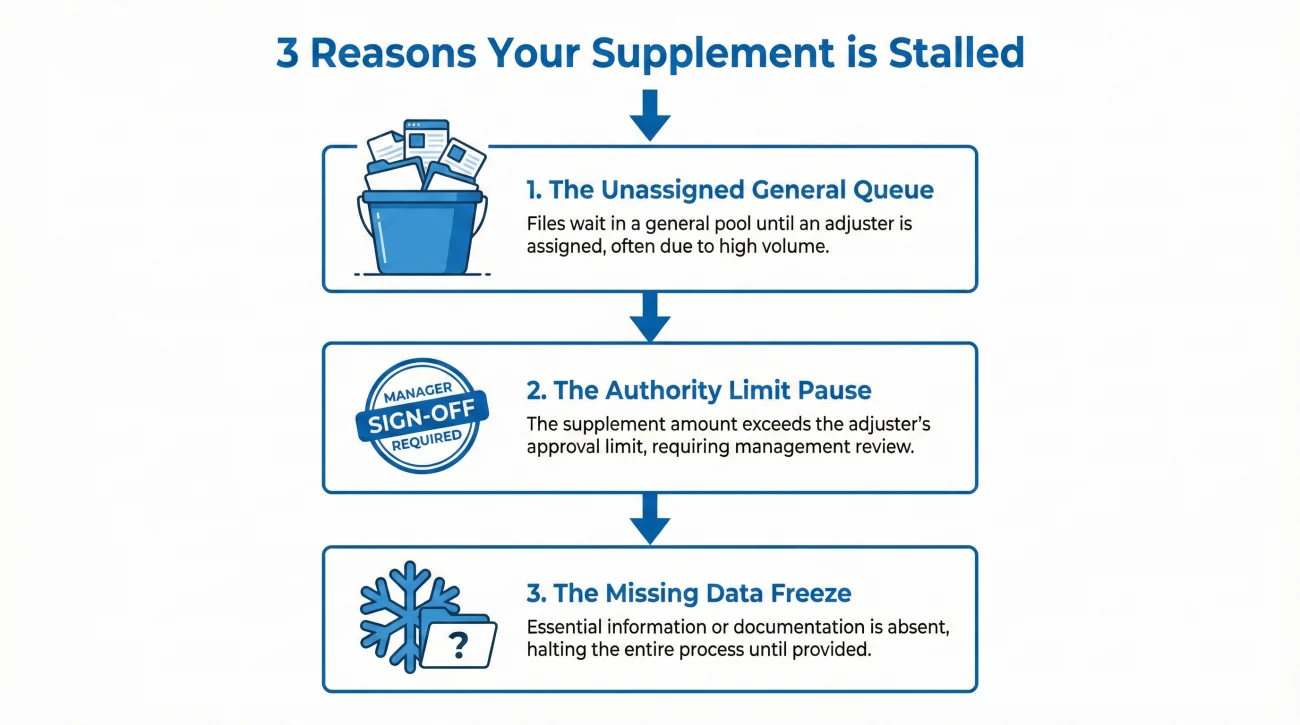
To understand what to ask, you first need to understand what happens to your document the moment you press send. When you submit your initial claim, a desk adjuster handles the standard estimate. But a supplement usually represents a dispute over scope, pricing, or complex building codes. Many standard adjusters do not have the authority to approve these changes.
In many cases, your file is transferred to a specialized “Supplement Team” or requires a manager’s override. This creates an operational bottleneck. Here are the common places your file might be resting.
The Unassigned General Queue
This is the most common reason for a massive delay. Your primary adjuster receives your supplement and clicks a button in their software to route it to the supplement department. Your file is now sitting in a digital bucket with hundreds of other files, waiting for a specialized reviewer to pull it. Until a human being actually claims your file from that bucket, there is no assigned reviewer, and therefore, no timeline.
The Authority Limit Pause
Every adjuster has a financial authority limit. If your initial claim was $15,000, and your contractor’s supplement is for an additional $20,000, the total claim value might exceed your current adjuster’s limit. They may have reviewed it and agreed with it, but they physically cannot issue the approval without a manager signing off. Files waiting for management review often sit at the bottom of a very busy supervisor’s inbox.
💡 Pro Tip: Recognizing that your adjuster might be waiting on their own boss changes how you communicate. You are no longer fighting your adjuster; you are helping them get the answers they need to pass it up the chain.
The Missing Data Freeze
Supplement reviewers are looking for highly specific justifications. If your contractor just sent a massive bill with a note saying “prices went up,” the reviewer will simply pause the file. They will not necessarily call you immediately to tell you they need a detailed material invoice; they will just work on an easier file first. The file sits in “pending” status, but internally, it is functionally frozen.
What Actually Counts as “Assigned”?
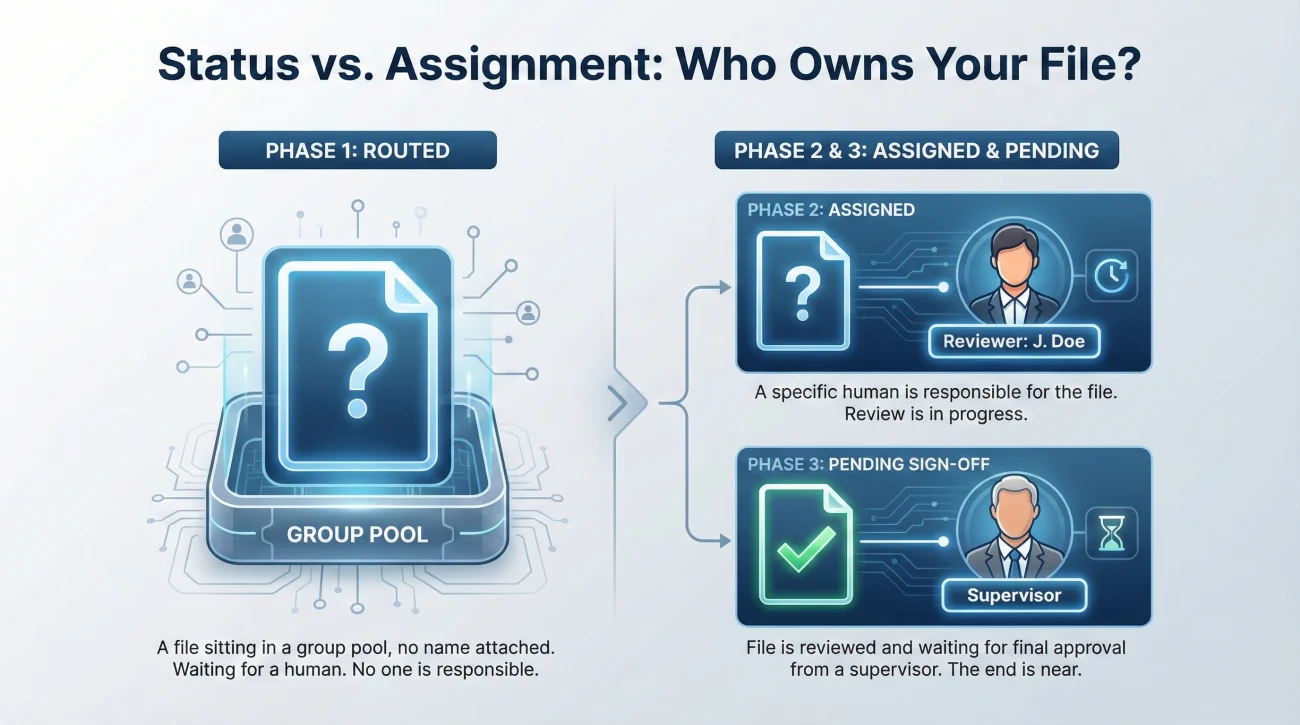
To effectively track your file, you must understand the difference between being routed and being assigned. These phases dictate your next step.
- ✅ Routed to the Supplement Team: The file is in the right department, but no individual has taken responsibility for it yet. This is the unassigned bucket.
- ✅ Assigned to a Reviewer: A specific adjuster or vendor has pulled the file and is responsible for comparing your contractor’s estimate against the carrier’s guidelines.
- ✅ Pending Management Sign-off: The reviewer has finished their work, but the financial payout exceeds their authority limit. It is now waiting for a supervisor to click approve.
The Workflow Owner Strategy
Because of these routing complexities, the most important piece of information you can gather is the name of the current workflow owner. This is the specific human being who is responsible for making the next decision on your file.
When you call the main customer service line and ask for a status update, the representative will often look at your file and say, “Your supplement is under review.” That is a status, not an individual. You need to politely push past the status.
“How much longer will the review take?” (Usually results in a vague “soon” or “we are working on it.”)
“Can you look in the system and tell me the name of the specific reviewer assigned to this supplement?”
If the representative says, “It is with the supplement team,” that often means it is in the unassigned queue. If they give you a specific name, you now have a target desk. Once you have that, you can ask for a concrete ETA.
The 5 Core Supplement Review Timeline Questions
When you are trying to cut through the noise and get real answers, you need to use questions that require the representative to look at the actual workflow data. These specific phrasings are highly effective when you have an adjuster or customer service agent on the phone.
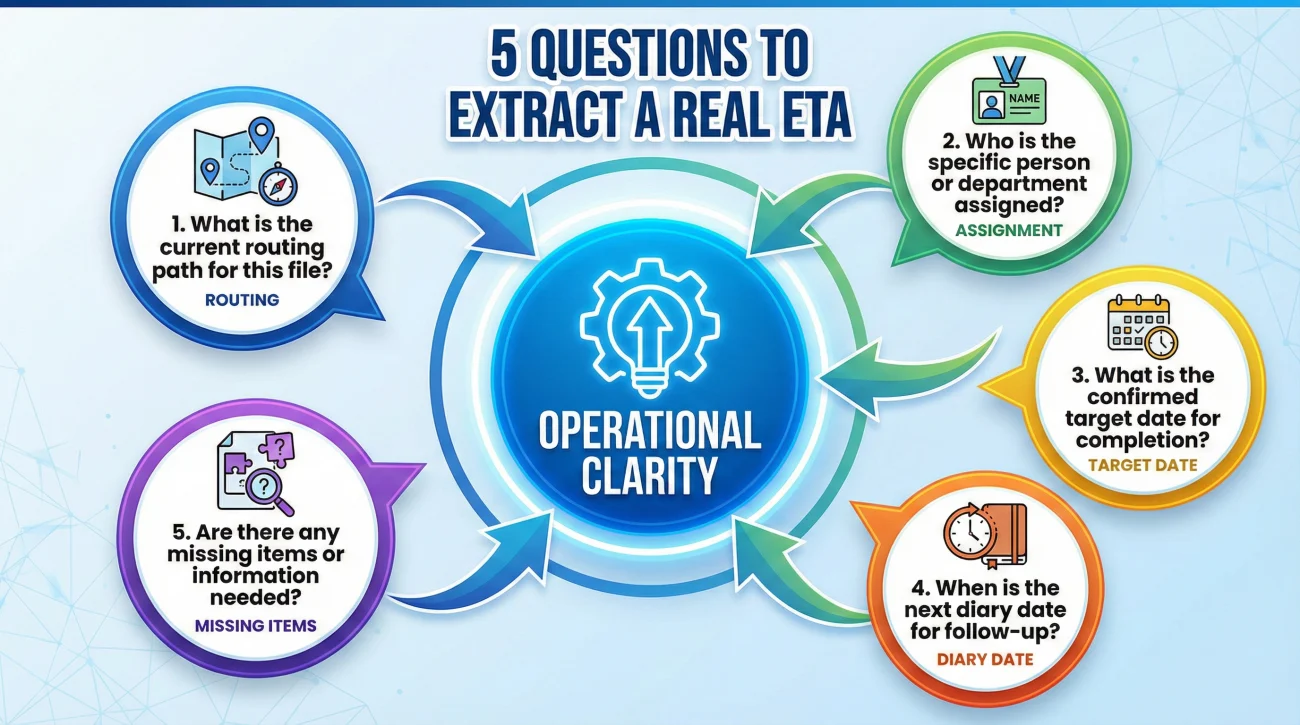
Question 1: The Routing Inquiry
You need to establish whether your main contact still has the power to make decisions, or if you are waiting on a separate department.
“Is this supplement currently being reviewed at your desk, or has it been routed to a specialized supplement queue or a supervisor for approval?”
The operational goal: This forces the adjuster to admit if they no longer have control of the file. If they say it has been routed, you immediately follow up with the next question.
Question 2: The Assignment Check
If the file has been moved to another queue, you must find out if it is actively being worked on or just sitting in a pool.
“Has a specific reviewer been assigned to this supplement yet, and if so, what is their name and direct contact information?”
What this reveals: This exposes the “unassigned bucket” problem. If they cannot give you a name, you know the file is stalled before the review has even begun.
Question 3: The Target Date Request
Never ask “when will it be done?” Ask for the operational target date. Insurers often use internal service level agreements (SLAs) for reviews.
“What is the system’s target completion date for this specific review phase?”
Why it is effective: They may not explicitly share their internal SLAs with you, but you can ask what target date their system shows. Asking for the target date speaks their language and usually results in a specific day of the week rather than a vague “next week.”
Question 4: The Diary Date Check
In claims software, a “diary date” is the scheduled day the system prompts the adjuster to open and work on the file again.
“What is the next diary or task date on the file for this review phase?”
The logic behind this: Using this phrasing shows you understand claims operations. If they say the next diary date is two weeks from now, you instantly know why nothing is happening today.
Question 5: The Missing-Items Preemption
This is arguably the most critical question to prevent delays. Do not assume your packet was perfect. Actively ask if they are stuck on anything.
“Before the review is finalized, are there any specific line items, photos, or contractor invoices missing that are preventing a decision?”
The practical benefit: Proactively asking this reduces the chance of silent pauses later. It forces them to audit the file now, rather than waiting a week to realize they need another photo.
Putting the Concepts into Action: Email Templates
While the questions above are perfect for a phone conversation, sending them as a bulleted list in an email can sound robotic. Instead, I recommend using these smooth, conversational email scripts. They extract the exact same operational data (routing, assignment, target dates, and missing items) but read like a natural business request.
Template 1: The Status & Handoff Check
This framework is best when your supplement has been submitted but you have no idea who is actually holding the file right now.
Subject: CLAIM #12345678 – Supplement Routing Status
Hello [Adjuster Name],
I am checking in to get an operational update on the contractor supplement submitted on [Date].
To make sure I am following up with the right person moving forward, could you please confirm if this file is still at your desk, or if it has been routed to a specialized queue?
If it has been reassigned, please let me know the new reviewer’s name and the system’s target completion date for their review phase.
Thank you for keeping this file moving.
[Your Name]
Template 2: Unblocking a “Pending” Status
Send this message when you have been told the file is “under review” but the timeline keeps stretching out without a clear answer.
Subject: CLAIM #12345678 – Missing Items Check for Pending Supplement
Hello [Adjuster Name],
I understand the supplement is currently in the review phase. To ensure we avoid any technical delays on our end, I want to proactively check the file requirements.
Could you please review the file and let me know if you are missing any specific photos, line-item explanations, or contractor invoices? If you need anything else to process this, let me know so we can supply it immediately.
If everything is in order, please confirm the current target date for the final decision.
Best regards,
[Your Name]
Mini-Scenarios: Diagnosing the Delay
To see how this works in practice, let me share two common operational patterns I observe.
Scenario 1: The Unassigned Queue
A homeowner’s contractor submitted a comprehensive supplement for complex water damage mitigation. For three weeks, the homeowner’s calls were met with: “It is processing in the supplement department.”
The homeowner switched to the workflow strategy. They sent an email explicitly asking for the assigned reviewer’s name. The desk adjuster replied, revealing that the file had been routed to the “Large Loss Supplement Queue,” but no individual reviewer had actually pulled it. The homeowner asked the desk adjuster to ping the manager of that queue to get it assigned. A reviewer was assigned the next morning. Timelines vary, and sometimes it still takes longer even after a reviewer is assigned, but finding the bottleneck is the crucial first step.
Scenario 2: The Authority Limit Pause
In another case, a homeowner’s file was actively assigned, but the timeline kept slipping. The homeowner asked the routing question: “Is this currently at your desk, or waiting on a supervisor?”
The adjuster admitted that they had finished their review and agreed with the pricing, but because the supplement was for $25,000, it exceeded their $15,000 authority limit. It was sitting in their manager’s queue waiting for a sign-off. Knowing this, the homeowner stopped blaming the adjuster and instead asked, “What is the standard turnaround time for your manager’s review queue?” This shifted the conversation from frustration to clarity.
Translating “Adjuster Speak” About Timelines
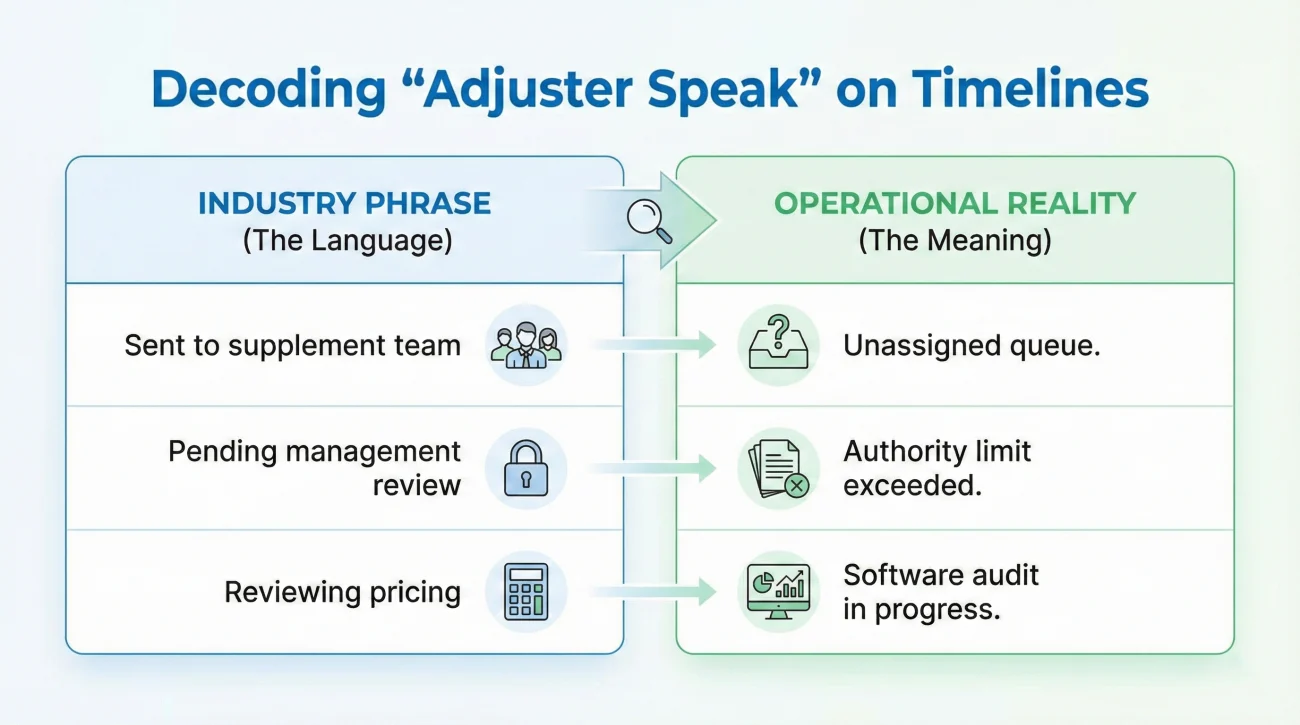
When you ask these questions, the answers you receive will often be wrapped in industry terminology. Part of managing a claim is learning how to decode what the carrier’s representatives are actually saying about your timeline.
| What They Say | What It Usually Means Operationally | Your Next Question |
|---|---|---|
| “It has been sent to the supplement team.” | It is in a general queue and likely does not have a human assigned to it yet. | “Has it been assigned to a specific desk yet, or is it unassigned?” |
| “It is pending management review.” | The adjuster agrees with it but exceeded their financial authority limit. It is waiting for a boss to sign off. | “Does the manager have all the necessary documentation, and what is their typical turnaround time?” |
| “We are reviewing the contractor’s pricing.” | They are running your contractor’s estimate against their own internal software database to look for discrepancies. | “Are there specific line items that are disputed, or is this a general audit?” |
| “We are waiting on a field report.” | An inside reviewer cannot decide and has ordered an outside vendor to physically look at the property again. | “Who is the vendor, and when are they scheduled to visit the property?” |
Identifying Hidden Gaps While You Wait
While you are waiting for the reviewer to be assigned and the ETA to arrive, the worst thing you can do is just sit there passively. Even if you ask the missing-items question, the adjuster might simply say “we have everything we need” because they may not have done a full file audit yet.
In many cases, I advise homeowners to use this waiting period to perform their own audit of the documentation response they submitted. Often, supplements stall because the initial packet lacked a clear narrative. If your contractor sent a 30-page estimate with zero photos linking the damage to the line items, the reviewer is going to struggle.
- 📄 Review the photos: Did you provide wide-angle establishing shots, or just extreme close-ups of damage?
- 📄 Check the narratives: Did your contractor include a brief written explanation for complex line items (like code upgrades)?
- 📄 Audit the invoices: Are actual material invoices attached, or just round-number estimates?
If you realize your packet was thin on evidence, do not wait for them to deny it. Gather the supporting evidence now so that when the reviewer finally does ask for it, you can provide it quickly, without another week of back-and-forth.
Common Mistakes When Asking for a Timeline
Homeowners often shoot themselves in the foot by asking for updates in a way that allows the insurance company to easily deflect the question. Avoid these common operational mistakes.
Mistake 1: Asking for a “General Update”
If you email an adjuster and say, “Can I get an update on my claim?”, you are handing them an easy out. They can reply, “We are still working on it,” and they can respond without giving you anything actionable. Always ask targeted questions about routing, assignment, and target dates.
Mistake 2: Being Aggressive with the Wrong Person
If your file is stuck in the unassigned supplement queue, getting angry at your primary desk adjuster achieves nothing. They literally cannot review the file themselves. Once you learn they are not the reviewer, shift your tone to collaborative. Ask them to help you get it assigned, rather than blaming them for the delay.
Mistake 3: Assuming They Will Tell You If Something is Wrong
Never assume an adjuster will proactively notify you the moment they realize a document is missing. Files frequently sit dormant for weeks simply because a reviewer wanted a closer photo of a cabinet hinge but moved on to an easier file instead of calling you.
Setting Reasonable Expectations
It is important to remember that supplement reviews are inherently slower than initial claim estimates. Target dates can and will shift based on department volume or catastrophic weather events. The objective of asking these questions is not to guarantee an instant payout. Rather, the goal is to maintain operational clarity regarding who holds the file, what the next required action is, and what documents might be missing.
Final Thoughts on Supplement Timelines
Navigating the supplement phase of an insurance claim tests your patience more than almost any other part of the process. The shift from a single, known adjuster to a faceless “review queue” is jarring. However, the system still runs on basic operational principles.
By consistently applying these supplement review timeline questions, you remove the ambiguity from the process. You force the system to identify exactly which desk holds the file, what date they are aiming for, and whether any technical roadblocks are in the way. In claims operations, clarity creates movement. Keep your questions precise, focus on finding the assigned reviewer, and proactively clear away any missing documentation. That is how you keep a file on track.
❓ FAQ
⏳ Why do supplements take so much longer than the initial estimate?
Supplements often require specialized review for pricing accuracy or complex code upgrades, pulling the file away from the standard desk adjuster and into a backlogged secondary queue.
📞 Who should I call if my adjuster says the supplement is out of their hands?
Ask the adjuster for the specific name and contact information of the new reviewer, or ask customer service to check the system for the currently assigned desk.
🤔 What does “pending management approval” actually mean?
It typically means the reviewer agrees with the pricing but the total dollar amount exceeds their personal financial authority limit, requiring a supervisor’s signature.
📬 Will the insurance company notify me if my supplement is missing documents?
They may eventually, but files often sit paused for days or weeks before a notification is sent. It is always better to proactively ask if anything is missing.
🗣️ How do I ask for an ETA without sounding too pushy?
Use operational language. Instead of “When will this be done?”, ask, “What is the system’s target completion date for this specific review phase?”
🤷♂️ What if customer service cannot give me a reviewer’s name?
This usually indicates the file is sitting in an unassigned general queue. Ask them to ping the manager of that queue to get the file assigned to a specific desk.
📝 Should my contractor handle the timeline questions or should I?
As the policyholder, you often have more leverage to demand internal routing information and ETAs. Contractors can discuss scope, but you should manage the overall timeline.
🛑 Can a supplement be denied just because it takes too long to review?
No, a delay in review is an internal operational issue, not a valid reason for denial. A denial must be based on policy coverage or verified scope discrepancies.
🔍 Is there a way to track the supplement review online?
Many carrier portals only show a vague “Under Review” status. To get the real internal status, you practically always need to speak directly with the assigned reviewer.
📆 What if the target date they gave me comes and goes with no answer?
Document the missed date in an email to the reviewer, asking what specific issue caused the delay and requesting the new, revised target completion date.
⚠️ Disclaimer: PropertyClaimChecklist.com provides practical guidance, process checklists, and example follow-ups to help you organize a property claim and move it forward. It is not policy language, claim documentation, legal content, or a substitute for your insurer's instructions. Always rely on your carrier's requirements and your actual policy terms for what must be submitted and how decisions are made.