Correcting Claim Errors: How to Fix Paperwork Without Red Flags
Correcting Insurance Claim Mistakes

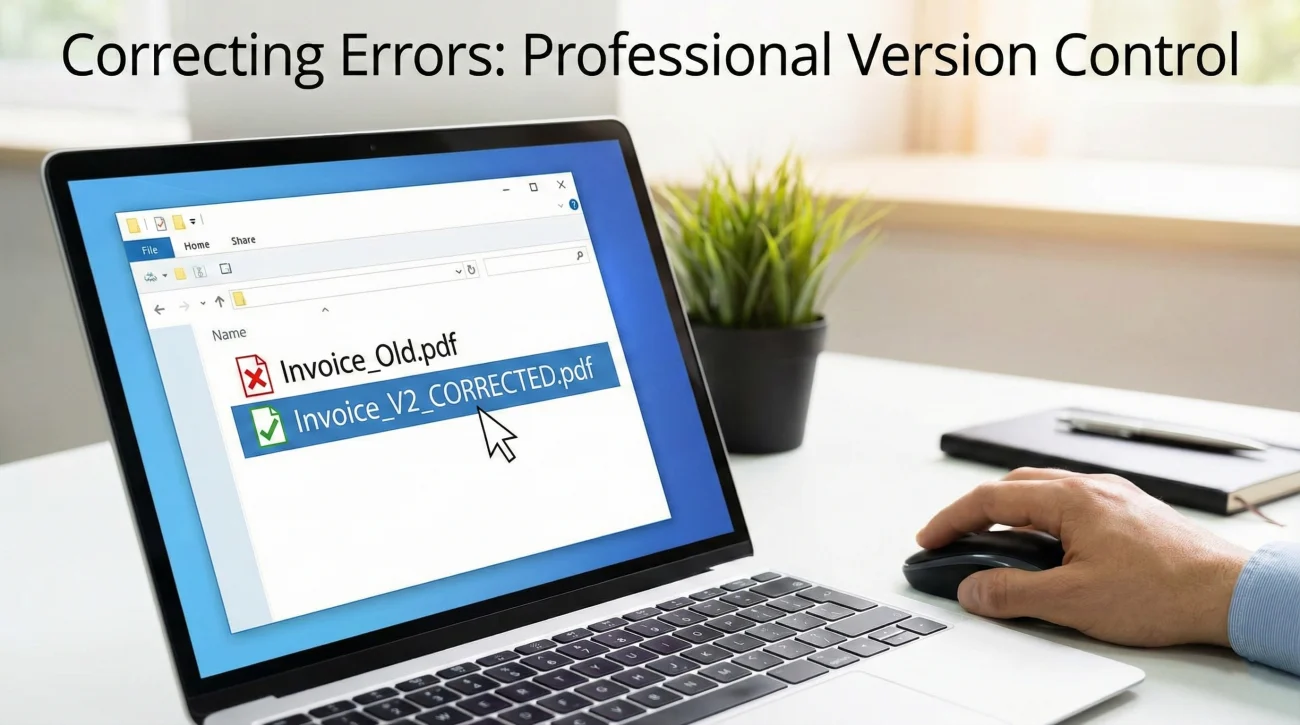
Patience over speed: While it is tempting to send a quick apology, I have found that waiting until the corrected document is fully ready prevents a confusing trail of multiple “oops” emails. Clear versioning is your best tool: By adding “V2” or “CORRECTED” to your filenames, you help the insurance intake system distinguish the new … Read more
Date of Loss Documentation: Why Inconsistent Dates Kill Claims

Date Of Loss Documentation

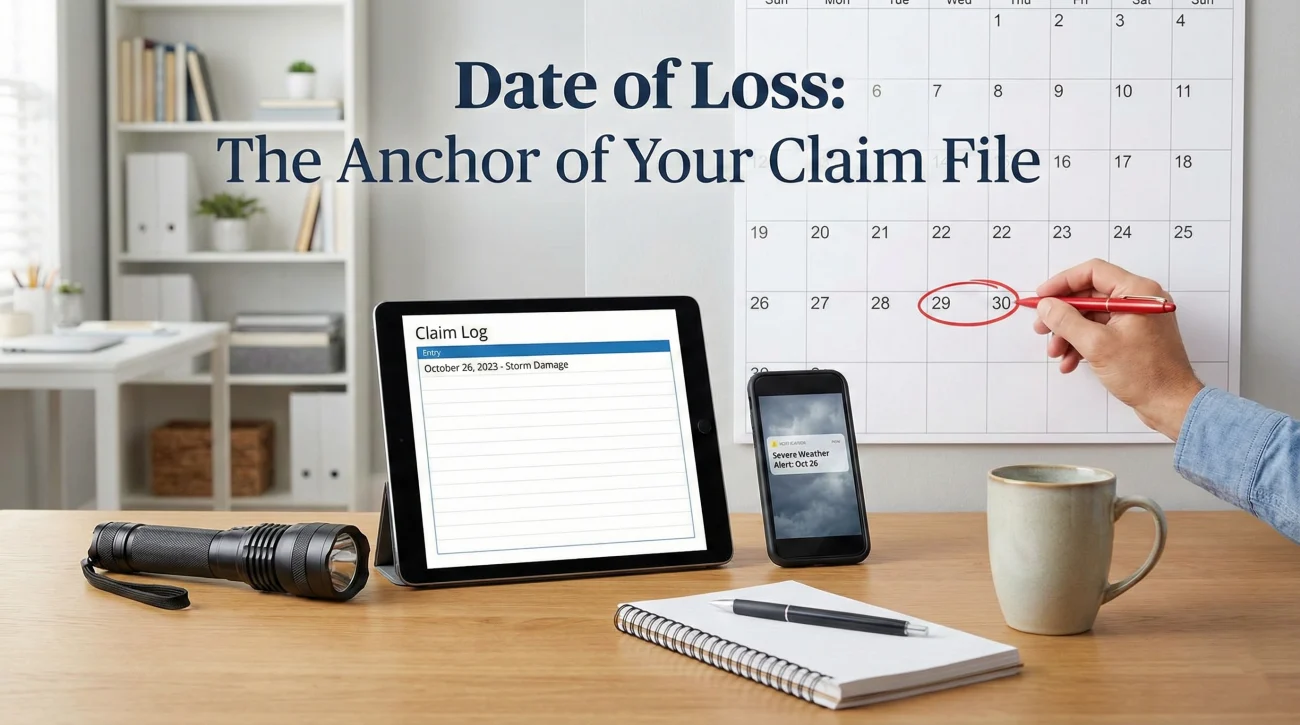
Your date of loss documentation is the chronological anchor for your entire claim file. Inconsistent dates across different documents are a primary cause of process delays. Always distinguish between the date the damage “occurred” and the date it was “discovered.” Documenting this difference clearly prevents confusion. Review every third-party document (contractor estimates, mitigation invoices) to … Read more

Insurance Evidence Master List: A Structure to Organize Your Proof

Evidence Checklist Structure

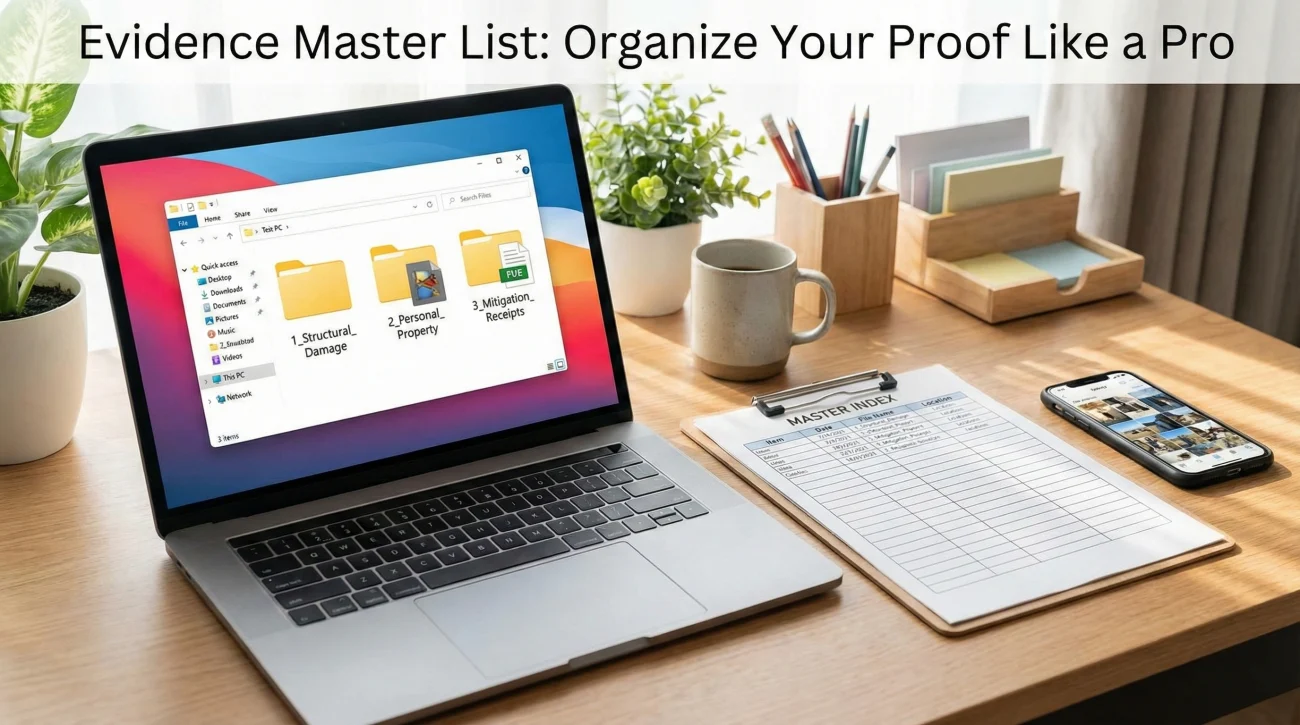
An unorganized dump of photos and receipts will almost always delay your review; you need a defined evidence checklist structure to act as a roadmap. Divide your proof into three core buckets: Structural Scene, Personal Property Inventory, and Financial Mitigation. Always keep original files untouched in a master folder and only share copies that have … Read more

Claim Consistency Check: Finding Contradictions in Your Evidence

Consistency Check For Claim Evidence

A claim consistency check is a self-audit you perform before submitting documents to ensure your dates, locations, and descriptions align perfectly across all files. Contradictions in evidence rarely indicate fraud, but they frequently trigger administrative delays because the reviewer cannot confidently map the damage. Reviewing your evidence helps clarify the record, making it easier for … Read more

Sworn Statement in Proof of Loss: A Guide to Avoiding Errors

Sworn Statement In Proof Of Loss

A sworn statement in proof of loss is a formal, notarized document that creates a locked-in record of your claim details at a specific point in time. Never cross out mistakes or use correction fluid on this form. Always request a clean, updated version in writing before you sign. Before visiting a notary, verify that … Read more

ALE Documentation: Organizing Receipts for Temporary Housing Claims

Ale Receipts And Documentation

Building a sustainable ALE (Additional Living Expenses) routine – like capturing receipts daily and logging them weekly – helps prevent your file from overwhelming the reviewer. A best practice is to write the context directly on the physical receipt (who, what, and why) before taking a photo. Avoid sending a disorganized pile of loose images. … Read more

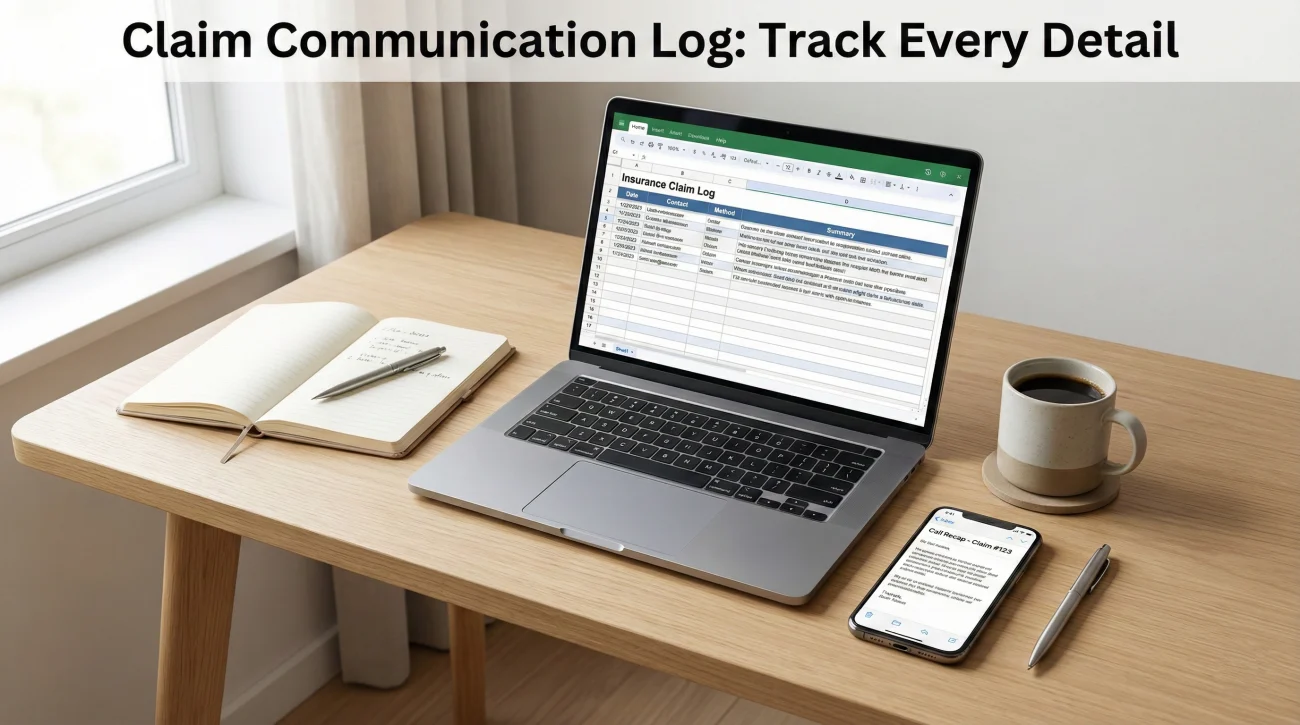
Claim Communication Log: How to Track Calls with Your Adjuster

Insurance Claim Communication Log

The “Phantom Promise”: Verbal promises that aren’t noted in the insurer’s system effectively never happened. Your log is the specific antidote to this. The 5-Minute Rule: Send a “Call Recap” email immediately after hanging up. It turns “he said/she said” into documented fact. Strategic Tone: We provide 3 email templates below – ranging from friendly … Read more

Claim Paperwork Timeline: What Documents to Expect on Day 1, 7, and 30

Insurance Claim Paperwork Timeline

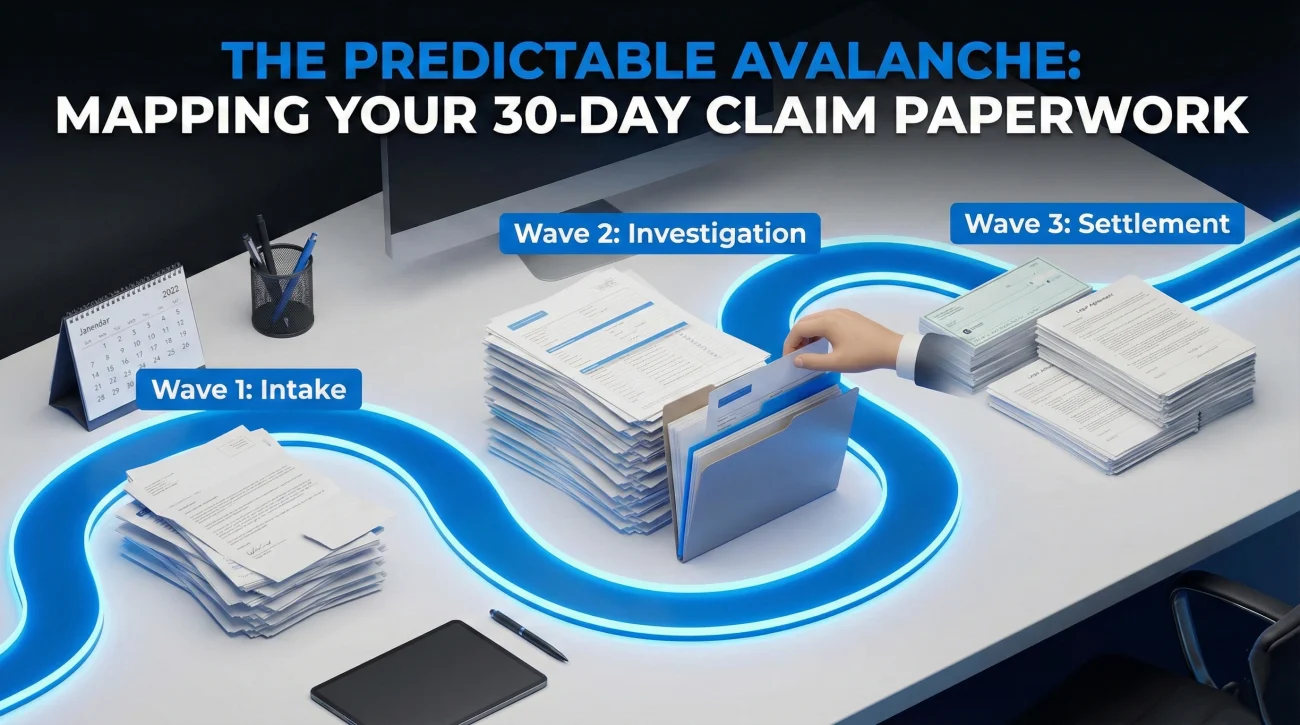
The Pattern: Paperwork is not random. It follows a predictable “Three Wave” cycle: Intake, Investigation, and Settlement. Day 1 to 3 (Intake): Expect administrative forms like Acknowledgement Letters and Privacy Notices. These confirm the claim is open. Day 7 to 14 (Investigation): This is when the heavy documents arrive, including the “Reservation of Rights” and … Read more