
- The Agent: Sales and support. They can escalate delays but rarely approve repairs.
- The Desk Adjuster: The decision maker. They review the file in the office and typically control the payments.
- The Field Adjuster: The inspector. They document the damage but often cannot make final coverage decisions on site.
- The Claims Rep: Admin support. Use them for updating contact info or uploading files, not for negotiation.
- The Strategy: Be cooperative with the Field Adjuster, but save your policy arguments for the Desk Adjuster.
The Confusion of the First 48 Hours
One of the most frustrating aspects of starting a claim is the sudden influx of new names and titles. Within 48 hours of filing a loss, you might receive emails from three different people. One says they are your “Claims Representative.” Another calls to schedule an inspection and says they are an “Independent Adjuster.” Meanwhile, you are texting your “Insurance Agent” asking why nothing is happening.
In my experience handling claims operations across major carriers, I see homeowners waste weeks of energy trying to negotiate with the wrong person. They spend hours convincing the field inspector to pay for the floor, not realizing the inspector rarely has the authority to write a check. Or they scream at the call center representative about coverage law, unaware that the rep is essentially a data entry clerk.
To navigate this system, you need to ignore the fancy job titles and look at one thing: Authority. You need to know who gathers the facts and who actually signs the release. Understanding the difference between agent vs adjuster vs claims rep is the first step to getting your file moving.
The Insurance Agent: Sales vs. Support
Your agent is likely the person you know best. You might have their cell phone number. You might buy them a Christmas card. Naturally, when your house floods, your first instinct is to call them and expect them to fix it.
However, there is a hard operational wall between “Sales” (the Agent) and “Claims” (the Adjuster). In many large carriers, your agent often has limited access to the claims system. They usually cannot approve a payment, they cannot overturn a denial, and they sometimes cannot even see the notes the adjuster is writing. I have seen clients get angry at their agents for “not fighting for them,” but the reality is the agent is often just as locked out of the technical process as you are.
This does not mean they are useless. A good agent is your “backchannel.” If the claims department ignores you for two weeks, your agent can sometimes send an internal email to a supervisor to nudge the file. Use them for escalation and pressure, but do not expect them to know the technical details of your repair estimate.
The Critical Split: Desk Adjuster vs. Field Adjuster
This is where 90% of the confusion happens. In the old days, one adjuster came to your house, looked at the damage, and wrote you a check on the hood of their car. That rarely happens anymore. The role has been split in two.
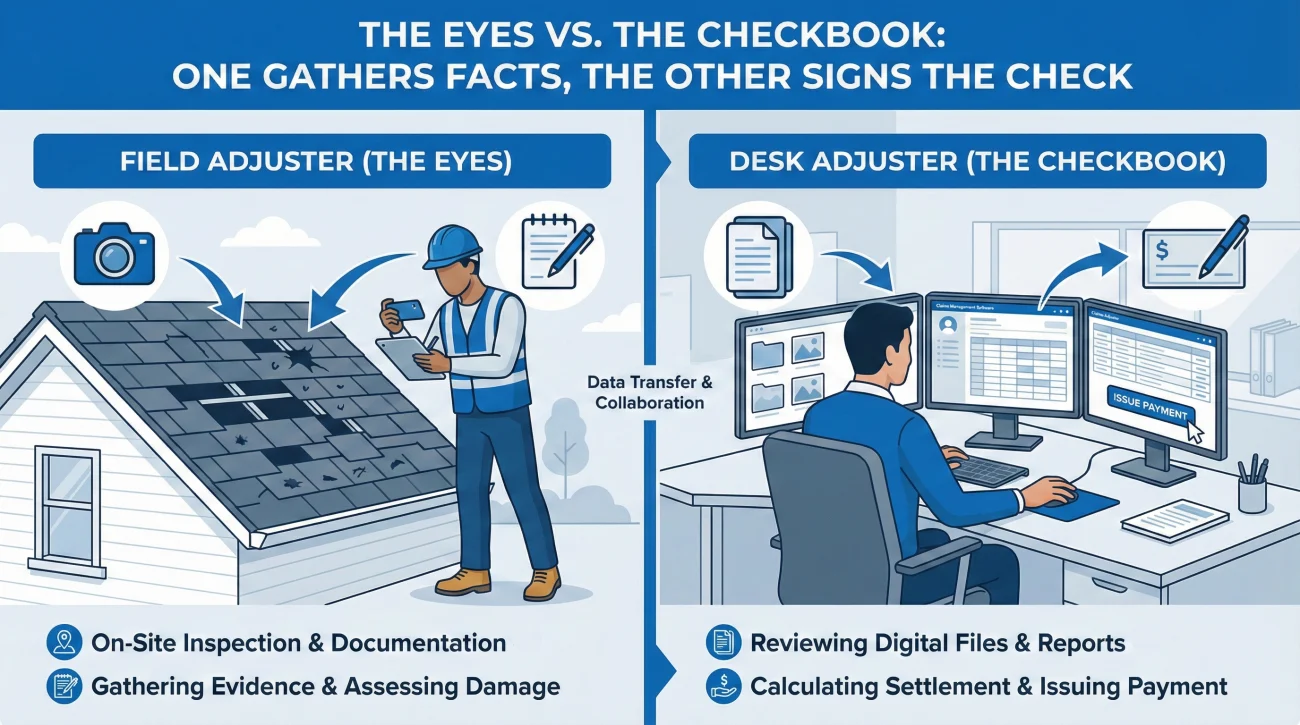
The Field Adjuster (The Eyes)
This is the person who knocks on your door. They climb the roof, measure the rooms, and take photos. They are often friendly and knowledgeable about construction. Crucially, they are often Independent Adjusters (IAs), meaning they don’t even work directly for your insurance company. They are contractors hired just to gather data.
I recall a file where the homeowner had a great rapport with the Field Adjuster. The adjuster stood in the kitchen and said, “Yeah, these cabinets definitely need to go.” The homeowner relaxed, thinking the claim was approved. Two weeks later, the denial letter arrived. The homeowner felt betrayed. But the Field Adjuster didn’t lie; they just didn’t have the final say. They submitted their report recommending replacement, but the person back at the office disagreed.
The Desk Adjuster (The Checkbook)
This person is often invisible. They sit in a cubicle hundreds of miles away. They review the photos and report sent by the Field Adjuster. They read your policy. And most importantly, they typically decide what gets paid.
Your negotiation is almost always with the Desk Adjuster, not the person inspecting your house. If you have evidence to submit or an argument to make about coverage, it must go to the Desk Adjuster. Sending it to the Field Adjuster after they have left your property is often a dead end because they have already closed their assignment and moved on to the next job.
The Claims Representative (Customer Service)
When you call the main 1-800 number, you are usually speaking to a Claims Representative (or CSR). These employees act as the front desk. They can tell you the status of a check, update your mailing address, or assign a new adjuster if yours quits.
Do not try to debate policy language with a Claims Rep. They work off scripts and cannot make coverage decisions. I often advise clients to use the Claims Rep strictly for administrative tasks. If you need to upload a document or get the email address of your Desk Adjuster, they are helpful. If you ask them “Why didn’t you pay for my fence?”, you are wasting your breath.
Operational Decision Guide: Who to Call
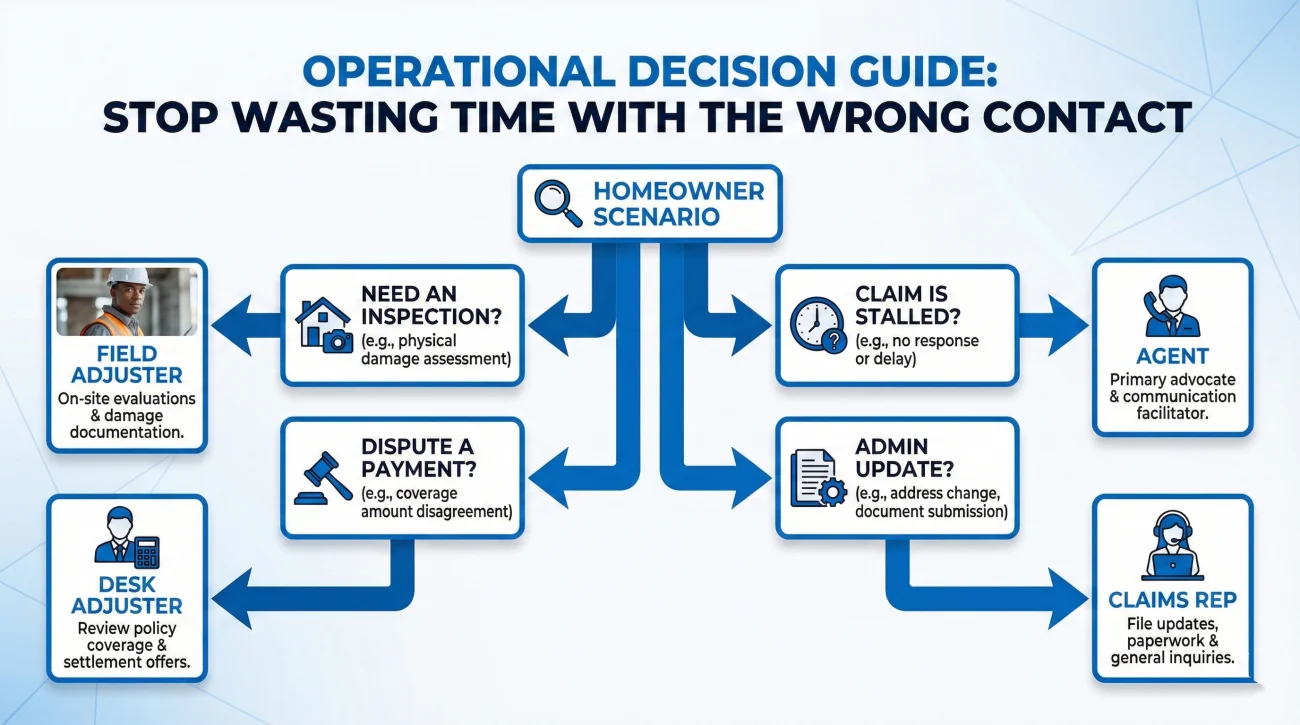
Knowing who to contact saves you hours of hold time. Here is the breakdown I use when managing claim files.
| If you need to… | Contact this person | Why? |
|---|---|---|
| Schedule the inspection | Field Adjuster | They manage their own calendar. The Desk Adjuster usually cannot schedule them for you. |
| Argue about price/scope | Desk Adjuster | They hold the authority to revise the estimate and issue supplemental payments. |
| Escalate a delay | Agent | They can use internal channels to ping a supervisor if the adjuster is ghosting you. |
| Update your email/phone | Claims Rep (1-800) | Fastest way to update admin data without distracting the decision makers. |
The “Independent” Confusion
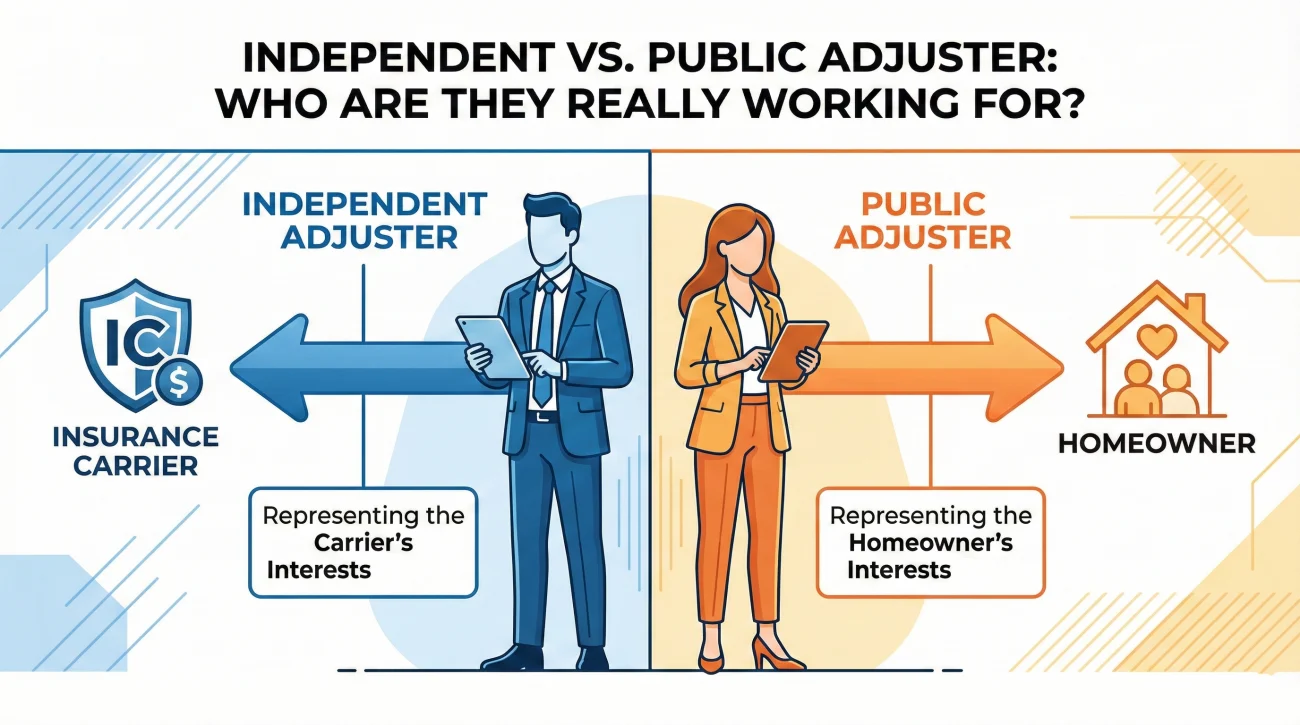
There is one more distinction that trips people up: the difference between an Independent Adjuster and a Public Adjuster. The names sound similar, but their loyalties are opposite.
An Independent Adjuster (IA) is hired by the insurance company. Even though they are “independent” (meaning they are freelancers or work for a third-party firm), their paycheck comes from the carrier. They represent the carrier’s interests, not yours.
A Public Adjuster (PA) is hired by you. You sign a contract with them, and they take a percentage of your final settlement fee. They represent your interests. Never assume an adjuster is “on your side” just because they have the word “Independent” on their business card.
How to Talk to the Desk Adjuster
Since the Desk Adjuster is the decision-maker, your communication with them matters most. But because they are overworked and office-bound, they are hard to reach. I have found that email is significantly more effective than phone calls for this role.
When you email them, structure your message like a business proposal, not a complaint. Instead of asking “What is happening?”, refer to specific documents. For example, “Attached is the invoice for the emergency plumbing. Please confirm if this has been approved.” This forces a binary yes/no decision, which is easier for a busy Desk Adjuster to process than a vague request.
This approach aligns with the broader strategy of knowing how to file a property insurance claim efficiently. The more you treat your claim like a project management task rather than a personal grievance, the faster these roles will respond to you.
Final
The insurance machine is built on specialization. The person selling the policy does not read the policy. The person inspecting the roof does not write the check. And the person answering the phone does not decide coverage. By identifying who is who early in the process, you stop shouting into the void and start directing your evidence to the one person who actually has the power to pay you: the Desk Adjuster.
❓ FAQ
📞 Can my insurance agent override a denial?
No. Agents generally do not have claims authority. However, they can ask a Claims Manager to review the file again to ensure the denial was procedurally correct.
👷 Is the field adjuster the same as the desk adjuster?
Rarely. In most modern claims, the Field Adjuster gathers the facts (photos/measurements) and the Desk Adjuster applies the policy and issues the payment. You usually negotiate with the Desk Adjuster.
🤝 Who does the Independent Adjuster work for?
They work for the insurance company. Even though they are contractors, their job is to inspect the loss on behalf of the carrier. They do not represent you.
📧 Why won’t my adjuster answer my phone calls?
Desk adjusters often manage a high volume of files at once. They prioritize emails because it is faster. Try sending a clear, bulleted email with your claim number in the subject line for a faster response.
🔄 Can I request a new adjuster if I don’t like mine?
Yes, but you need a valid reason (like unresponsiveness or unprofessionalism), not just because you disagree with their price. Call the Claims Representative (customer service) to ask for a supervisor to discuss reassignment.
📝 Does the Claims Rep handle my evidence?
They can upload it to the system, but they don’t review it. If you send photos to the general claims email, the Rep files them. You still need to alert your Desk Adjuster that the new evidence is there.
🏚️ Do I have to use the adjuster’s contractor?
No. You have the right to hire your own contractor. The adjuster might recommend a “preferred vendor,” but the choice is yours. Just ensure your contractor’s scope aligns with the adjuster’s scope.
⚖️ What is a Public Adjuster?
A Public Adjuster is a licensed professional you hire to represent you. They handle the negotiation and paperwork in exchange for a percentage of the final claim settlement.
💼 Who writes the final check?
The Desk Adjuster (or their supervisor for large amounts). The Field Adjuster almost never carries checks anymore.
🗣️ Should I give a recorded statement to the Claims Rep?
Be cautious. You are required to cooperate, but you should stick to the facts. It is often better to ask to schedule the statement for a later time so you can prepare your notes first.
⚠️ Disclaimer: PropertyClaimChecklist.com provides practical guidance, process checklists, and example follow-ups to help you organize a property claim and move it forward. It is not policy language, claim documentation, legal content, or a substitute for your insurer's instructions. Always rely on your carrier's requirements and your actual policy terms for what must be submitted and how decisions are made.