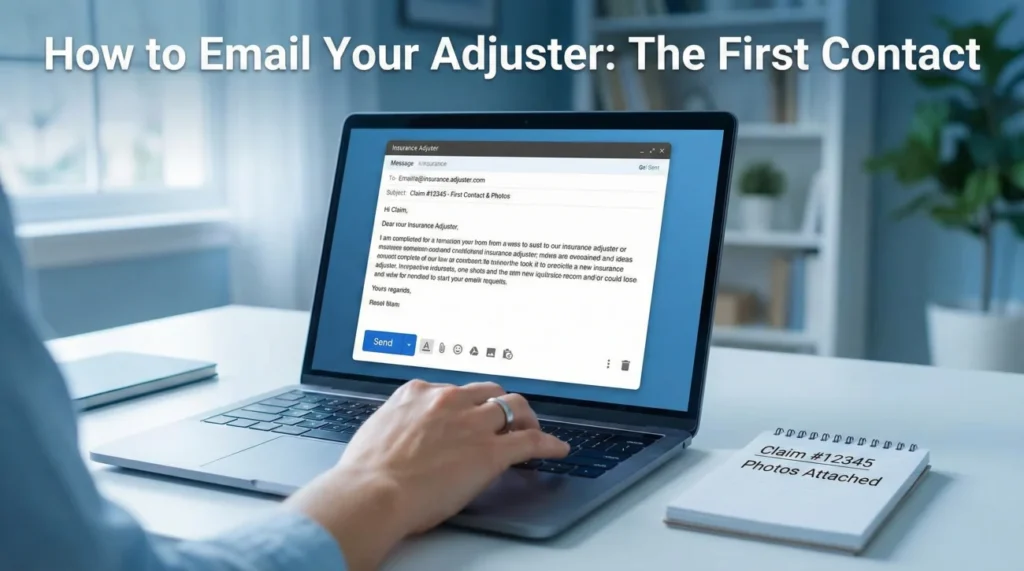
- The first email you send is the formal opening of your claim record. A clean, organized message helps prevent your file from getting lost in a crowded inbox.
- Lead with your claim number, stick to observable facts, and list your mitigation actions to make your file easy to process.
- Close with tactical questions that require the adjuster to reply with specific names, dates, and next steps in writing.
- Keep your tone neutral and descriptive to avoid red flags that may needlessly delay your file for manual review.
Getting Your Claim Noticed in a Crowded Inbox
When your home is damaged, the first 48 hours are usually a blur of phone calls and emergency cleanup. It feels like a massive relief to finally hit “send” on that initial email to the insurance company, and you naturally assume the process will now move forward automatically.
However, having worked in claims operations, I often see policyholders accidentally stall their own recovery right at the starting line simply because their message was hard to process. When an email is vague or bogged down in emotional storytelling, it does not move the needle.
By taking ten minutes to structure your email correctly today, you can establish a clean record and save yourself days of silence later.
The Adjuster’s Perspective: The Inbox Triage
To write an effective message, it helps to understand the reality on the other side of the screen. A typical desk adjuster manages a heavy volume of active claims. When they open an email in the morning, they are usually looking for three specific data points: Who is this? What happened? What do I need to do right now?
If they have to search their system just to figure out which policy belongs to your email address, your file is already delayed. Emails that provide a clear path to the next milestone are simply easier to handle, meaning they often get processed faster.
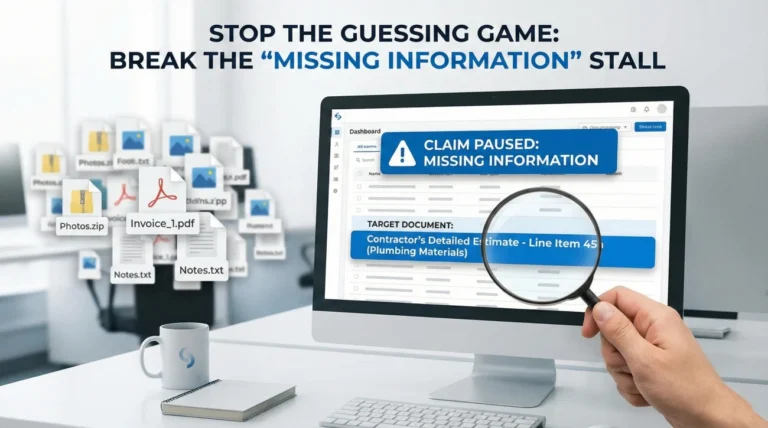
Field Note: A common pattern that slows down new claims is the “information dump.” Sending fifty unorganized photos along with a long, angry paragraph about the weather often causes a file to be set aside for a later, deeper review. Files that present a few clear facts and a specific question are much easier to process quickly.
The Anchor: Claim Numbers and Subject Line Hygiene
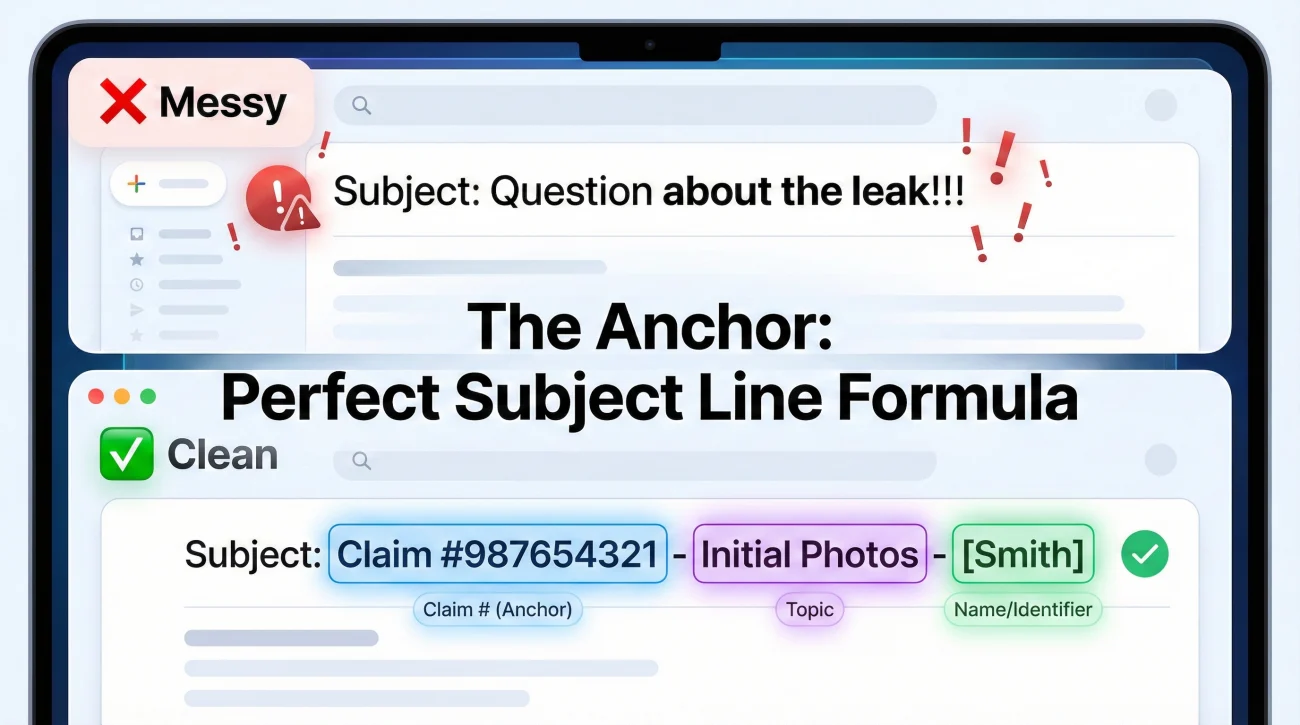
The insurance company identifies your home as a claim number, not a person. This number is the anchor of your entire file. It must be prominent and consistent. If you have not been assigned a claim number yet, your policy number and the date of loss serve as your temporary anchor.
Putting the claim number first ensures anyone monitoring the inbox can instantly identify where the data belongs. This small habit helps prevent your information from sitting in an “unassigned” folder. It also means if your adjuster is out sick, a supervisor can still find your update immediately.
The Core: Reporting Observable Facts
When you write out what happened, stick to neutral, observable facts. A common mistake is trying to diagnose the cause of the damage before a professional has even inspected it. For example, saying “My old roof finally gave out” is a diagnosis. Saying “I discovered water dripping from the living room ceiling” is an observable fact.
Diagnosing it yourself can unintentionally categorize your claim incorrectly in the system. Focus on what you see, hear, and smell. Let the physical evidence do the talking. This keeps your property claim documents checklist clean and factual from day one.
💡 Pro Tip: Use “Discovery Time” instead of “Damage Time.” Unless you were standing in the room when the pipe burst, you don’t know exactly when it happened. Stating “I discovered the damage at 2:00 PM today” is accurate and prevents contradictions if the leak turns out to be older than it looked.
The First Contact Packet: Attachment Strategy
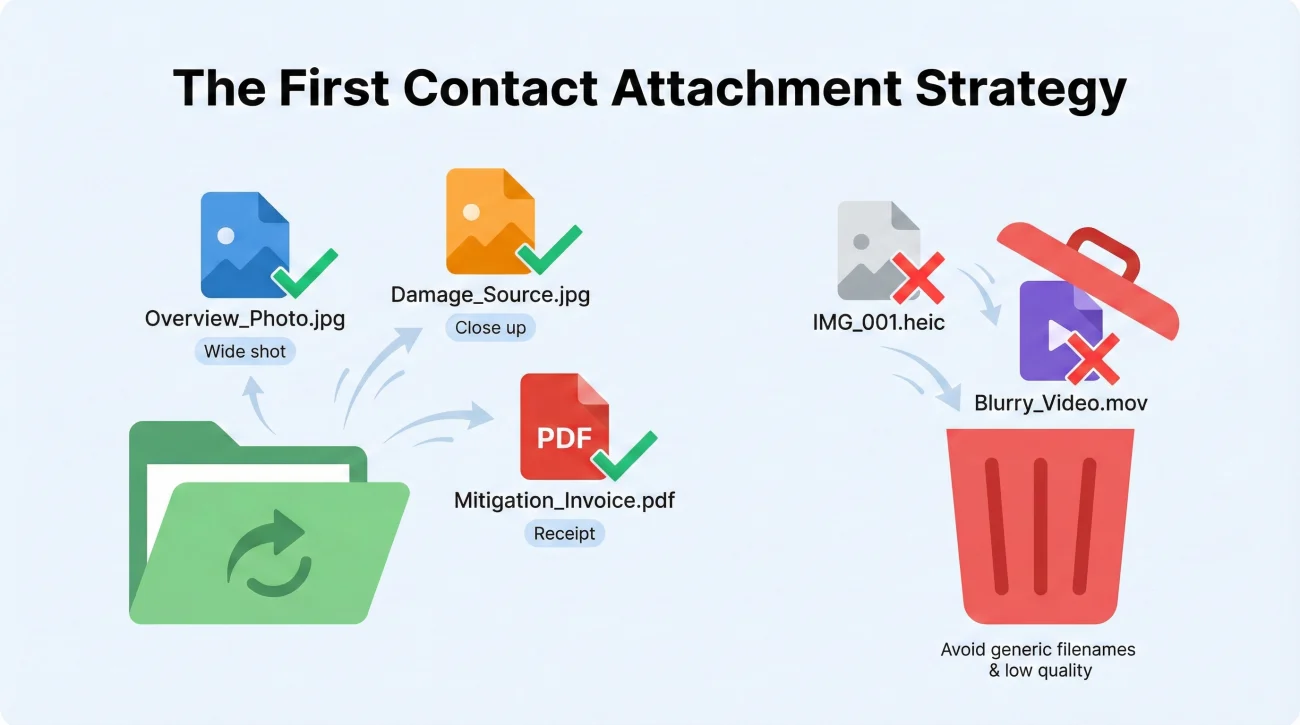
Your first email needs a small, high-impact set of attachments. Sending dozens of unorganized photos might overwhelm the system or cause the email to bounce entirely. Just send enough proof to help them understand the scale of the event.
| Attachment Type | Operational Purpose | What to Include |
|---|---|---|
| Overview Photos | Spatial Orientation | 2 to 3 wide shots of the room to show the scale of the area. |
| Close-up of Source | Supports Review | 1 to 2 photos of the failure point (e.g., a broken pipe or window). |
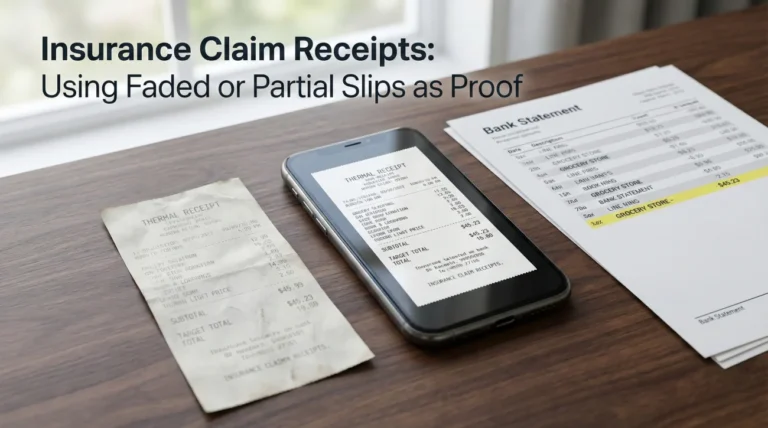
| Mitigation Receipts | Expense Tracking | PDFs of plumber invoices or emergency tarping services. |
| Communication Log | Process Continuity | A copy of your initial call notes or your claim number assignment. |
How you name your files matters, too. “Overview_Kitchen_Floor.jpg” is incredibly helpful. “IMG_9921.heic” is not. When a reviewer can tell what a photo shows without opening it, your claim becomes much easier to process.
The Formula: 5 Questions That Require a Next Step
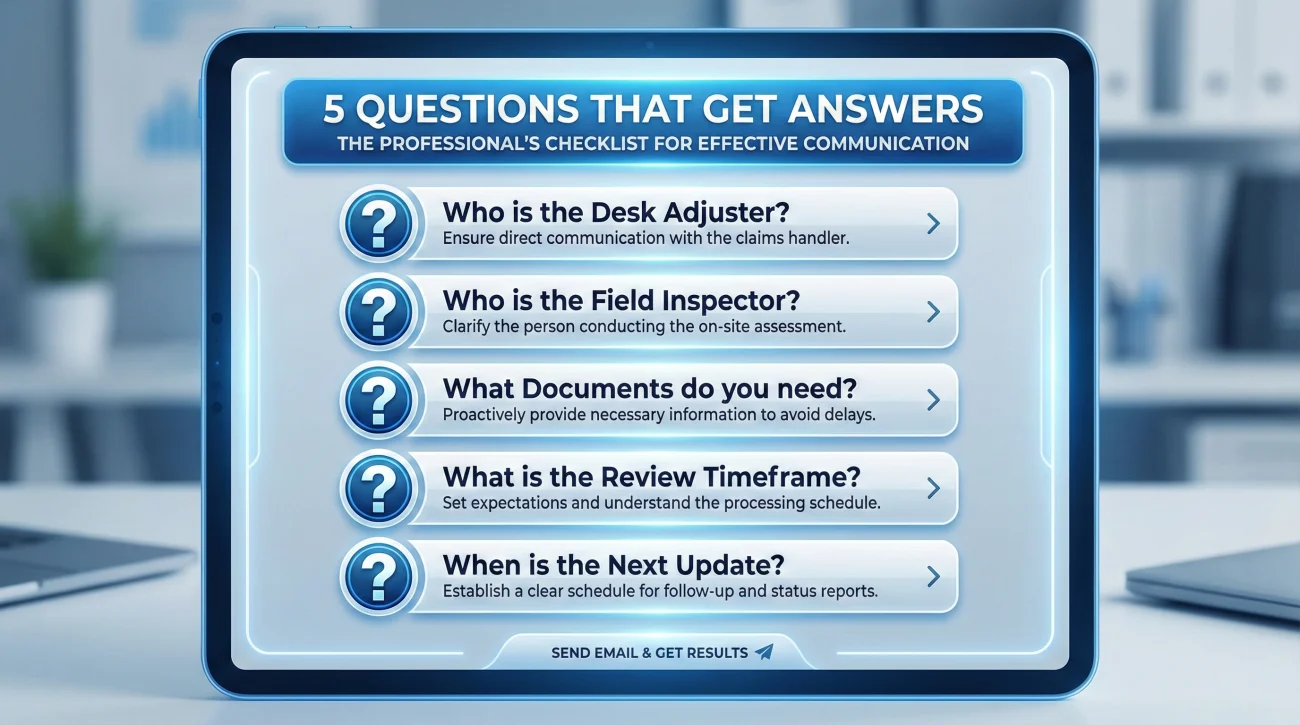
The way you end your email dictates what happens next. If you just say “Thanks for your help,” you might get a generic “We are working on it” reply. To get a real timeline, ask questions that require specific answers.
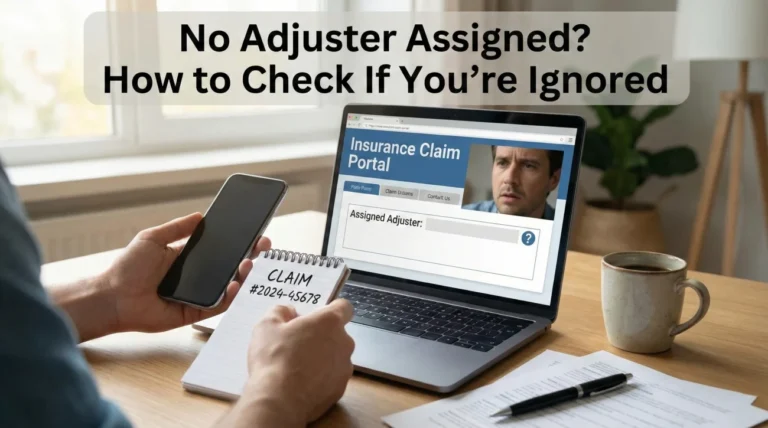
1. Who is the specific desk adjuster making coverage decisions on this file, and what is their direct contact info?
2. Has a field inspector been assigned? If so, what is their name and confirmed arrival date?
3. Could you provide a written checklist of the specific documents or forms you require from me this week?
4. What is the current estimated timeframe for your review of the photos and receipts I have attached?
5. On what date should I expect a written summary of the next steps if I do not hear from you first?
These questions do not ask for favors; they ask for administrative facts. You are establishing a professional boundary that shows you are ready to cooperate, but you also expect accountability.
[Action] + [What you need in writing] + [Confirmation request]
A Real-World Example: The Storm Response
Let’s look at how this works after a major storm. When hundreds of claims hit the system at once, being “just another caller” almost guarantees a long wait.
Instead of leaving a panicked voicemail, an organized homeowner sends a clean email within hours of discovering a roof leak. They use the subject line: “Claim #12345 – Storm Damage Overview – [Name].”
They keep the body simple: “I discovered water in the upstairs bedroom following the storm. I have moved the furniture and placed a tarp.” They attach three clear photos and a PDF of the tarping receipt, then close with the 5 tactical questions.
Because this email gives the intake team exactly what they need to categorize the loss, a field inspector can often be assigned much faster. While others might still be waiting on hold just to get a claim number, this homeowner has a much better chance of getting an inspection date confirmed in writing.
Common Pitfalls That Trigger Delays
Even with the best intentions, people often make mistakes that get their files flagged for manual review, which can slow down the entire process.
- ❌ Sending Blank Emails with Attachments: Never send photos without a written message. Security filters often flag empty emails with attachments as spam, or adjusters may ignore them because they lack context.
- ❌ CC’ing Your Attorney Too Early: Unless you have already officially retained them, copying a lawyer on your first email often triggers a defensive response. It may move your file to a “legal review” desk, which can move much slower.
- ❌ Apologizing for the Condition of the House: Phrases like “I’m sorry it’s messy” or “I should have cleaned those gutters” can be read as admissions of poor maintenance. Stay neutral. The damage is just a fact.
- ❌ Demanding a Specific Payout Amount: The first email is about starting the process, not the final settlement. Asking “When will I get my $5,000?” before anyone has even inspected the property signals that you do not understand how claims work, which can invite more scrutiny.
The Anatomy of a Professional Message
When you put all these pieces together, this is what a clean, actionable first contact looks like. If you need a first insurance claim email template, use this layout as your starting point to build a message that perfectly fits your situation.
Subject: Claim #[Claim Number] – Initial Damage Overview – [Your Name]
Hello [Name of Adjuster or Claims Dept],
I am providing the initial documentation for claim #[Number], regarding the loss discovered on [Date].
Upon returning to the property, I discovered water on the kitchen floor. The moisture appears to be originating from behind the dishwasher. To prevent further damage, I have shut off the water valve and removed standing water. Attached is the initial invoice for emergency services performed by [Company].
I have attached 5 photos providing an overview of the room and the source failure for your review.
Before we proceed with the field inspection, I have a few specific questions regarding the next steps:
[Insert the 5 tactical questions here]
I look forward to your written response confirmed via email.
Thank you,
[Your Name]
[Phone Number]
Setting the Tone for Your Recovery
The first message you send sets the tone for your entire claim. If it is scattered, your file may get treated as a low priority. If it is structured and factual, you establish yourself as a professional partner in the process.
Remember, you are building a permanent record. Every word in that inbox can be referenced months later if there is a dispute. Keep the emotion out of it, anchor the message with your claim number, and ask for next steps in writing.
Once you hit send, wait for them to confirm receipt. If you don’t hear back within 1 to 2 business days, you now have a perfectly documented starting point for your first follow-up.
❓ FAQ
📧 What is the absolute most important part of my first email?
The claim number in the subject line. Without it, your email is just “noise” in a crowded inbox. It allows the system to instantly route your message to the correct adjuster’s desk.
📸 Should I send every photo I took in the first message?
No. Send only 5 to 7 high-impact overview photos. Large attachments can cause emails to fail, and the adjuster only needs a general sense of the damage to schedule the next step.
📅 How long should I wait for a reply to my first email?
In a normal environment, expect a confirmation of receipt within 1 to 2 business days. If there has been a major regional storm, this may extend slightly, but a follow-up is warranted after two business days.
📝 What if I don’t have a claim number yet?
Use your full policy number and the date of loss in the subject line. As soon as you are assigned a claim number, start using it exclusively in all future communications.
🛑 Should I mention that I’m worried about my coverage limits?
No. Do not volunteer theories or worries about coverage in the first contact. Stick to the physical facts of what you see. Coverage discussions happen after the official inspection.
👨💼 Should I CC my local insurance agent on the first message?
It can help keep your local agent in the loop, but remember that the primary conversation must stay with the claims department, as local agents usually do not process the actual estimates.
📎 What is the best way to name my email attachments?
Use simple, descriptive names like “Kitchen_Floor_Damage” or “Plumber_Invoice_Oct12.” Avoid long strings of numbers or generic file names generated by your phone.
📄 Do I need to attach a copy of my policy to the email?
No. The insurance company already has your policy on file. Attaching it only makes the email larger and more difficult for the system to process.
🗣️ Can I send a voice note instead of typing a message?
Text is the primary language of claims operations because it is searchable and easy to log. Use voice notes only as a supplement, never as the sole method for communicating important facts.
📥 What if they don’t reply to my 5 tactical questions?
Send a follow-up email after two business days referencing the date of your first message, and politely restate that you are waiting for those specific names and dates to move the process forward.
⚠️ Disclaimer: PropertyClaimChecklist.com provides practical guidance, process checklists, and example follow-ups to help you organize a property claim and move it forward. It is not policy language, claim documentation, legal content, or a substitute for your insurer's instructions. Always rely on your carrier's requirements and your actual policy terms for what must be submitted and how decisions are made.