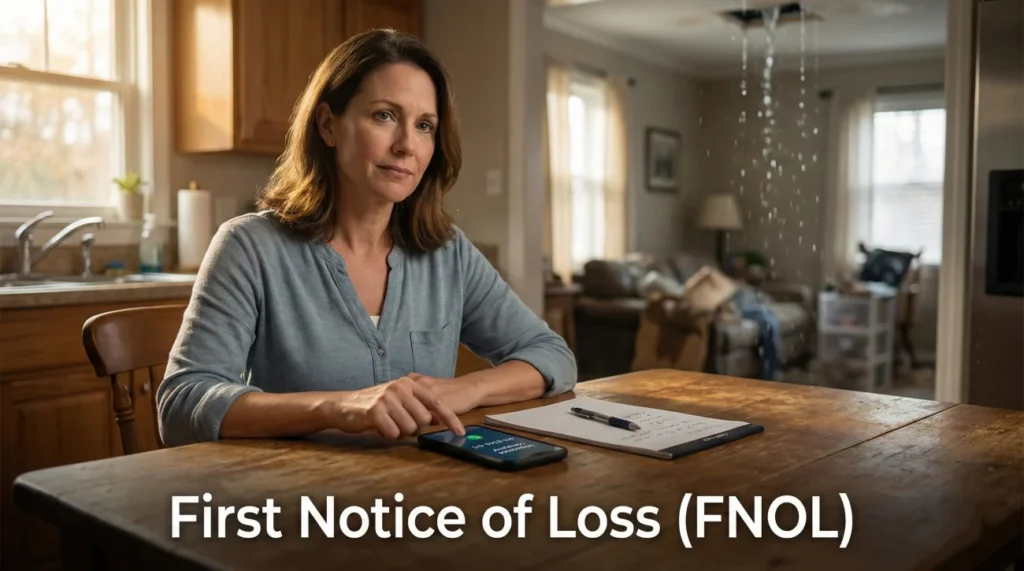
- Your First Notice of Loss (FNOL) sets the factual foundation for your entire claim. Do not guess the cause of the damage. Use your discovery time and stick strictly to observable facts.
- Gather your core details before dialing: Date of discovery, exact location of damage, current property status, and a list of affected rooms.
- Understand who is answering the phone. Intake representatives are usually data entry specialists using drop-down menus, not the adjusters who will estimate your repairs.
- Practice “fact hygiene” to avoid contradictions later. Stress can make us over-explain, and a simple guess about how long a pipe was leaking may trigger a specialized coverage review.
The Silence After a Bad Intake Call
In my years of working in claims operations, the most heartbreaking delays I see rarely come from a lack of damage evidence. They almost always trace back to a panicked, five-minute phone call made on day one. A homeowner discovers water pouring through their ceiling, dials the insurance company, answers a flurry of questions in a rush, and gets a claim number. Weeks later, they find out their estimate is paused.
Why? Because something they guessed during that initial call does not match the field inspector’s physical report.
When you are staring at a flooded floor or a broken window, it is completely normal to feel scattered. But this initial report is known in the industry as the First Notice of Loss (FNOL), and it sets the factual foundation for your entire claim file. The words you say and the dates you provide are typed into a system log. Taking just a few deep breaths and organizing your thoughts before making that call is the best way to protect yourself. I want to walk you through the exact checklist of facts I wish every policyholder had in front of them before they ever picked up the phone.
The “Day 1” Fact Checklist
When an intake file lands on my desk, I am looking for clean, undeniable data points. Having this information on a piece of paper prevents you from freezing up or giving inaccurate information under pressure. Write down these five core fields before you dial.
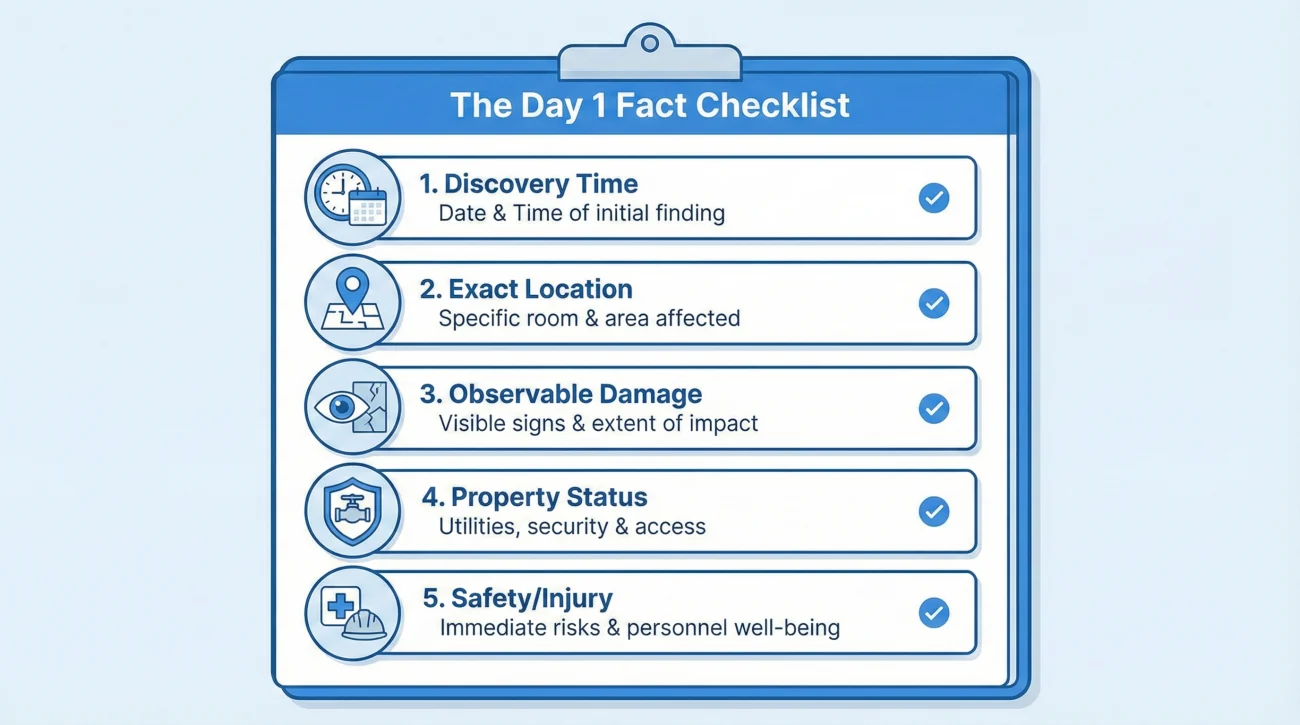
1. Date and Time of Discovery
You will be asked when the damage occurred. Often, you simply do not know exactly when a pipe started leaking inside a wall. Be precise about your discovery instead. Write down the exact date and the approximate time you noticed the issue. Distinguishing between when it happened and when you found it is a critical detail that keeps your story factual.
2. Exact Location of Damage
Avoid broad statements like “the whole house is ruined.” List the specific rooms that are currently affected. For example, note “the master bathroom, the hallway, and the ceiling of the living room directly below.” Listing specific rooms helps the intake team categorize the initial severity correctly.
3. Type of Damage (Observable)
Stick to the basic categories of what you can actually see with your own eyes. Is it water, smoke, fire, wind, or impact damage? Write down a one-sentence description of the physical reality, like “There is standing water on the hardwood floors.”
4. Current Property Status
The system needs to record if the emergency is ongoing or if the property is secure. Write down the current status, such as “The main water valve has been shut off.” Intake teams look for this detail to decide if they should dispatch an emergency mitigation crew immediately.
5. Injuries or Habitability
Let them know if anyone is hurt and if the home is safe to sleep in. If you have no power or heavy smoke odor, state clearly that the home is currently uninhabitable. This might initiate the process for temporary housing assistance, commonly called Additional Living Expenses. Always ask the representative exactly what receipts or documentation they need before you spend money on a hotel.
Choosing Your Channel: Portal vs. Phone
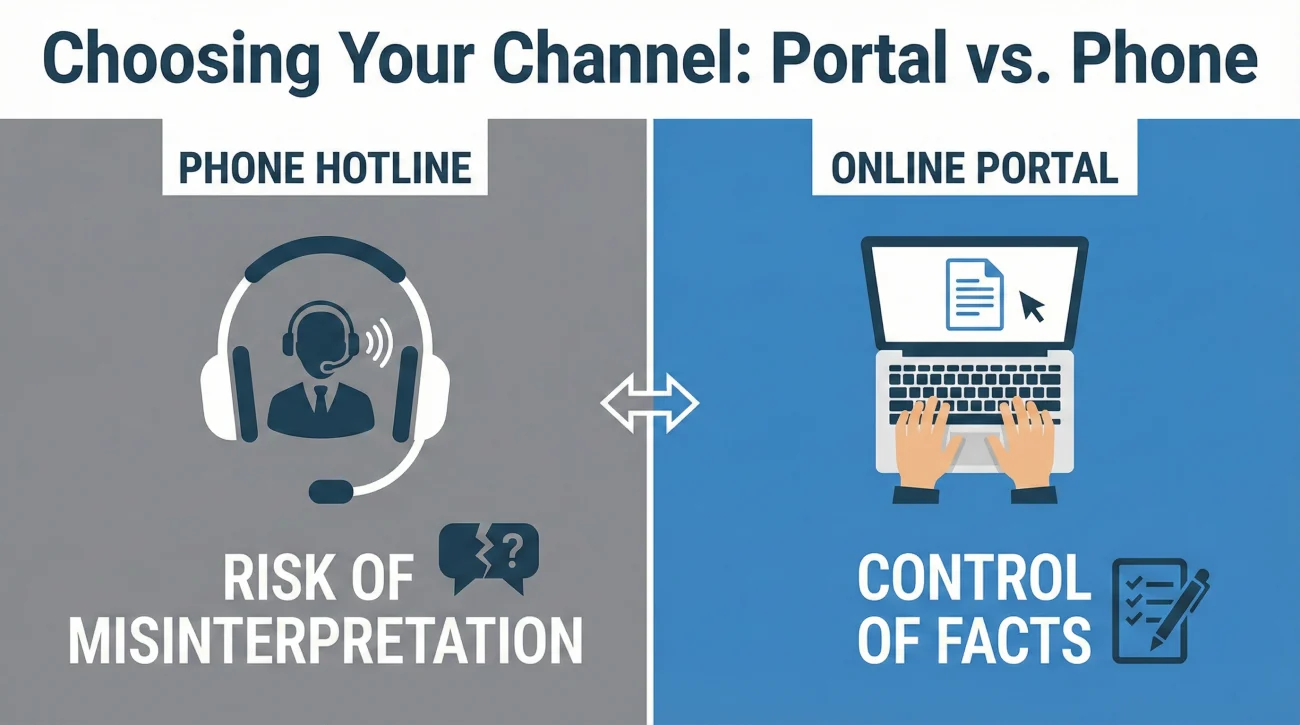
I am frequently asked if it is better to file the initial claim through an online portal or by calling the 24-hour hotline. From a purely operational standpoint, I often recommend using the digital portal if your situation is stable. It gives you incredible control over your FNOL. You can type your observable facts exactly as you wrote them on your checklist, completely removing the risk of a call center representative summarizing or misinterpreting your statements.
However, if it is an active emergency and you need immediate vendor dispatch for something like water extraction, calling the hotline is usually faster. Whichever method you choose, keeping your prepared notes nearby is essential.
Fact Hygiene and the Data Entry Reality
To understand why a written checklist matters, it helps to know who is on the other end of the phone. When you call the claims hotline, you are almost never speaking to a desk adjuster. You are usually speaking to a third-party call center employee or an intake specialist.
Their job is data entry. They look at a computer screen with drop-down menus and blank text boxes. Because they move quickly through a required script, they have to summarize what you say to fit into those boxes. If you give vague or overly detailed answers mixed with guesses, their summary might alter the context of your situation.
“Fact hygiene” means stripping away all emotions, assumptions, and theories from your report. You only report what you see, what you smell, and what you hear. You never report what you “think” caused the issue.
Field Note: In daily operations, one of the most common reasons a file gets flagged for a deeper investigation is an initial FNOL summary that contradicts a later field inspection. If the intake notes say “Roof has been leaking for a month” because the caller guessed under pressure, but the policyholder later claims it happened during yesterday’s storm, it can easily trigger a pause on the estimate in many workflows. Always get your facts straight.
Red Flag Words to Avoid
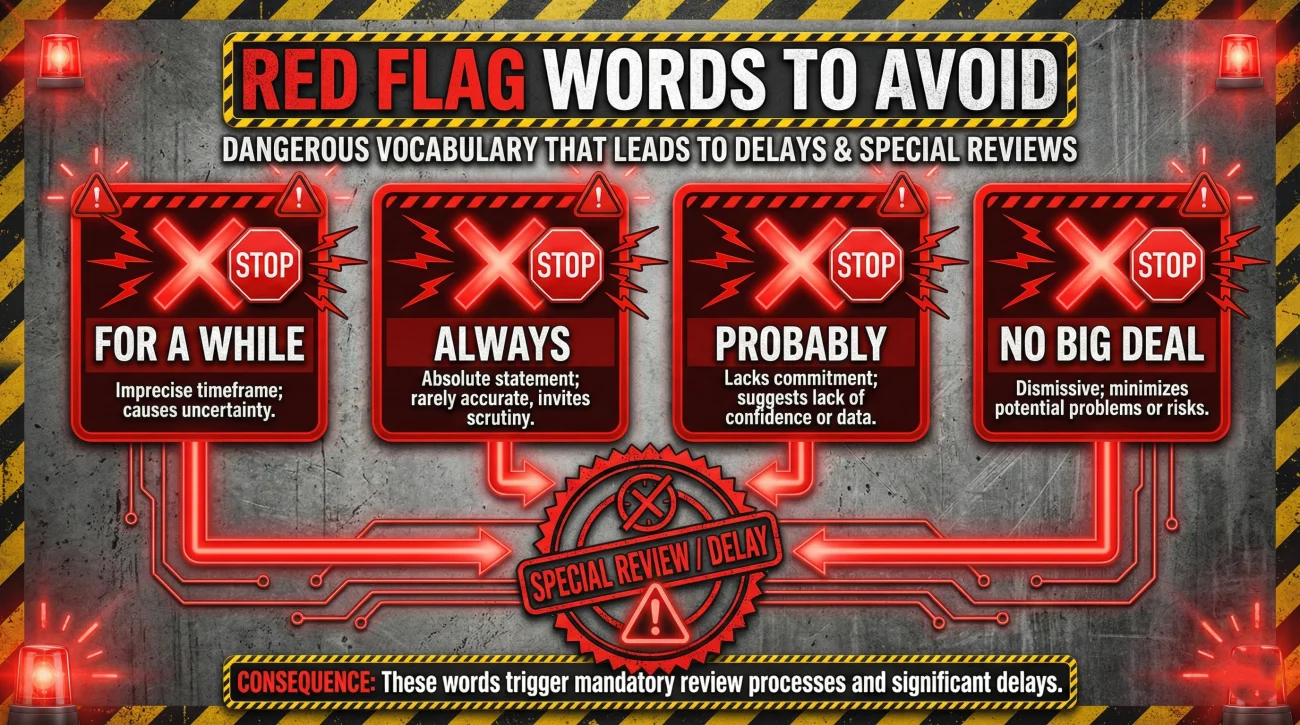
Certain phrases can act like tripwires in a claims system. Depending on the workflow, when an intake representative types these words into their summary, it might route your file to a specialized review desk. Here is what I highly recommend avoiding during your initial report.
- ❌ “For a while”: Saying “I think it has been leaking for a while” implies a long-term maintenance issue rather than a sudden loss. If you just found it, simply state the discovery time.
- ❌ “Always”: Saying “That window always leaks a little during big storms” can be interpreted as a known, ongoing issue that you failed to mitigate prior to this major event.
- ❌ “Probably”: Saying “It was probably the wind that knocked the pipe loose” introduces a theory you cannot prove. Stick to the facts you can see.
- ❌ Minimizing the damage: Saying “It is just a little water, no big deal” just because you want to sound calm. The system records this. Later, when you realize the water ruined your subfloor, the initial “no big deal” note creates an annoying contradiction.
A Real-World Call Breakdown
Let me show you what a perfect intake report looks like from my side of the screen. I once reviewed a file for a flooded laundry room that moved through the system flawlessly. The homeowner did not panic. They turned off the valve, sat down, and used clean dialogue based entirely on observable facts.
When did this happen?
I discovered the water today, October 12th, at 5:30 PM when I returned from work.
Notice that they used the word “discovered.” They did not try to guess the exact start time of the leak while they were at the office.
What caused the damage?
There is water pooling around the washing machine base, but I cannot see the exact broken part.
Here, the homeowner stated the observable location without diagnosing the plumbing failure. They left the diagnostics to the professionals.
Where is the damage located and is it still active?
The laundry room floor is covered in water, and the carpet in the adjacent hallway is soaked. I have successfully turned off the water supply valve behind the machine.
This final answer defined the clear perimeter of the loss and confirmed the property was currently secure, giving the intake team exactly what they needed to proceed.
Linking Intake to Your Master Evidence
The facts you establish during this phone call will serve as the opening chapter of your official claim documentation. When an assigned desk adjuster like me eventually reviews your full file, we naturally compare your initial FNOL report against your photos and written timelines.
If your intake facts are clean, they seamlessly integrate into your master proof of loss playbook. You will not have to spend time explaining why the call center representative wrote down a confusing date or a wrong cause of loss. Consistency from day one is your most powerful tool for reducing delays.
Securing the Record
After you complete the FNOL, the representative will give you a claim number. Write this number down immediately, as it becomes the main identifier for your home.
Do not simply trust that the representative typed your facts perfectly. It is always a smart operational habit to request a written copy of the intake summary. You can easily send a short message through your portal to secure this paper trail.
[Action] + [What you need in writing] + [Confirmation request]
Subject: Request for FNOL Summary Document – Claim [Your Claim Number]
Hello,
I recently filed my initial claim report and received my claim number. To ensure my personal records are accurate and aligned with your system, could you please provide a written copy or PDF export of the First Notice of Loss (FNOL) summary notes generated during my intake?
Please let me know when I can expect the document.
Thank you,
[Your Name]
Final
I know that when your home is damaged, your only goal is to get someone out there to fix it as fast as possible. However, filing your First Notice of Loss requires you to step back and report the situation objectively. By preparing a checklist of observable facts, you remove the emotion and the guesswork from a stressful moment. You give the intake system exactly what it needs to route your file correctly.
Remember that the person on the other end of the phone is typing your words into a permanent record. Speak slowly, avoid theories, and practice strict fact hygiene. If you do not know the answer to a question, saying that you have only just discovered the damage is a perfectly safe and honest response.
Once you have your claim number and your intake facts recorded, you have successfully completed day one. You can now shift your focus toward securing your property and building your comprehensive evidence file.
❓ FAQ
📞 Do I have to call the insurance company immediately?
You must report the loss promptly, but taking 10 to 15 minutes to secure your safety, stop a leak, and write down your observable facts before dialing is always the smartest approach.
📅 What if I don’t know the exact date the damage started?
Provide the exact date and time you discovered the damage. Do not guess when it might have started. State clearly that you discovered the issue on this specific date.
🤷♂️ If I’m not sure it’s a leak or roof issue, what do I say?
Describe exactly what you see happening right now. Say that water is coming through the living room ceiling, rather than guessing if a pipe broke or a shingle blew off.
🧑💼 Should I call my agent first or the claims hotline?
If you have general questions about deductibles and coverage basics, you can call your local agent first. If you are ready to officially file the claim, the 24-hour hotline or portal is usually faster.
😰 What if I’m panicking and already said the wrong thing?
If you realize you provided a guess or incorrect information out of stress, correct it in writing immediately. Send a message through your portal stating that you want to clarify your initial report with the correct facts.
📸 Do I need photos ready before I make the call?
No, you do not need to send photos during the FNOL call. You only need the basic facts to generate the claim number. You will upload your evidence pack later.
🔢 What is a claim number and when do I get it?
It is the unique identifier for your file. You should receive it at the very end of your FNOL call or immediately after submitting your online intake form.
👷 Should I talk to a contractor before filing?
If it is an emergency like an active leak, call an emergency mitigation plumber or water tech to stop the damage first, then file. For non-emergencies, filing first is standard.
💧 What if the damage gets worse after I file the claim?
Document the new damage thoroughly with photos and written logs. You can submit these details to your assigned adjuster later as an update to the original claim.
📝 What should I do right after I hang up?
Write down your new claim number, the name of the representative you spoke with, and immediately request a written copy of your FNOL summary notes for your personal records.
⚠️ Disclaimer: PropertyClaimChecklist.com provides practical guidance, process checklists, and example follow-ups to help you organize a property claim and move it forward. It is not policy language, claim documentation, legal content, or a substitute for your insurer's instructions. Always rely on your carrier's requirements and your actual policy terms for what must be submitted and how decisions are made.