
- Calling your adjuster every single day does not automatically speed up your claim. In many workflows, excessive “status check” calls can actually slow down the process because they often require the adjuster to stop working to log the conversation.
- Adjusters work on a “diary” system. Your follow-up cadence should align with the realistic timeframes of each claim stage, rather than your own anxiety.
- Wait 5 to 7 business days after a field inspection before asking for an estimate. Give management 7 to 10 days for review approvals.
- Never ask “What is the status?” Instead, ask “What is the exact next step, and what date should I follow up with you on that step?”
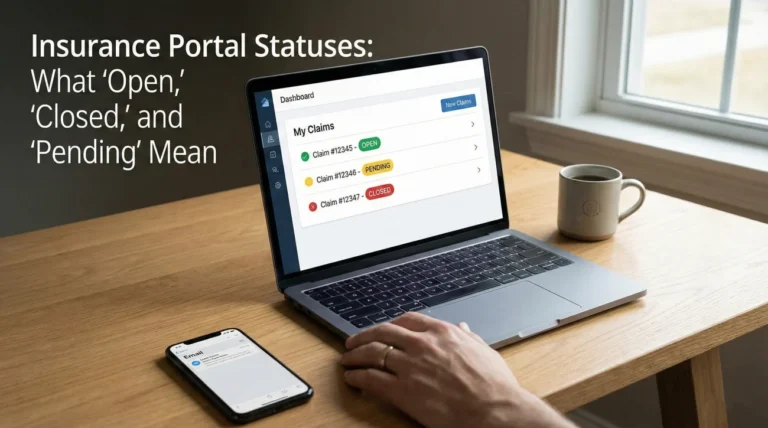
- Use the portal or email for routine check-ins to create a paper trail. Save phone calls for complex disagreements or missed promised dates.
The Urge to Call Every Day
When half of your kitchen is torn apart and you are cooking dinner out of a microwave in the living room, time moves incredibly slowly. A week feels like a month. You know the insurance company has your file, you know the inspector already came by, but now there is just silence. It is incredibly frustrating, and the natural human response is to pick up the phone and call your adjuster every single morning until you get an answer.
I completely understand the anxiety that drives that behavior. However, it sounds counterintuitive, but calling every day is often one of the quickest ways to accidentally stall your own recovery.
Property claims operate on specific administrative cycles. There is a time for urgent daily calls, and there is a time when stepping back is the only way the work gets done. This guide breaks down exactly how often you should follow up on an insurance claim. We will look at the realistic timeframes for each stage of the process, helping you build a follow-up cadence that keeps your file moving without turning you into the file that gets pushed to the bottom of the pile.
The Diary System: How Adjusters Actually Work
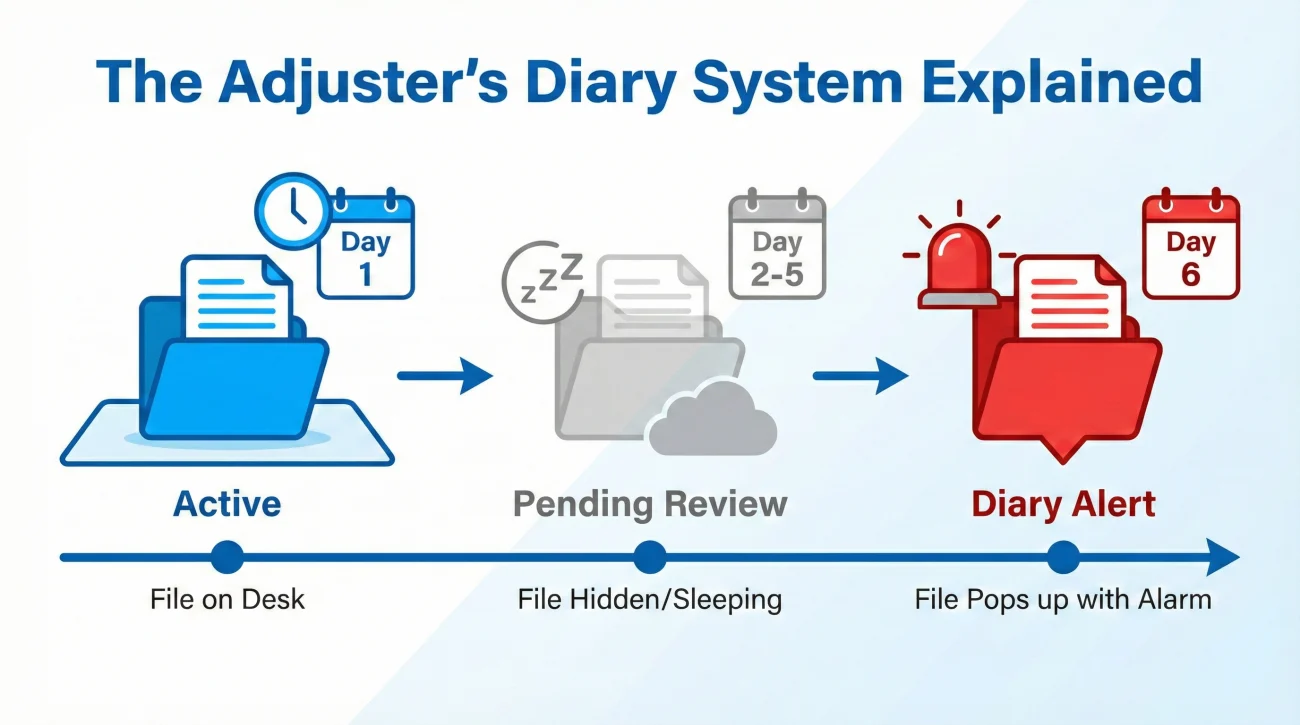
To understand why a strict follow-up schedule works, you have to understand what the person on the other end of the phone is dealing with. A desk adjuster does not have three or four files on their desk. They commonly manage dozens to well over a hundred active claims at the exact same time.
To survive this workload, adjusters use a software feature called a “diary” or a “tickler” system. It is basically an automated calendar. When they finish a task on your file, they set a diary date for the next step. If they send your estimate to a manager for approval, they might set a diary to check back on it in five days. During those five days, your file essentially disappears from their active daily screen.
If you call them on day two just to see how things are going, you force them to manually search for your file, read the notes to remember who you are, see that it is still pending manager review, tell you nothing has changed, and then write a mandatory log entry that you called. You just burned fifteen minutes of their time, and your file did not advance a single inch.
Field Note: In many high-volume claim centers, the “squeaky wheel” does not get the grease. The overly persistent caller gets a polite non-answer while the adjuster rushes to get off the phone so they can get back to their planned diary tasks. Strategic, well-timed follow-ups are far more effective than daily check-ins.
The Follow-Up Cadence by Claim Stage
Your follow-up rhythm should not be the same on day two as it is on day forty. The frequency of your contact must adapt to the specific phase of the operation. Here is a practical breakdown of how long things actually take behind the scenes, and when you should reach out.
Stage 1: The Initial Intake and Emergency Phase
The first 48 hours after you report the loss is the only time when high-frequency contact is truly justified. If you have an active leak, a collapsed roof, or your home is uninhabitable, you need immediate vendor dispatch or temporary housing approval.
Cadence Rule: Daily follow-up is acceptable until the property is secure, an adjuster is officially assigned, and emergency mitigation crews are cleared to work.
Stage 2: The Post-Inspection Waiting Period
The field inspector came to your house, took hundreds of photos, and left. Now you are waiting for the estimate. Many homeowners expect the estimate the next morning. In reality, the inspector has to build a 3D sketch of your home in their software, input current local material prices, and write a narrative report. If there was a major regional storm, they might be writing ten of these reports a night.
Cadence Rule: Wait 5 to 7 business days after the physical inspection before you ask for an update on the estimate. Calling before day five is almost always a waste of your time.
Stage 3: The Internal Review Phase
Your desk adjuster finally has the estimate, but they tell you it is “pending review.” This means the dollar amount exceeds the desk adjuster’s personal approval authority, and they had to send it to a supervisor or an auditing department. Management review queues are notoriously slow.
Cadence Rule: Follow up once a week. Because the file is in another department’s hands, your desk adjuster literally cannot move it forward until the manager signs off. A weekly check-in keeps it on their radar without harassing them.
Stage 4: The Payment Issuance Phase
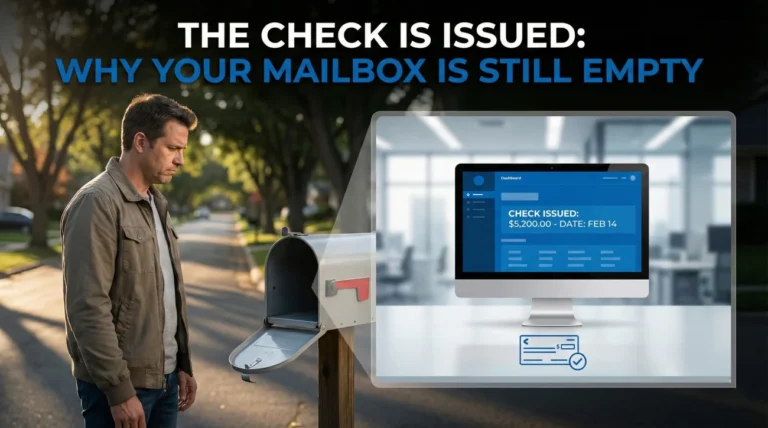
The claim is approved, and you are just waiting for the check to be cut and mailed. This is usually handled by an automated accounting department, but delays still happen, especially if mortgage company endorsements are involved.
Cadence Rule: Check in every 3 to 5 business days to ask if the payment has physically cleared the accounting system and if a tracking number is available.
| Claim Stage | What They Are Doing | Your Follow-Up Cadence |
|---|---|---|
| Emergency / Intake | Assigning roles, securing property | Daily until secure |
| Post-Inspection | Writing the estimate in software | Wait 5 to 7 business days |
| Manager Review | Auditing prices and policy limits | Once a week |
| Payment Processing | Cutting checks and mailing | Every 3 to 5 business days |
How to Ask: The “Next Action” Rule
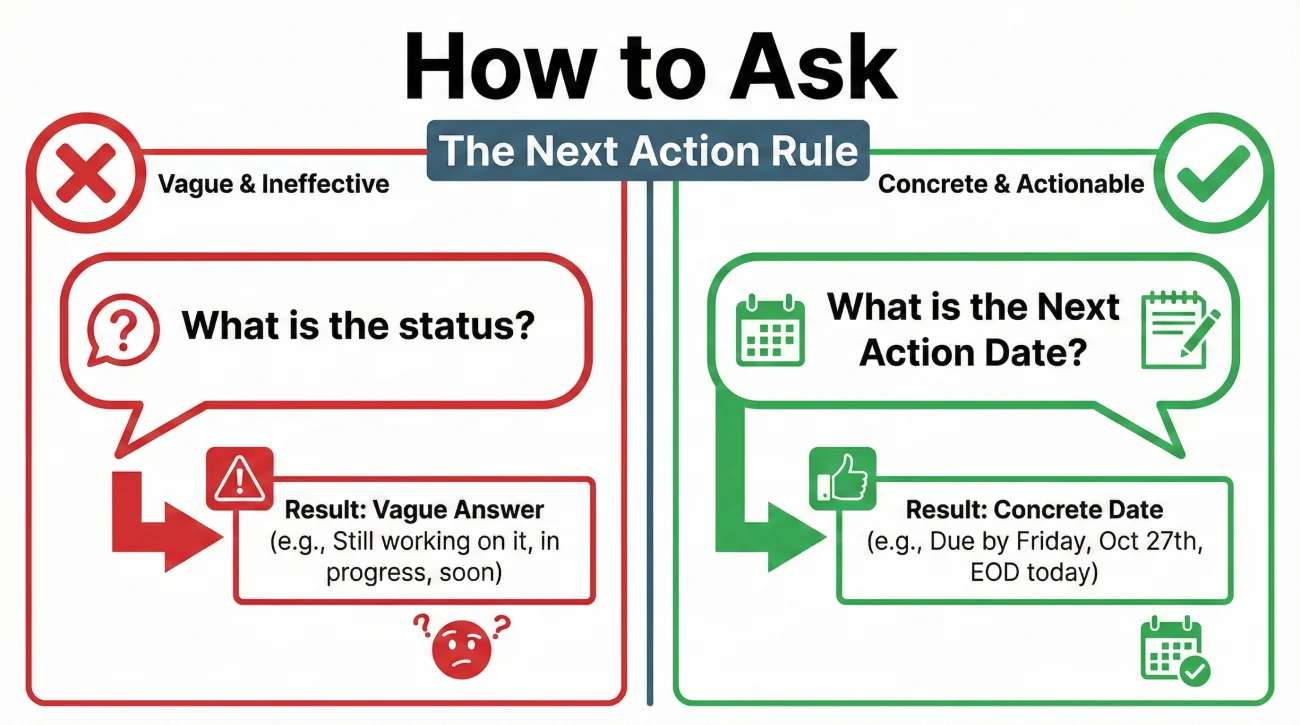
The frequency of your calls is only half the battle. The words you use when you follow up determine whether the conversation is productive or useless.
The biggest mistake you can make is calling and asking, “What is the status of my claim?” This is an open-ended question that invites a vague answer. An adjuster can simply say, “It is still processing,” and hang up. They have answered your question, but you have learned absolutely nothing.
You must shift from asking about the status to asking about the next action owner and the next action date. When you reach out, your message should focus on finding out exactly whose desk the file is sitting on right now, what that person is doing, and what day they are expected to finish.
“Hi, I am just calling to check on the status of my claim. It has been a while.” (Result: “We are still working on it, please be patient.”)
“Hi, my file has been in manager review for six days. What is the specific missing item holding up the approval, and what date is the manager scheduled to finish their review?” (Result: A concrete date or a specific missing document you can actually help track down.)
Channel Selection: Portal vs. Email vs. Phone
The hard part is knowing when to call and when to type. Many policyholders default to the phone because it feels faster, but phone calls leave no paper trail. If an adjuster promises you an estimate by Friday over the phone, and Friday comes and goes, you have no proof of that promise.
When to Use the Portal or Email
For your standard cadence follow-ups, written communication is always best. Use the insurer’s official portal or direct email to ask your weekly check-in questions. This creates a permanent, time-stamped record of your diligence. If the claim ever stalls completely and you have to escalate to a supervisor, a clean log of unanswered messages is your strongest asset.
When to Pick Up the Phone
Reserve your phone calls for moments of friction. If an adjuster misses a specific promised date, if you receive a confusing denial letter, or if your contractor needs to discuss a complex line item on the estimate, you need a live conversation. Tone and nuance are often lost in emails during a disagreement. Use the phone to solve the problem, and then immediately summarize what was agreed upon in a follow-up message to the portal.
A Practical Follow-Up Scenario
Let us look at how a patient, organized homeowner handles the wait after a major roof inspection without losing their temper or harassing the adjuster.
The field adjuster finishes inspecting the roof on a Tuesday. The homeowner knows the 5-to-7 business day rule. They do not call on Wednesday, Thursday, or Friday. They let the adjuster work.
On the following Wednesday (day six), the homeowner sends a polite message through the portal asking if the estimate is complete, or if the adjuster needs any additional contractor quotes to finish it. The adjuster replies on Thursday saying the estimate is done but is currently pending manager review.
The homeowner does not immediately call to argue about the review. They reply asking, “What date is the manager scheduled to review this file?” The adjuster says it should be done by next Tuesday. The homeowner sets their own calendar for next Wednesday. When Wednesday arrives and there is no update, the homeowner picks up the phone to firmly ask why the promised date was missed. This is a clean, professional cadence that respects the operational workflow while holding the insurer strictly accountable to their own deadlines.
Common Follow-Up Mistakes
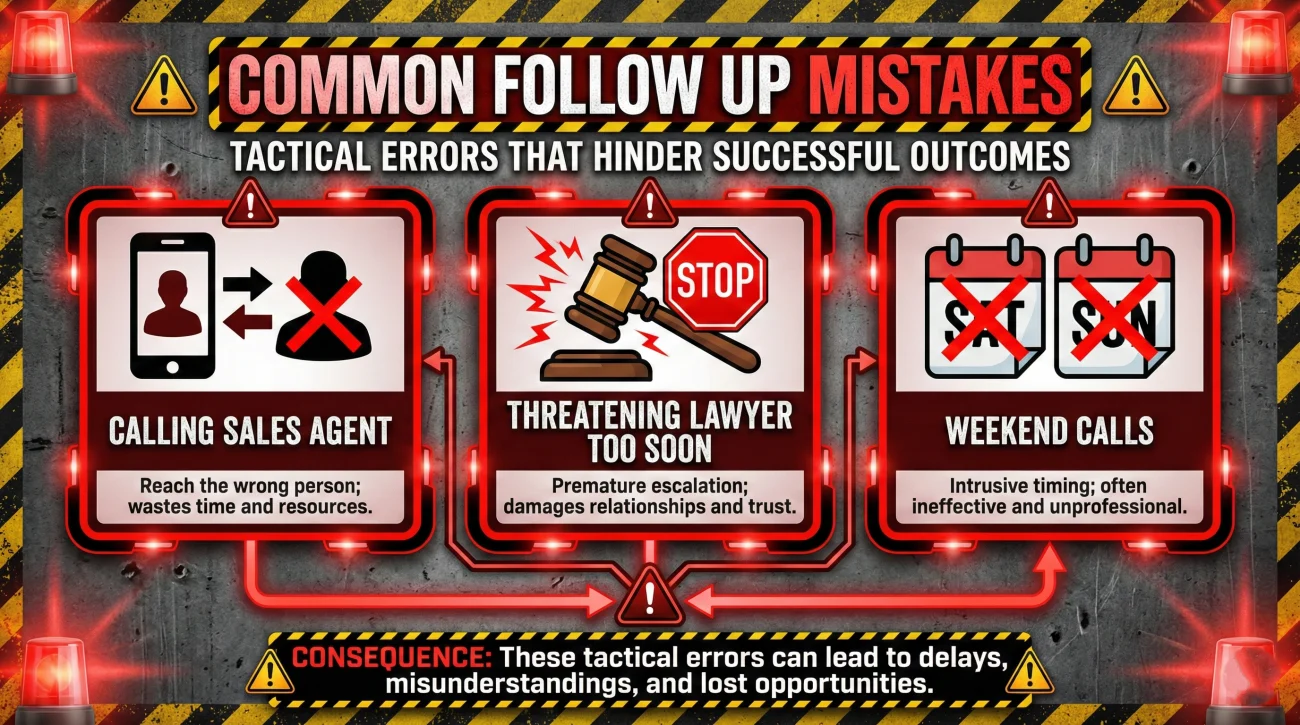
When patience runs out, people make tactical errors. Avoid these common traps that can inadvertently isolate you from the claims team.
- ❌ Calling the local sales agent for updates: Your local agent sells policies; they do not write repair estimates. While they can sometimes nudge a file internally, they have no authority over the desk adjuster. Calling the agent every day just creates a game of telephone. Keep your focus on the assigned claims team.
- ❌ The “Lawyer” Threat: Telling a desk adjuster “I am going to hire a lawyer” on day ten of a delay rarely speeds things up. In many workflows, mentioning legal action may require the adjuster to stop talking to you and transfer the file to a specialized legal correspondence desk, which can delay your timeline.
- ❌ Following up on weekends: Unless you are dealing with a 24-hour emergency mitigation team, desk adjusters work standard business hours. Leaving angry voicemails on a Saturday morning only guarantees they will start their Monday morning feeling defensive.
Logging Your Cadence
Following a strict schedule only works if you actually track your efforts. Every time you make a call or send a message, it needs to be recorded. You should log the date, the person you spoke to, the channel you used, and the exact promise they made.
This tracking transforms your follow-ups from random, emotional check-ins into a structured claim follow-up system. When you eventually have to demand a supervisor’s attention, you will not just be an angry customer complaining that it is “taking too long.” You will be a highly organized policyholder who can prove exactly how many days have passed and exactly which promises were broken.
Final
I know how exhausting it is to wait for answers while your home is in disarray. It feels incredibly disrespectful when the person holding the keys to your recovery goes silent. But property claims are a marathon, not a sprint.
By respecting the operational reality of the diary system, you avoid becoming a nuisance and instead position yourself as a professional partner in the process. Give the adjusters the necessary time to write their estimates and secure their approvals. But the moment a realistic timeframe passes or a specific promised date is missed, step in firmly with targeted questions about the next action owner.
Patience combined with a precise, documented follow-up schedule is often one of the most reliable ways to keep your claim moving toward a final resolution.
❓ FAQ
📞 Should I call my adjuster every day?
No. Daily calls disrupt the adjuster’s workflow and force them to spend time logging the call rather than actually working on your estimate. Reserve daily calls only for active emergencies in the first 48 hours.
⏳ How long should I wait for an estimate after the inspection?
It typically takes 5 to 7 business days for a field inspector to sketch the home, run the pricing software, and submit the final narrative report to the desk adjuster.
📨 Is it better to email or call for a status update?
Email or portal messages are always better for routine status updates. Written communication provides a clear paper trail of your follow-up efforts and prevents verbal promises from being forgotten.
🤷♂️ What should I say if the adjuster tells me it is “pending review”?
Do not just accept the status. Ask them exactly whose desk the file is on, what specific items the manager is reviewing, and what date the review is scheduled to be completed.
😡 What do I do if my adjuster never answers the phone?
Leave one clear voicemail requesting a callback with a specific update. Then, immediately send a message through the online portal documenting that you called and are waiting for a response.
🗓️ Can I ask the adjuster to schedule a specific time to talk?
Yes. If you keep playing phone tag, send a portal message asking for a scheduled 15-minute window on a specific day to review the file. Adjusters often prefer scheduled calls over random interruptions.
🧑💼 Should I have my local agent follow up for me?
Your local agent can sometimes check internal systems, but they do not control the claims process. Relying entirely on your sales agent creates a game of telephone. You must communicate directly with the claims team.
💸 How often should I check on my payment once it is approved?
Once the final dollar amount is approved, check in every 3 to 5 business days to confirm if the check has been cut and to request a mailing tracking number.
🤐 What happens if I threaten to hire a lawyer during a follow-up?
In many company workflows, mentioning a lawyer may require the adjuster to immediately stop communicating with you and transfer your file to a legal review desk, which can delay your estimate.
📝 Do I need to keep a log of my follow-ups?
Absolutely. Always write down the date, time, the person you spoke with, and the exact promises they made. This log is your strongest tool if you ever need to escalate a delay to a supervisor.
⚠️ Disclaimer: PropertyClaimChecklist.com provides practical guidance, process checklists, and example follow-ups to help you organize a property claim and move it forward. It is not policy language, claim documentation, legal content, or a substitute for your insurer's instructions. Always rely on your carrier's requirements and your actual policy terms for what must be submitted and how decisions are made.