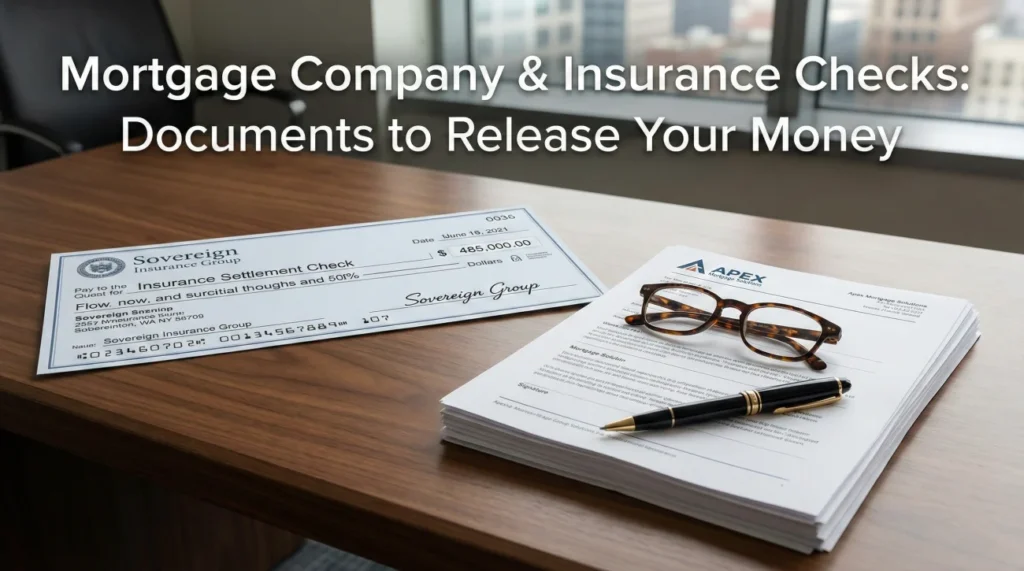
- If you have a mortgage, you’ll likely see your lender’s name right next to yours on the insurance check. This means you won’t be able to just deposit it at your local branch.
- Instead of your regular customer service line, you’ll need to work with the lender’s “Loss Draft Department” and send them a specific set of mortgage company insurance check documents.
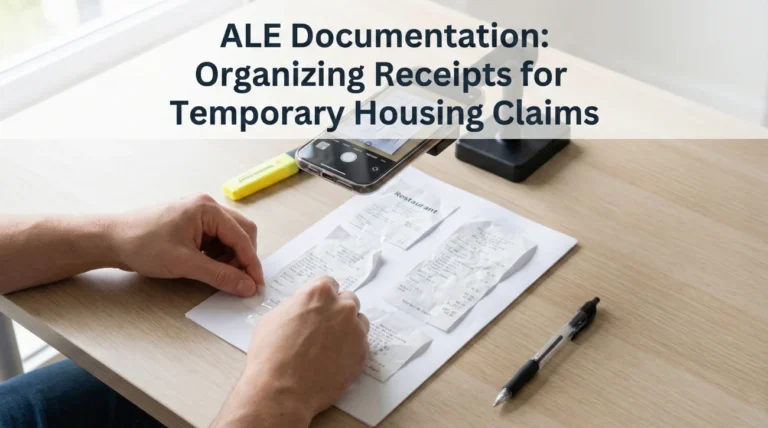
- I always advise keeping high-quality copies of the front and back of the check before mailing the original, just in case it gets misplaced in transit.
- For larger repairs, the bank typically releases funds in stages (called “draws”). You’ll often need to show them contractor invoices and pass an inspection to keep the money flowing.
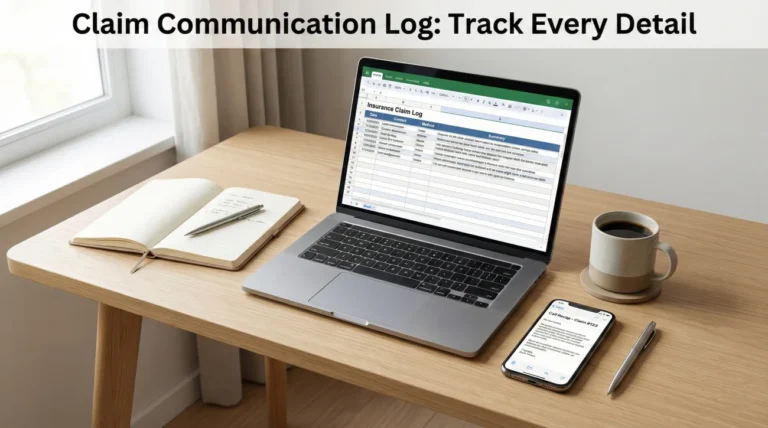
- Treat this paperwork like a legal submission. I highly recommend using a tracking number for mail and jotting down a quick log of every phone call you make to the bank.
The Unexpected Hurdle of Co-Payee Checks
I have guided countless people through the paperwork maze of property claims, and there is one moment that almost always causes frustration. You finally get an envelope in the mail from your insurance company. You open it, see the settlement check, and feel a wave of relief. But then you look closely at the “Pay to the Order of” line, and your heart sinks. Your mortgage company’s name is listed right next to yours.
In my experience, this is the point where many people freeze. You take the check to your local bank, and the teller hands it right back, telling you that both parties must endorse it. Suddenly, you realize that dealing with the insurer was only part one. Now, you have to navigate your lender’s bureaucracy.
Because the lender has a financial interest in your property, they want proof that the repair money will actually be used to fix the house. To prove this, they require a very specific packet of mortgage company insurance check documents. If you just endorse the check, drop it in a standard envelope, and mail it to the address on your monthly mortgage statement, it often gets misrouted or delayed for weeks. In day-to-day claims ops, I constantly see the delays caused by sending the wrong paperwork to the wrong department.
I want to walk you through exactly what documents they typically ask for, how to assemble your packet so it gets processed quickly, and how to track the funds so your contractor can get paid and your life can return to normal.
The Standard Document Packet (What They Usually Ask For)
Most mortgage companies process these checks through a specialized division called the “Loss Draft Department.” Customer service representatives who handle your regular monthly payments often do not have access to loss draft files. You have to speak to the right department, and you have to send them the right paperwork.
Every lender has their own specific forms, but over the years, I have noticed that the core requirements are commonly very similar across the board. When you are putting together your submission, these are the typical documents you need to gather.
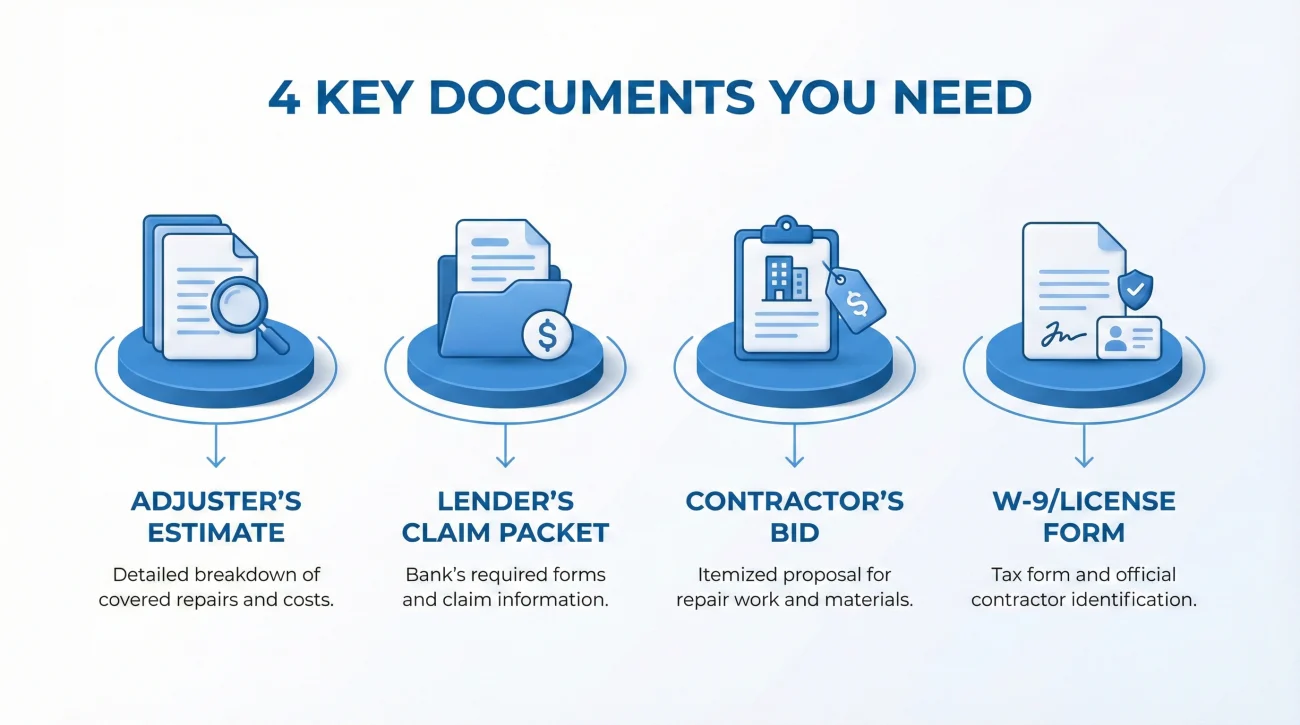
1. The Complete Adjuster’s Estimate
The mortgage company needs to see exactly what the insurance company is paying for. They will ask for the full, itemized breakdown provided by the adjuster. I often see people make the mistake of only sending the summary page. The loss draft department usually wants the entire document, which can sometimes be twenty or thirty pages long, showing the line-by-line breakdown of the approved scope.
2. The Lender’s Claim Document Packet
You cannot use a generic letter to request an endorsement. You must call your lender’s loss draft department and ask them to send you their specific claim packet. This packet usually contains an endorsement request form that you must sign, and sometimes a conditional waiver form. Do not skip this step. If you do not use their exact barcode-scannable forms, your paperwork might sit in a mailroom basket indefinitely.
3. Your Contractor’s Signed Estimate
To release the money, the bank needs to know who is doing the work. They will typically require a copy of the formal, signed agreement between you and your contractor. This document needs to show the contractor’s contact information, the scope of work they have agreed to perform, and the total cost.
4. Contractor’s W-9 and License
Because the mortgage company is releasing funds that may ultimately go to a business, their compliance department usually requires the contractor’s W-9 form (for tax verification) and a copy of their active business license or registration. In some cases, they may also ask for a certificate of the contractor’s liability insurance.
⚠️ Warning: Never mail the original check without making a high-quality scan or photocopy of both the front and the back. If the check is lost in transit, having a copy of the routing numbers and check numbers will make getting a reissue from the insurance company significantly easier.
How to Organize the Endorsement Package
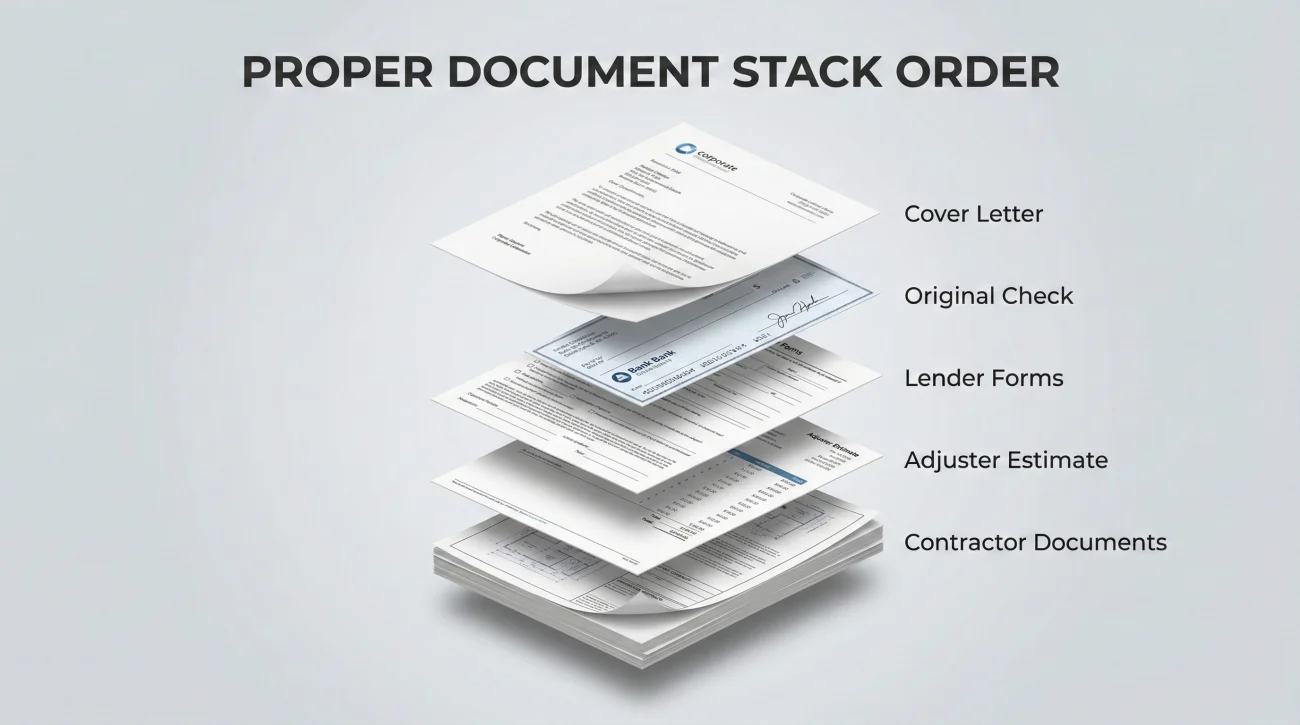
In operations, how you present information is just as important as the information itself. When a clerk opens your envelope, you want them to immediately understand what they are looking at. If they have to sift through a disorganized pile of papers to figure out what you want, your file goes into the “review later” pile.
I always recommend creating a clean, logical stack. The goal is to make it so easy for the clerk that they can approve your file in three minutes. Here is how I suggest you order the packet from top to bottom.
- 📄 Top Layer: A brief cover letter stating your loan number, property address, and a list of the attached documents.
- 📄 Second Layer: The original insurance check, properly endorsed by you (and your co-borrower, if applicable).
- 📄 Third Layer: The lender’s required endorsement forms, fully filled out and signed.
- 📄 Fourth Layer: The complete insurance adjuster’s estimate.
- 📄 Bottom Layer: The contractor’s documents (bid, W-9, license).
To keep things professional and clear, I advise including a simple cover letter. It does not need to be long or complex. It just needs to state the facts. Here is a structure you can adapt.
Date: [Date]
To: [Name of Mortgage Company] – Loss Draft Department
From: [Your Name]
Loan Number: [Your Loan Number]
Property Address: [Your Address]
Subject: Insurance Claim Check Endorsement Request
To the Loss Draft Department,
Enclosed please find an insurance claim check in the amount of [Check Amount] related to property damage at the address listed above.
To facilitate the release of these funds for repairs, I have included the following required documents:
- The original, endorsed insurance check.
- Your completed Loss Draft Request form.
- The complete adjuster’s itemized estimate.
- The signed contract with [Contractor Name].
- The contractor’s W-9 and license copy.
Please review these documents and process the endorsement or release of funds to my mailing address on file. If any additional information is required, please contact me immediately in writing at [Your Email Address].
Sincerely,
[Your Signature]
[Your Printed Name]
[Your Phone Number]
The “Draw Release” Cycle (If Funds Are Held in Escrow)
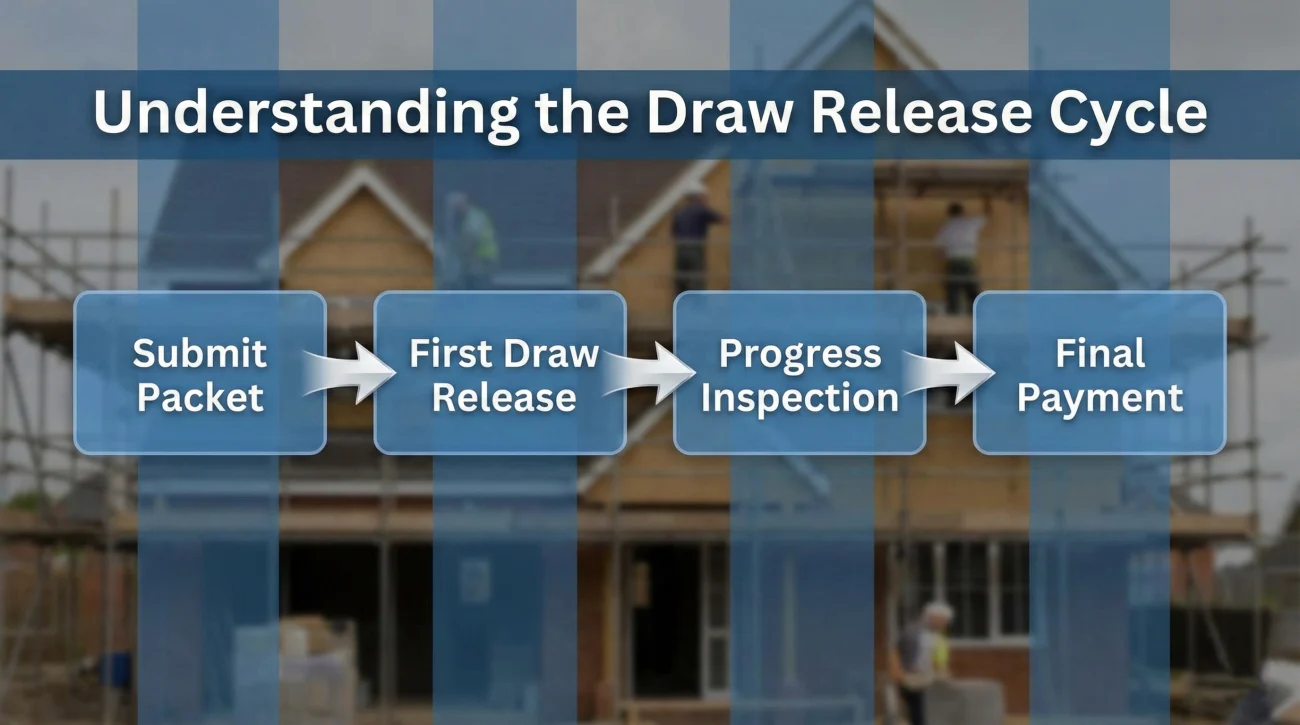
If your claim is relatively small, the lender may simply stamp the back of the check (endorsing it) and mail it right back to you. However, I often see a completely different process take over when the check is for a larger amount.
If the settlement exceeds a certain threshold (often determined by the lender’s internal policies), they will not give you the money all at once. Instead, they will require you to deposit the check into a restricted escrow account that they control. They will then release the money to you in stages, which are called “draws.”
This is where organization becomes critical. Getting the first draw usually requires the initial document packet we discussed above. But getting the second or third draw requires a new round of paperwork. You have to prove that the work is progressing.
You assume the bank will just mail you the rest of the money when you ask for it, leading to stalled construction when the contractor walks off the job due to non-payment.
You know you must proactively submit proof of progress to trigger the next payment, keeping the cash flowing and the project moving.
The Inspection Requirement
Before releasing the next batch of funds, the mortgage company will usually send an inspector to your house. This is not a city building inspector; this is a third-party inspector hired by the bank simply to verify that the work you claimed is actually being done. They will take photos to confirm that 50% or 100% of the repairs are complete.
In my experience, you have to request this inspection. The bank rarely schedules it automatically. When your contractor says they are halfway done, you need to call the loss draft department and request a draw inspection. I highly recommend doing this a few days early, as inspectors can take time to arrive.
Conditional and Unconditional Lien Waivers
Along with the inspection, the bank will often require a document called a “Lien Waiver” from your contractor. A lien waiver is a document signed by the contractor stating that they have been paid for a certain portion of the work and therefore waive their right to place a mechanic’s lien on your property for that amount.
Typically, a conditional waiver is used before the check clears (saying “I waive my rights provided this check actually clears”), and an unconditional waiver is used after the money is securely in their account. The bank uses these forms to ensure they are not releasing money for repairs only to have the contractor sue the homeowner for non-payment later.
Key Point: Do not wait for the bank to ask for the next round of documents. Ask them upfront for a checklist of exactly what is required for each draw, so you can gather it in advance.
Tracking the Check and the Paperwork
One of the most common operational failures I observe is a homeowner putting a twenty-thousand-dollar check in the regular mail with a standard stamp. You must treat this envelope like a highly sensitive legal submission. If it gets lost, the process to get a new check issued from the insurance company, signed by you, and sent back to the bank can add weeks or months to your recovery timeline.
You need a tracking system. If you are already keeping your files organized using a property claim documents checklist, this step will feel natural. You simply apply the same discipline to the mortgage company that you apply to the insurance adjuster.
Never Send Without a Tracking Number
Whether you use USPS Certified Mail, FedEx, or UPS, you must use a service that provides a tracking number and a delivery confirmation signature. You need to know exactly which day the envelope arrived at the loss draft processing center.
The Communication Log
Once the tracking shows the package was delivered, wait 48 hours and then call the loss draft department. Your goal is to get a verbal confirmation that the packet is in their system and under review. Every time you call, you must log the details. I recommend a simple table format to keep your notes organized.
| Date & Time | Rep Name & ID | Purpose of Call | Outcome / Next Step |
|---|---|---|---|
| Oct 12, 10:00 AM | Sarah (ID 4092) | Confirm receipt of check | Confirmed. Scanning into system. Call back in 3 days. |
| Oct 15, 2:00 PM | Marcus (No ID given) | Check review status | Under review. Missing contractor W-9. |
| Oct 16, 9:00 AM | Uploaded via portal | Submit W-9 | Saved screenshot of upload confirmation. |
Notice the second entry in that table. This is a very common scenario. They might sit on the file because they feel one document is missing, but they may not proactively call you to tell you. This is why you have to manage the follow-up loop tightly. If they say a document is missing, apply the same rule we use for insurance adjusters:
[Send the document immediately] + [Save proof of sending] + [Call back 24 hours later to confirm receipt]
Operational Mistakes That Delay Funds
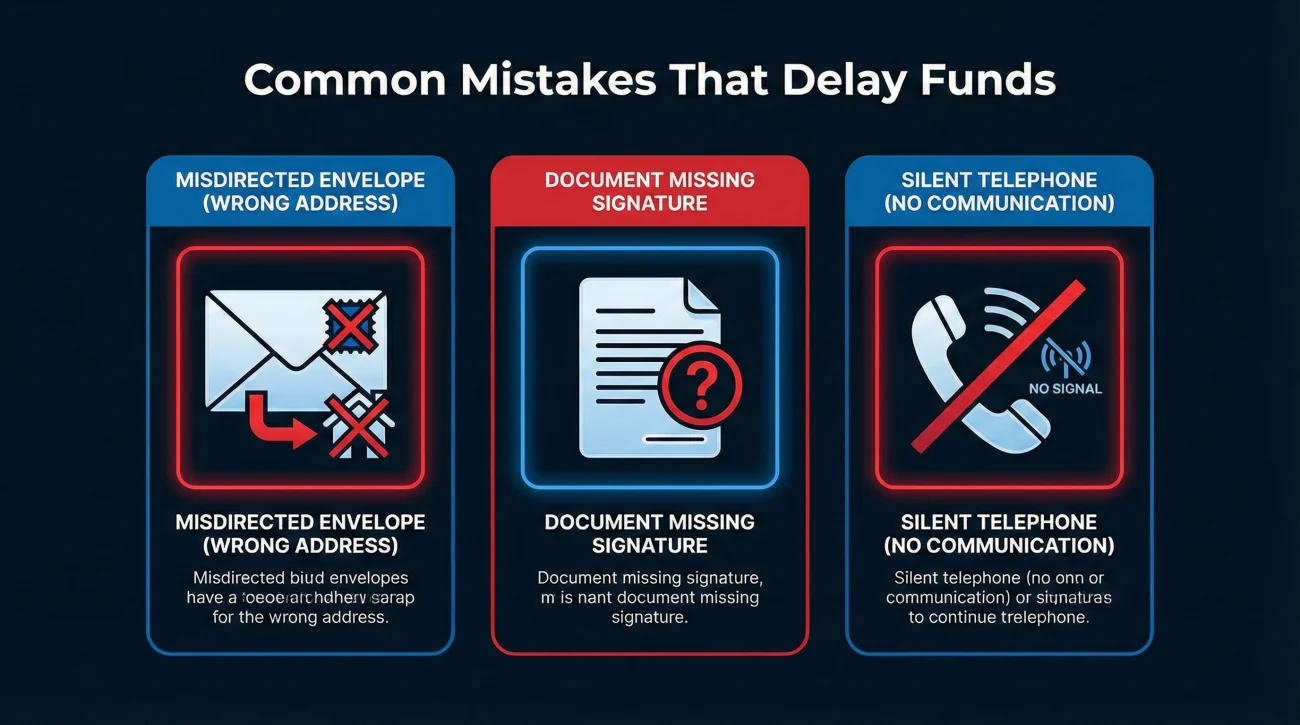
When you are managing a property claim, momentum is everything. Every time a file gets stuck in a “pending” status at the bank, your repairs are delayed. Here are a few practical mistakes I see repeatedly, and how you can avoid them.
Mailing to the Payment Address
The address where you send your monthly mortgage payment is usually a processing facility designed exclusively to handle check deposits for loan payments. If you send an insurance check with multiple documents to that address, the automated machines will not know what to do with it. Always call and ask specifically for the “overnight mailing address for the Loss Draft Department.”
Forgetting Signatures
If the check is made out to “John Doe AND Jane Doe AND Default Mortgage Bank,” both John and Jane must endorse the back of the check. If Jane forgets to sign it, the bank will reject the packet and mail the check back to you, wasting precious time.
📌 Note: Do not write “For Deposit Only” on the back of the check unless the loss draft department specifically instructs you to do so in their written packet. Sometimes, an incorrect restrictive endorsement can invalidate the check for the bank’s processing purposes.
Assuming the Bank and Insurer Talk
Your mortgage company and your insurance company do not communicate with each other automatically. If the bank needs an updated estimate, they will not call the adjuster to get it. They will wait for you to provide it. You are the project manager bridging the gap between these two massive entities. You have to move the documents from one side to the other.
Final
Dealing with a co-payee check adds an undeniable layer of administrative work to your plate. However, once you understand that the mortgage company is simply following a rigid compliance checklist, the process becomes much less intimidating.
In my experience, the people who get their funds released the fastest are the ones who treat the bank like a strict auditor. They do not send half-completed forms. They do not guess the mailing address. They compile a perfect stack of mortgage company insurance check documents, they mail it with tracking, and they follow up relentlessly. By adopting this operational mindset, you take control of the timeline, ensure your contractor gets paid, and keep your property repairs moving forward without unnecessary stress.
❓ FAQ
⏳ How long does the mortgage company hold my insurance check?
It depends on the amount and their internal process. For small amounts, they may endorse and return it within a week. For larger amounts placed in an escrow draw account, funds are released in stages as repairs are inspected, which can take weeks or months.
📬 Where do I mail my insurance check for endorsement?
Do not mail it to the regular payment address. You must call your lender and ask specifically for the “Loss Draft Department mailing address” or the overnight processing address for insurance claims.
🏦 Can I just cash the check without my mortgage company?
No. If the mortgage company’s name is on the check as a payee, banks will not allow you to deposit or cash the check without the mortgage company’s official endorsement.
🏢 What is a loss draft department?
It is a specialized division within a mortgage company that specifically handles property damage insurance claims, monitors repair progress, and manages the release of insurance funds.
📄 Why do they need my contractor’s W-9?
Because the bank is releasing funds that are paying a business for services, their compliance rules usually require a W-9 to verify the business’s tax identification before approving the release of money.
🔄 What happens if my mortgage gets transferred while they have my check?
You must contact the loss draft department of the new lender immediately. Often, the previous lender will forward the escrowed claim funds to the new lender, but you will need to establish communication and confirm the new tracking process.
🔨 Do I have to use the contractor the mortgage company approves?
In most cases, you can choose your own contractor. The mortgage company just needs to review the contractor’s credentials (like their license and W-9) to ensure they are a legitimate business before releasing the funds.
🧾 How do I prove I sent the check to them?
Always keep a photocopy of the front and back of the endorsed check, and always mail the physical check using a service that provides a tracking number and requires a delivery signature.
🔍 What is a draw inspection for an insurance claim?
When funds are held in escrow, the bank will send a third-party inspector to your property to verify that a certain percentage of the repairs are complete before they release the next installment (draw) of the money.
📱 Can I deposit the check via mobile app if both names are on it?
Usually, no. Mobile deposits for multi-party checks involving a corporate entity (like a bank) are frequently rejected by banking apps. The physical check must follow the loss draft endorsement process.
⚠️ Disclaimer: PropertyClaimChecklist.com provides practical guidance, process checklists, and example follow-ups to help you organize a property claim and move it forward. It is not policy language, claim documentation, legal content, or a substitute for your insurer's instructions. Always rely on your carrier's requirements and your actual policy terms for what must be submitted and how decisions are made.