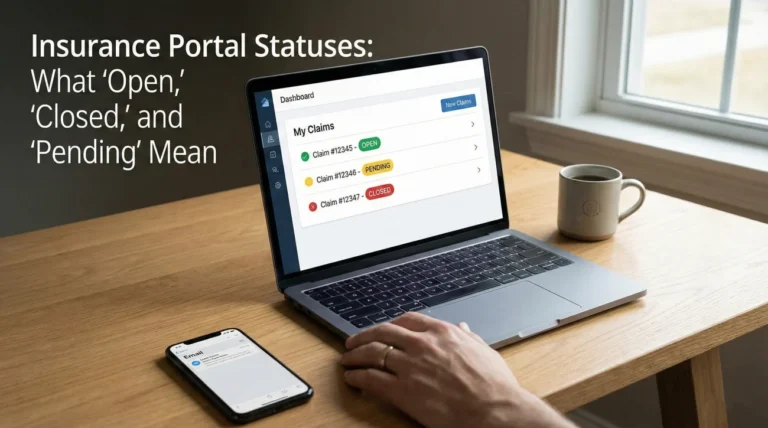

- The Information Gap: You cannot negotiate effectively if the adjuster has photos and notes that you have never seen. Level the playing field by getting the full file.
- Ask for “The Claim File,” Not Just the Estimate: The estimate is just the bill. The claim file includes log notes, photos, and engineering reports. You need all of it.
- Written Requests Only: Never ask for this over the phone. Send a formal email or letter to create a compliance timestamp.
- Be Specific: Don’t just say “send me everything.” Request specific categories like “field adjuster photos,” “activity log,” and “expert reports.”
Why You Are Negotiating in the Dark
Imagine trying to assemble a puzzle when the other person is holding half the pieces behind their back. That is what negotiating a property claim feels like for most homeowners. You see the damage in your living room, but the adjuster sees a screen full of internal notes, previous photos, and engineer reports that you don’t even know exist.
In my years working in claims operations, I have seen this dynamic play out hundreds of times. A homeowner calls me, frustrated that their roof claim was denied. I ask, “What did the engineer’s report say?” They reply, “I don’t know, they just told me it was denied.”
That is a failure of information leverage. If the carrier denies your claim based on an “engineering report,” but you have never read that report, you cannot possibly dispute it intelligently. You are arguing against a ghost.
The good news is that in most situations, you have a right to see what they see. Requesting your insurance claim file is the single most effective way to understand why a decision was made. This guide will show you how to ask for the full picture, not just the sanitized summary they want to send you.
The 3-Layer Anatomy of a Claim File
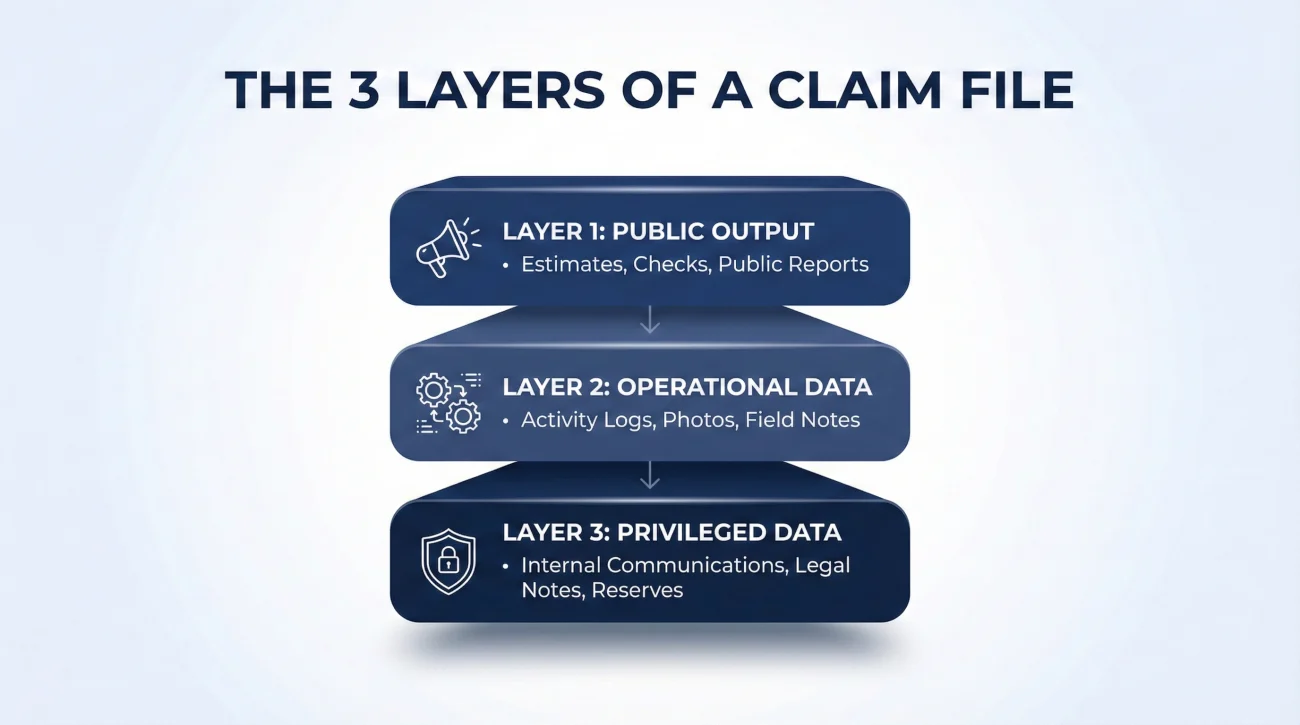
To ask for the right things, you need to understand how a claim file is structured on the carrier’s side. It isn’t just one PDF. It is usually a database with three distinct layers.
Layer 1: The Output (Public)
This is what they willingly send you: the estimate, the settlement letter, and the check. Most homeowners stop here. This is a mistake, because it only tells you the result, not the reasoning.
Layer 2: The Operational Data (The Gold Mine)
This is what you need to request. It includes:
- Activity Log / Diary Notes: The running commentary of every action taken on the file.
- Field Photos: The raw, unedited photos taken by the adjuster at your house.
- Vendor Reports: Full PDF reports from engineers, leak detection specialists, or ladder assists.
- Internal Emails: Correspondence between the desk adjuster and the field adjuster.
Layer 3: The Privileged Data (The Shield)
This includes communications with legal counsel or fraud investigation notes. You typically cannot get this, and asking for it will trigger a defensive reaction. The goal of your request is to extract Layer 2 without hitting the wall of Layer 3.
Field Note: Why the “Activity Log” Matters
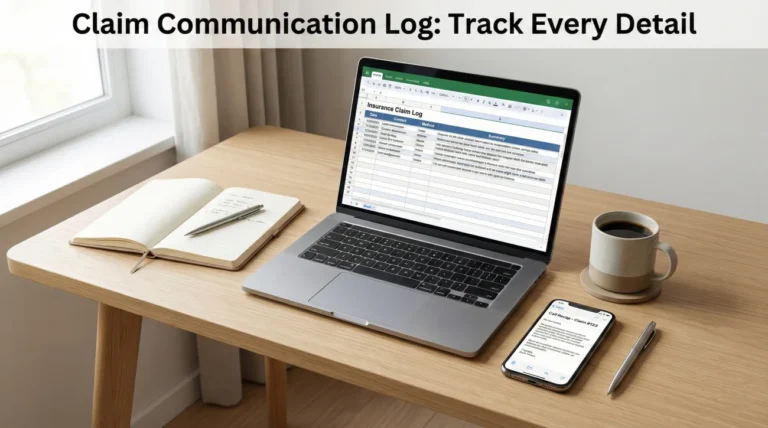
If I could only ask for one document in a claim, it would be the Activity Log (sometimes called “Claim Notes” or “Diary Notes”). This is the heartbeat of the claim.
I once reviewed a file where the carrier claimed they “never received” the homeowner’s proof of loss. But when we got the Activity Log, there was an entry on June 12th: “Received email from insured with attachments. Will review later.”
That single line of text proved the timeline discrepancy. It forced them to address the delayed payment. Without the log, we would have had no proof. The log reveals the administrative truth behind the delays.
The Request Protocol: Writing, Not Talking
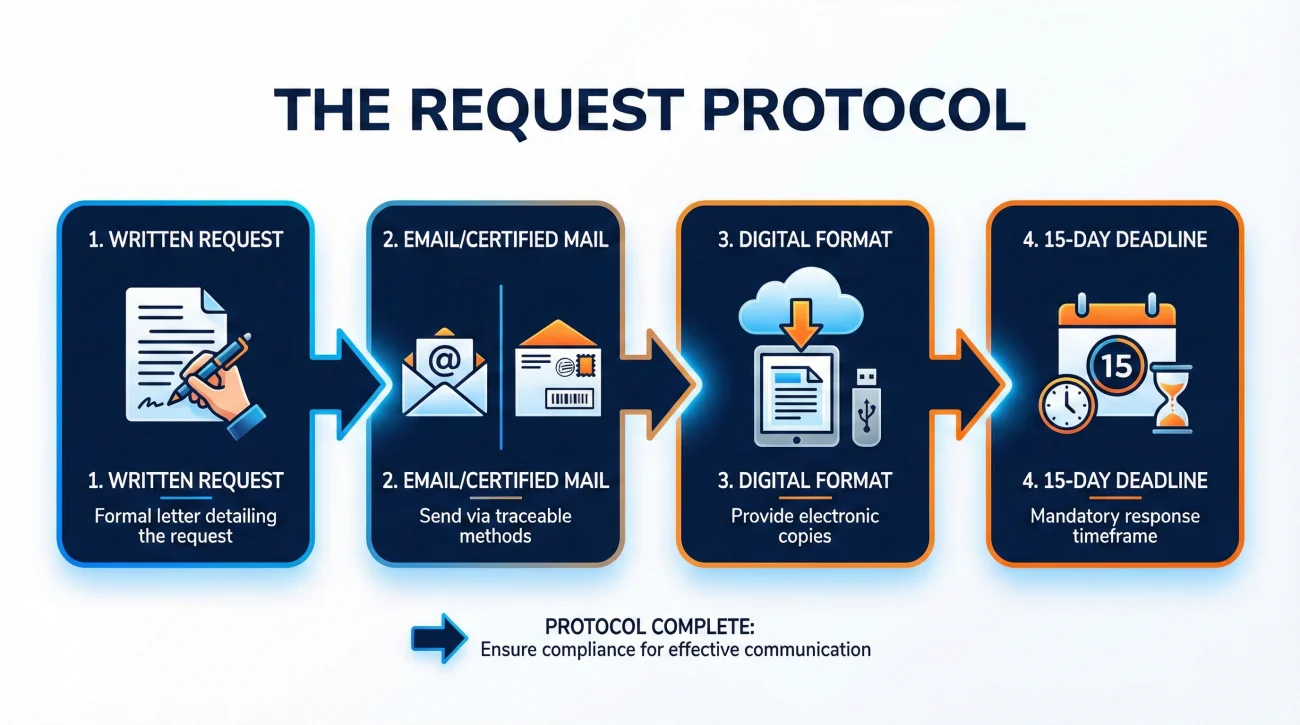
Do not ask for your claim file over the phone. It is too easy for an overworked adjuster to say “Sure, I’ll send it” and then forget, or send only a partial document. You need a paper trail.
You must send a formal written request (email is fine, certified mail is better for escalations). This starts a clock. In many jurisdictions, carriers have specific timelines to respond to written requests for documents (check your state’s Department of Insurance guidelines).
Subject: Request for Complete Claim File – Claim #[Number] – [Your Name]
To the Claims Department,
Please consider this my formal request for a complete copy of my claim file regarding the loss on [Date of Loss].
To ensure I have a full understanding of the claim adjustment, please provide:
1. All claim log notes / diary entries / activity notes.
2. All unedited digital photos taken by your field adjusters or vendors.
3. Complete copies of any engineering, plumbing, or expert reports.
4. All estimates, including drafts and revisions.
5. All non-privileged correspondence related to this claim.
Please provide these documents in digital format (PDF/JPEG) within a reasonable timeframe (e.g., 15 business days).
Regards,
[Your Name]
Request Checklist by Scenario
Tailor your request based on your specific problem. Here is what to prioritize:
| Scenario | Priority Items to Request |
|---|---|
| Engineer Denial | Full Engineer Report + Color Photos + Log notes surrounding the assignment date. |
| Unexplained Delay | Activity Log (full history) + Correspondence + Payment Authorization notes. |
| Depreciation Dispute | Estimate with line-item depreciation parameters + Field notes describing “Age/Condition.” |
Handling Pushback & Follow-Up
It is common for adjusters to hesitate. They might say, “The log notes are internal proprietary documents.”
Sometimes they are right (e.g., notes discussing potential fraud investigation). However, purely operational notes – like “Called insured, left voicemail” – are often discoverable. If they refuse the whole file, ask for a “Redacted Copy.”
Follow-Up Templates
1️⃣ Polite Nudge (Day 15)
“Checking in on my request from [Date]. I haven’t received the file yet. Please update me on the status.”
2️⃣ The “Why” Question (Day 20)
“If you are unable to provide the full file, please provide a written reason for the refusal and a redacted copy of the non-privileged sections.”
3️⃣ Final Notice (Day 30)
“I have requested my file three times. If I do not receive it by [Date], I will assume the delay is intentional and will seek assistance from the Department of Insurance to obtain these records.”
How to Audit the Data Dump
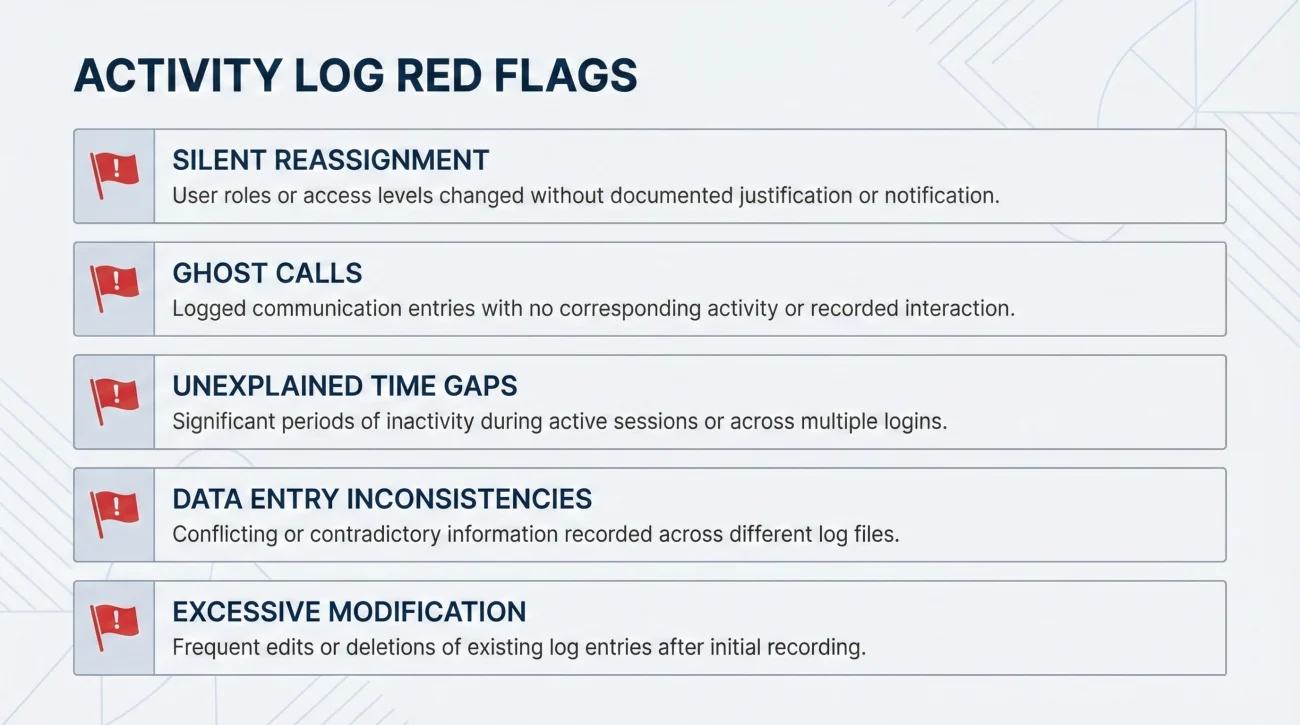
If you succeed, you might get a massive PDF or a zip file with 500 items. Do not get overwhelmed. Use this “Red Flag Checklist” to scan the Activity Log.
8 Activity Log Red Flags to Look For:
- 🚩 Silent Reassignment: The file changed owners 3 times, but no one told you.
- 🚩 The “Ghost” Call: Entry says “Called insured, left message” but your phone has no record of it.
- 🚩 Vendor Limbo: “Engineer assigned” on Day 5, but “Engineer scheduled” doesn’t appear until Day 25.
- 🚩 Review Lag: “Estimate submitted for approval” on Day 10, but “Estimate approved” isn’t until Day 30.
- 🚩 Missing Action: A diary note says “Need to call insured,” but there is no subsequent entry showing the call happened.
Mini-Guide: Match Your File to Theirs
To make your comparison easier, rename your own files to match the operational standard. I use this convention:
YYYY-MM-DD_Room_Item_Description
Example: 2023-10-12_Kitchen_Floor_WaterDamage.jpg
When you map their log entry (“Reviewing kitchen photos”) to your specific file, the timeline becomes undeniable.
Final Words: Information is Authority
Requesting your claim file changes the dynamic of the relationship. It shows the adjuster that you are not just a passive recipient of their decisions; you are an active auditor of the process.
You don’t need to be aggressive. You just need to be thorough. Once you have their file matching your file, the truth of the claim usually becomes much clearer to everyone involved.
❓ FAQ: Getting Your Records
📅 How long do they have to send the file?
This varies by state and policy. A reasonable expectation for a standard request is often 15 to 30 days. If they ignore you for longer, follow up in writing.
💻 Can I request the claim file through the carrier portal?
You can try, but portals are often automated and limited. It is usually more effective to send a direct email to the desk adjuster so there is a person responsible for fulfilling the request.
🔒 Are “Log Notes” the same as “Adjuster Notes”?
Yes. Terms like “Activity Log,” “Diary Notes,” “File Notes,” and “Running Record” all refer to the chronological text entries adjusters type into their system. Ask for “all activity notes” to cover your bases.
📝 What is the difference between claim notes and underwriting notes?
Claim notes are about the specific loss (the accident). Underwriting notes are about your policy history and risk rating. You want the Claim notes. Underwriting notes are rarely relevant to a specific repair dispute.
🚫 Can they charge me for copies?
In the digital age, this is rare. If they insist on mailing paper copies, they might try to charge a printing fee. Always request “digital copies via email or secure portal” to avoid this friction.
👷 Can I see the internal emails between the adjuster and their boss?
Sometimes. If they are discussing coverage decisions, it is often visible depending on discovery rules. If they are discussing legal defense, it will likely be redacted. Focus on the factual emails.
📞 Can I record the call where I ask for the file?
Be very careful. Recording laws vary by state. It is always safer and more effective to make the request via email. An email cannot be “misremembered” later.
📂 Should I ask for this right at the beginning?
You can, but the file won’t have much in it yet. It is usually most useful to request the full file after a coverage decision has been made or when a delay has dragged on for weeks.
📧 What if they send me a weird file format I can’t open?
This happens. Ask them to convert it. “I cannot open the .ESX file. Please print the report to PDF and resend.” You are entitled to receive the information in a readable format.
😡 What if they flat out refuse to send anything?
Ask for the refusal in writing, citing the specific reason. Often, simply asking for the “written reason for refusal” makes them reconsider and send the documents.
⚠️ Disclaimer: PropertyClaimChecklist.com provides practical guidance, process checklists, and example follow-ups to help you organize a property claim and move it forward. It is not policy language, claim documentation, legal content, or a substitute for your insurer's instructions. Always rely on your carrier's requirements and your actual policy terms for what must be submitted and how decisions are made.