- Insurance claim delays are frequently caused by operational bottlenecks in a massive administrative system, rather than a deliberate tactic to deny your payout.
- Instead of asking customer service for a general status update, it helps to diagnose exactly where the file is physically sitting in the process.
- Early delays are commonly caused by handoff failures between intake representatives, independent field adjusters, and desk adjusters.
- Mid-claim delays often stem from adjusters waiting on management authority or silently waiting for documents they forgot to request from you.
- Late-stage delays can occur when automated systems close inactive files, or when mortgage lenders hold co-payable checks in escrow.
The Operational Reality of Claim Delays
When your home is damaged, every day feels like an eternity. If weeks go by without a phone call or an email, it is completely natural to feel like the insurance company is intentionally ignoring you. People often ask me why their insurance claim is taking so long, assuming there is a deliberate conspiracy to wear them down.
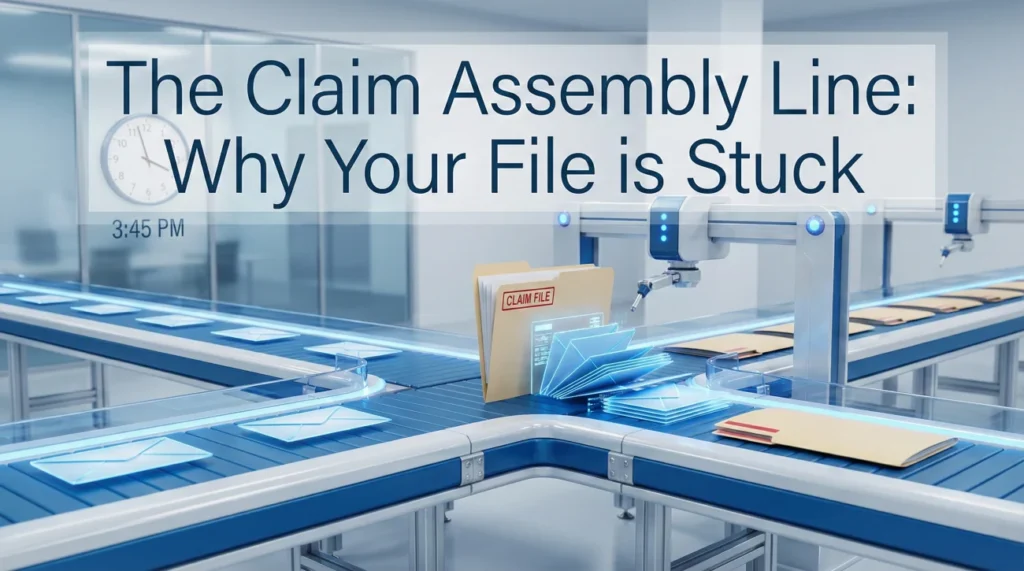
In this article, we will cover the most common operational bottlenecks that delay claims, how to identify them, and the specific questions you can use to unblock your file. In my years of auditing claims operations, I have reviewed hundreds of heavily delayed files. I can tell you that intentional delays are quite rare. The truth is much more boring, but equally frustrating: an insurance company is a massive, fragmented assembly line. Your file is a piece of data moving from an intake rep, to an independent contractor, to a desk adjuster, to a supervisor, and finally to a payment processing unit.
If a single piece of paper is mislabeled, or if a software glitch fails to alert the next person in line, the assembly line simply stops. In many cases, the system does not automatically raise a red flag to tell anyone your file is stuck. It just sits on a virtual desk gathering digital dust.
To unblock your claim, you generally cannot just call the customer service number and ask, “What is taking so long?” You have to diagnose the exact operational bottleneck. Throughout the life of a typical claim, I consistently see files get trapped in specific administrative gaps. Let’s walk through the three main phases of a claim so you can identify exactly where your file might be stuck.
The Bottleneck Map: A Quick Diagnostic Guide
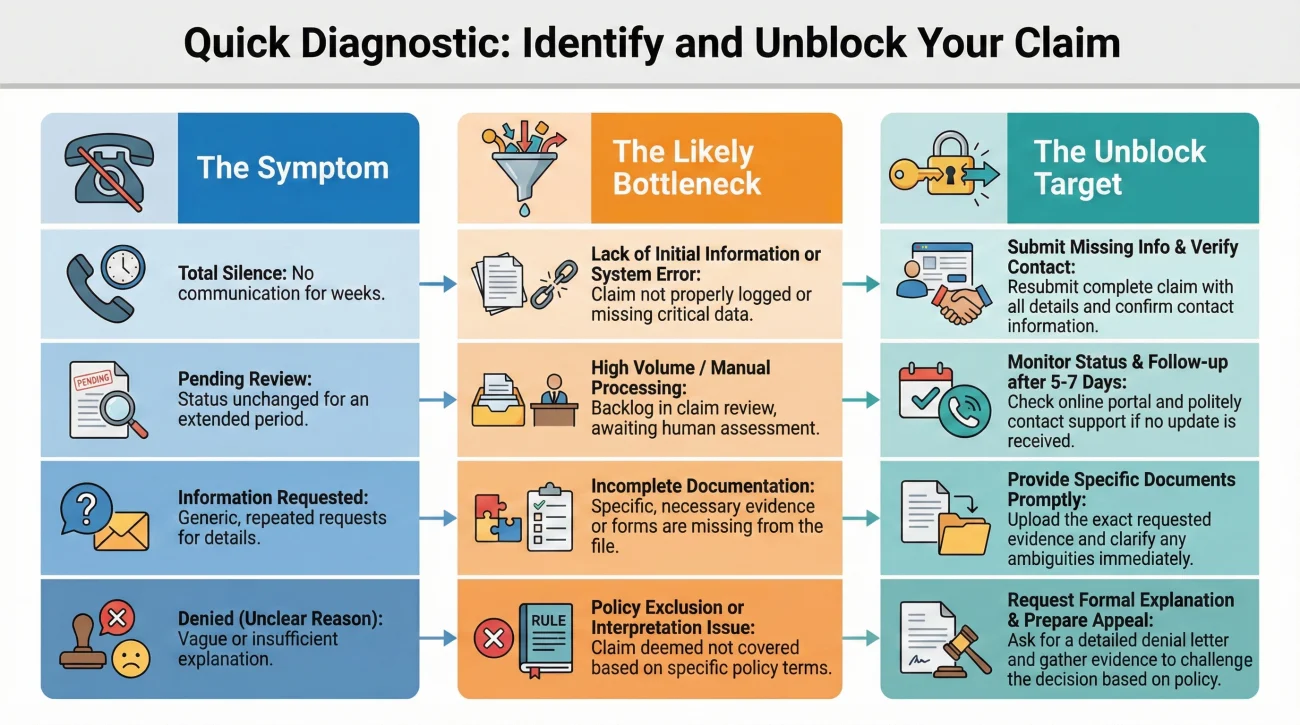
If you are feeling stuck right now, use this quick diagnostic map to match your current symptom to the most likely operational bottleneck. Once you know the bottleneck, you will know exactly what question to ask.
| The Symptom (What You Experience) | The Likely Bottleneck | The Unblock Target (What to Ask For) |
|---|---|---|
| Total silence in the first two weeks. | Unassigned Intake Queue | Ask for the specific name and direct line of your assigned desk adjuster. |
| The inspection is done, but no estimate arrives. | Field-to-Desk Disconnect | Ask for the exact date the field report was requested and the vendor’s deadline. |
| The rep says “it is pending review” for weeks. | Pending Authority / Missing Info | Ask if it is waiting for a manager’s signature or a document from you. |
| The check is issued but your lender has it. | Mortgage Co-Payee Delay | Ask your lender for their specific draw process document checklist. |
Scenario 1: The “Total Silence” Phase (Days 1 to 14)
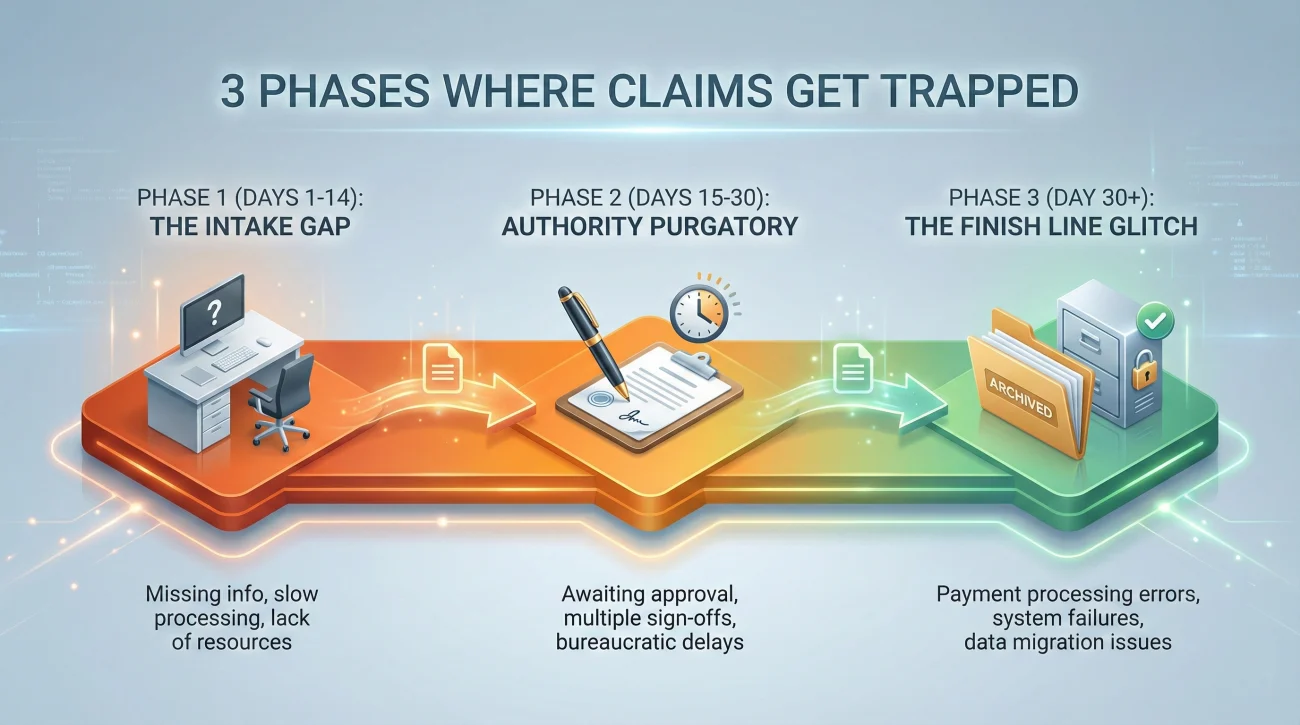
The first few weeks of a claim are highly volatile. Information is being gathered from multiple sources, and the file is changing hands rapidly. If you file a claim and hear absolutely nothing for ten days, you are likely caught in an early routing gap.
The most basic bottleneck is the Unassigned Intake Queue. When you report a claim online, it lands in a massive bucket. During a busy season, automated routing systems can fail, leaving your file without a specific, named desk adjuster to manage it. No one is calling you because no one actually owns your file.
If an adjuster has been assigned, the delay usually shifts to the Field-to-Desk Disconnect. The person who visits your house to take photos is often an independent field adjuster. They do not write the checks; they just gather evidence. I frequently see delays happen because the field adjuster finishes the inspection on a Monday, but takes three weeks to write and upload their PDF report. Your desk adjuster cannot move forward without that report, and they often will not proactively chase the field vendor unless you request them to do so.
Similarly, if your claim requires an engineer to inspect structural damage, you may fall victim to Third-Party Vendor Dependencies. External experts often operate on their own timelines, and desk adjusters routinely use this as an explanation for why they haven’t touched your file.
How to Unblock Early Delays
When facing total silence early in the process, your goal is to locate the file and force an assignment. When you call in, try to avoid asking for a general status. Instead, use a targeted approach to pin down the bottleneck.
“I have not received an update since the initial filing. Can you check the system and confirm the name of the specific desk adjuster who owns this file? If it is waiting on the field adjuster’s report, I need to know the exact date that report was requested and the deadline the vendor was given to upload it.”
This phrasing works because it prevents the representative from giving you a generic “we are working on it” response. It requires them to look at the assignment log and vendor tracking system.
Scenario 2: The “Pending Review” Purgatory (Days 15 to 30)
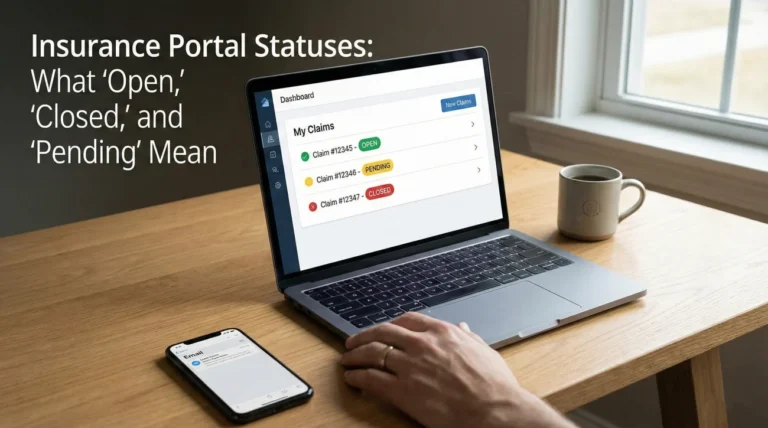
Once the photos are uploaded and the initial facts are gathered, the file enters the desk phase. This is where the actual money is calculated. If you call for an update and the representative says, “It looks like it is currently pending review,” you should ask for clarification immediately.
In operations, “Pending Review” is a commonly vague default answer. It is usually hiding one of three internal traffic jams.
First, it might be caught in the Pending Authority Trap. Desk adjusters do not have unlimited check-writing power. If your roof replacement costs $15,000 but the adjuster’s limit is $5,000, they must submit the file to a manager for “authority.” Managers review hundreds of files a week, and yours may just be sitting in a queue waiting for a signature.
Second, the delay might be caused by a Silent Missing Information Flag. This is one of the most common operational failures I see. An adjuster starts writing your estimate, realizes they need a copy of your plumber’s invoice, flags the file internally as “Waiting on Insured,” and moves to their next claim. The error happens when they forget to send you an email asking for the invoice. You are waiting on them, and they are waiting on you, in complete silence.
Third, if you have submitted your own contractor’s bid, you might be facing a Contractor Standoff. Your contractor quoted $20,000; the insurer estimated $12,000. Neither party will budge, and critically, neither party picks up the phone to negotiate. The file simply stalls.
Key Point: It is best not to accept “pending review” as a final answer. Ask the representative to define the exact stage of the review: “Is it waiting for a manager’s signature, or is it flagged for missing documents from my end?”
Field Note: The Adjuster Reassignment Shuffle
Before we look at the final stages of a claim, I need to address a highly disruptive bottleneck: staff turnover. The insurance industry often experiences high turnover rates, especially during peak storm seasons.
I have reviewed files that sat completely untouched for a month simply because the original desk adjuster went on medical leave or was reassigned to a different catastrophe team. The automated software was supposed to route the file to a new adjuster, but an error occurred. The homeowner assumed a thorough investigation was happening. The reality was that nobody even knew the file existed because it was assigned to an empty desk.
⚠️ Warning: If an adjuster who previously replied to you within 24 hours suddenly goes completely dark for a full week, it is a good practice to call the main customer service line to verify if that employee still works in that specific department.
Scenario 3: The “Finish Line” Illusions (Days 30 and Beyond)
Sometimes the estimate is done, the amounts are agreed upon, and you are just waiting for the check to arrive. Yet, weeks pass. Delays at this stage are frequently administrative errors or third-party processes.
One frequent culprit is the Misrouted Email. You emailed a signed document to the generic claims inbox, but you forgot to put your claim number in the subject line. The mailroom routing software could not read it, so it dumped your email into an unassigned queue. The adjuster literally never received the property claim documents you carefully prepared.
Another common glitch is the Auto-Closed File. Many insurance software systems are designed to automatically archive a claim file if there has been no activity logged for 30 to 45 days. If you are waiting two months for a contractor to finish work and do not email the adjuster to keep the file active, the system quietly shuts it down. You call for a payout, only to find out the file has been closed for weeks.
The Mortgage Co-Payee Delay (Loss Drafts)
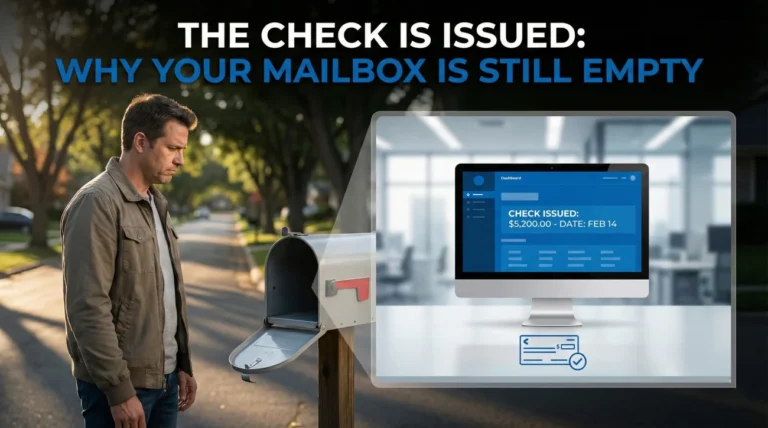
Finally, the payout itself can be stalled by the Mortgage Co-Payee Delay. If you have a mortgage, the lender is listed as an additional interest on your policy to protect their collateral. Because of this, the insurance company is typically required to make large settlement checks co-payable to both you and your lender.
The check is often issued quickly, but it goes straight to the lender’s loss draft or escrow department. To release the funds, the lender usually implements a “draw process,” meaning they release the money in phases as the repair work is completed. They will typically require specific documents from you before releasing the first draw. In many cases, you will need to provide the insurance adjuster’s estimate, your chosen contractor’s signed bid, a W-9 form from your contractor, and occasionally a mid-point inspection report. The insurance claim is technically “done,” but your money can be stalled for weeks by your lender’s administrative process if you do not proactively ask for their exact document checklist.
Diagnosis Scripts by Communication Channel
Depending on how you communicate with your insurance company, you can adapt your approach. Here are three short scripts designed to bypass generic updates and pinpoint the operational bottleneck across different channels.
✉️ The Email Script:
“Hello [Adjuster Name], I am checking on the status of my estimate. Can you please confirm if this file is currently pending management authority, or if you are waiting on a specific document from my side to proceed? If I need to provide anything, please let me know.”
💻 The Portal Message Script:
“Claim update request: Is this file currently active and assigned to a specific desk adjuster, or are we still waiting on the third-party field report to be uploaded? Please provide an ETA for the next internal review.”
📞 The Short Phone Script:
“I understand the claim is in review. Can you tell me exactly whose desk the file is on right now, what specific task they are performing, and the date I should expect that task to be completed?”
After the Diagnosis: What Comes Next?
Getting an answer about the bottleneck is just the first step. Once the representative tells you exactly what they are waiting for, you need to set a “follow-up trigger.” For example, if they state they are waiting on a manager’s signature and it normally takes three days, you should calmly state that you will follow up on the fourth day if you have not heard back.
This is where disciplined recordkeeping saves you from endless frustration. Every time you identify a delay and agree on a next step, you must log it. Building a reliable claim follow-up system ensures you are tracking exact dates, exact names, and exact responsibilities.
Whenever you hang up the phone or send an email, your notes should clearly state the identified bottleneck, the name of the person who owns the next action, and the specific date they promised to complete it. If you summarize this action plan out loud before ending a call, you significantly reduce the chances of the file slipping through the cracks again.
Final Takeaway
A delayed insurance claim is rarely a mystery, and it is almost never a conspiracy. It is typically an administrative failure. Files get stuck in general queues, managers get backed up with approvals, and adjusters silently wait for documents they forgot to ask you for.
By changing your communication strategy from passive frustration to active diagnosis, you take control of the timeline. Stop asking why it is taking so long. Start diagnosing the exact phase your claim is in, locate the specific bottleneck, and hold the representative accountable for a definitive next step.
❓ FAQ
⏳ Why is my insurance claim taking so long to process?
Claims often stall due to operational bottlenecks, rather than intentional denials. Common reasons include files waiting for a manager’s financial approval, delays from third-party inspectors, or adjusters silently waiting for documents they forgot to request from you.
📞 What should I say when calling about a delayed claim?
Try not to ask for a general update. Ask specifically: “Whose desk is this file on right now, what exact action are they performing, and what date will that action be completed?” This helps you get a clear, accountable answer.
🕵️♂️ What does “pending review” mean on an insurance claim?
“Pending review” is a vague administrative status. It usually means the desk adjuster has finished their estimate and sent it to a supervisor or management tier for final financial approval and signature before a check can be issued.
🏢 Why did my insurance claim get reassigned to a new adjuster?
High turnover, medical leave, or changing catastrophic storm assignments often cause reassignments. When this happens, it is critical to contact the new adjuster quickly to ensure they have read your file and to prevent the claim from restarting from scratch.
🛠️ Can my contractor talk to the insurance adjuster?
Yes, and in many cases they should. If your claim is stalled because the contractor’s estimate is higher than the adjuster’s payout, scheduling a joint phone call between the two of them is often the fastest way to reconcile the differences.
📧 Why didn’t the adjuster get the documents I emailed?
If you fail to include your exact claim number in the subject line of your email, automated mailroom software often cannot route your attachments to your specific file. The email can end up in an unassigned queue.
🔒 Why was my insurance claim closed without payment?
Many claims systems automatically close files after 30 to 45 days of administrative inactivity. If you were waiting on a contractor and did not update the adjuster, the system may have archived it. You can usually reopen it with a simple phone call.
🏦 Why is my mortgage company holding my insurance check?
If you have a mortgage, the lender is listed on the policy to protect their investment. The insurance company must make large checks co-payable. You will need to contact your lender’s loss draft department to fill out their specific paperwork to release the funds in phases.
📋 Is it normal to wait weeks for a field adjuster report?
While independent field adjusters are often busy, waiting multiple weeks for a basic report is a bottleneck. You should ask your desk adjuster to contact the field team directly to demand an estimated time of arrival for the uploaded photos.
📝 How do I keep track of promises from my insurance company?
You should maintain a written communication log. Every time you call, record the date, the representative’s name, the bottleneck identified, and the specific date they promised to resolve it. Summarizing this plan out loud before hanging up helps ensure clarity.
⚠️ Disclaimer: PropertyClaimChecklist.com provides practical guidance, process checklists, and example follow-ups to help you organize a property claim and move it forward. It is not policy language, claim documentation, legal content, or a substitute for your insurer's instructions. Always rely on your carrier's requirements and your actual policy terms for what must be submitted and how decisions are made.