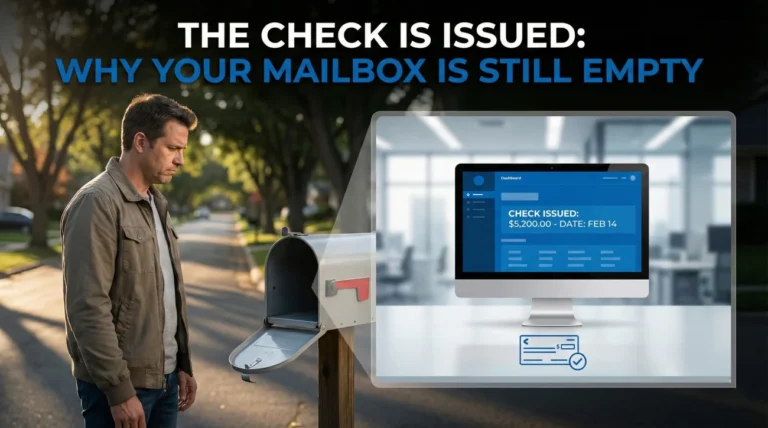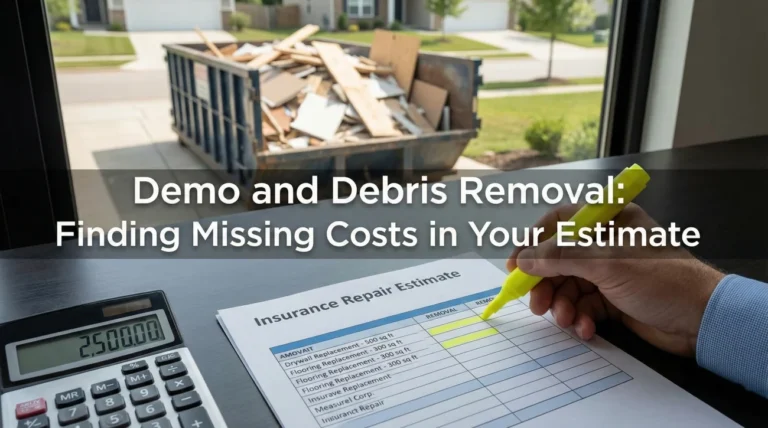

- The “Black Hole” Phase: The period between the inspection and the estimate is the most common stall point. It is usually operational rather than malicious.
- The “Field to Desk” Handoff: The person who visited your house often does not have the authority to send the check. They must upload their work to a desk adjuster first.
- The Invisible QA Queue: High-value estimates often sit in a “Quality Assurance” review folder for days before anyone sees them.
- Focus on the Stage: Don’t ask when it will be ready. Ask if the field report is uploaded or if the file is in QA review to get the truth.
The Silence After the Inspection
You had the inspection. The adjuster came out, took hundreds of photos, measured the rooms, and seemed generally agreeable. They told you, “I’ll get this written up shortly.” And now, two weeks have passed, and you have received absolutely nothing. No estimate from insurance means no check, and no check means no repairs. The silence can be deafening.
In my experience within claims operations, I often see this phase as the “Great Filter.” It is the point where organized files keep moving and disorganized files get stuck in digital limbo. The frustration for a homeowner usually comes from a lack of visibility. You are waiting for a result, but you don’t see the complex assembly line that produces that result.
The delay is rarely because the adjuster is ignoring you personally. In many cases, it is because the file has hit a specific operational snag, such as a missing vendor report, a software upload error, or a backlog in the review department. To speed it up, you need to stop asking “Where is my money?” and start diagnosing exactly which part of the assembly line is broken. When you understand how the system moves, you can help unstick the wheels.
Behind the Scenes: How an Estimate is Born
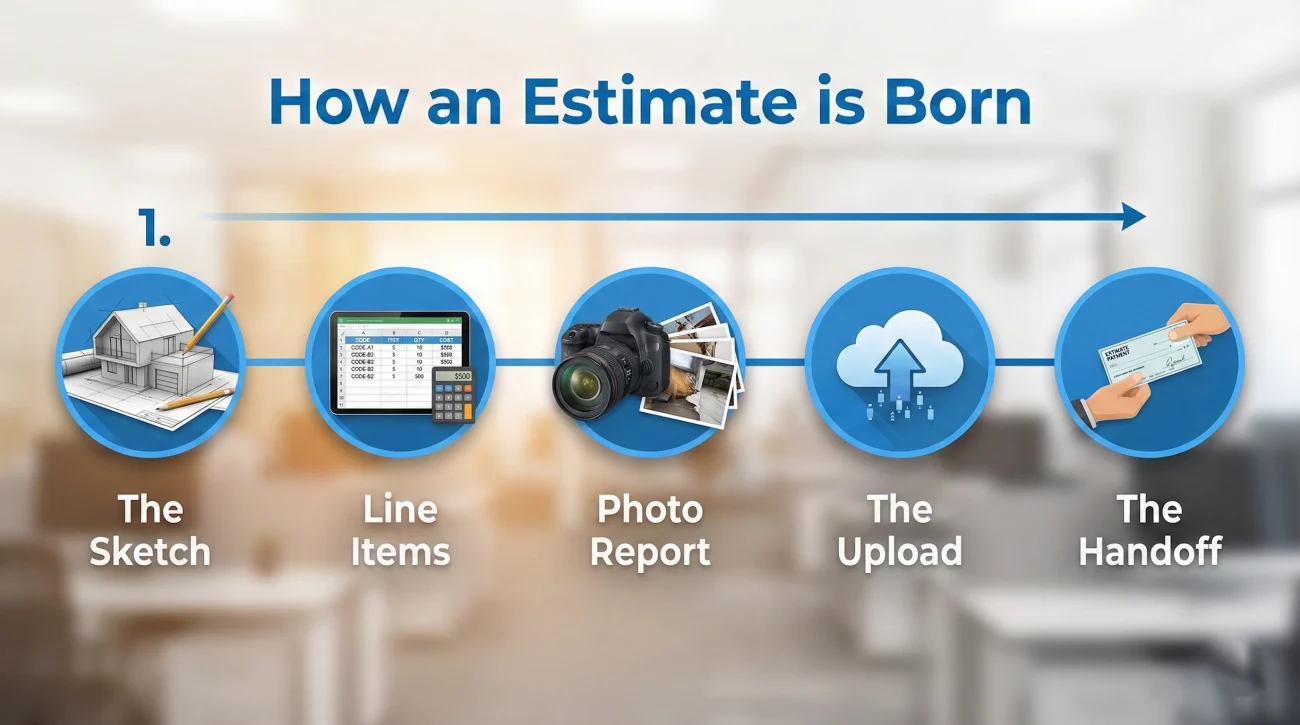
To understand why you have no estimate yet, you need to understand what physically happens after the adjuster drives away from your house. It is not as simple as typing numbers into a spreadsheet. The process involves multiple layers of data entry and synchronization that can fail without warning.
Here is the typical workflow I see in operations every day:
- The Sketch: The adjuster loads their measurements into estimating software to draw a 3D model of your home. If a single measurement is missing, the software often generates a “critical error” that prevents the file from being submitted.
- The Line Items: They select thousands of specific repair codes for every damaged surface. For example, they must distinguish between different types of drywall finishes or levels of paint quality.
- The Photo Report: They label and organize the 50 to 100 photos they took to prove why they chose those specific line items. If the photos are blurry or don’t match the sketch, the file will be flagged for review later.
- The Upload: They hit “Complete” and the file uploads to the insurance carrier’s central server. If the adjuster is working on a mobile hotspot in a storm-damaged area, this sync can frequently fail.
- The Handoff: A desk adjuster (the “checkbook”) or a supervisor opens the file, reviews it for errors, checks coverage limits, and then authorizes the payment.
If the process breaks at any one of these five steps, the homeowner gets silence. Your goal is to pinpoint which step failed so you can provide the nudge required to get the assembly line moving again.
Reason 1: The Field Adjuster Bottleneck
The most common reason for a delay in the first 7 to 10 days is simply that the field adjuster hasn’t finished writing the report. During busy storm seasons, field adjusters often inspect 3 to 5 houses a day. That means for every hour they spend inspecting, they have at least 2 hours of desk work to do at night.
Field Note: Adjusters naturally prioritize files that are “easy to close.” If your claim requires a complex coverage decision or a lot of tedious line-item entry, they might procrastinate on writing it to finish five easier claims first. It is a volume game.
I have seen adjusters sit on a file for days because they forgot to measure one specific window or closet and are dreading calling you to ask for a photo. They delay the whole estimate to avoid admitting the mistake. This is why a proactive follow-up is necessary to see if the “Field” portion of the job is actually complete.
The Binary Inquiry
Avoid the generic question “Is it done yet?” Instead, force a status update on the specific technical task. This forces the adjuster to look at the “upload status” on their dashboard.
Use this prompt:
“Has the field inspection report been successfully uploaded to the carrier’s system yet?”
This question forces a binary answer. If they say “No,” you know the ball is still with the person who came to your house. If they say “Yes,” you know you need to stop calling the field adjuster and start calling the desk adjuster at the main office.
Reason 2: The “QA” Loop (Quality Assurance)
This is the invisible killer of timelines. In many insurance companies, if an estimate exceeds a certain dollar amount, the desk adjuster is not allowed to approve it. It automatically routes to a “File Reviewer” or “QA Team.”
This team’s only job is to find mistakes. They look for “leakage,” which is operational slang for paying too much. If they find an error, such as the adjuster paying for two coats of paint when the photos only justify one, they “kick back” the file to the adjuster for correction.
In my experience, you are rarely notified when this happens. The file just sits in “Pending Correction” status. The adjuster has to fix it and re-upload it. I have seen files bounce back and forth in this QA loop for weeks while the homeowner hears nothing. The adjuster is busy with new claims and doesn’t prioritize the “corrections” queue.
The Troubleshooting Prompt
The specific question to ask:
“Is my estimate currently in a file review or QA queue, or has it been approved for release?”
If the desk adjuster admits it is in review, follow up with a helpful offer: “What specific items are being questioned? I may have additional photos that can help clarify these points so it can be approved today.”
Reason 3: The Third-Party Dependency
Sometimes the adjuster cannot finish the estimate because they are waiting for a specialist report or a final bill. This is extremely common in water and roof claims where the adjuster isn’t an expert in every field.
- 📄 Engineer Report: If there was a question about structural damage or foundation cracks, an engineer must write a formal report before an estimate can even start.
- 🧪 Mitigation Invoice: If you had water cleanup, the adjuster might be waiting for the final bill from the dry-out company to verify the demolition costs before they write the “repair” portion.
- 🪜 Specialist Quotes: If you have high-end custom cabinetry or rare materials, the adjuster might be waiting for a local vendor to provide a price quote.
❌ Operational Nightmare: I once managed a file that stalled for 21 days because the adjuster was waiting for a $400 invoice for an emergency tarp installation. The entire $40,000 roof estimate was held “hostage” by the system until that $400 receipt was uploaded. No one told the homeowner. Once we identified the hold, the homeowner sent the receipt, and the check was issued the next day.
Checking for Holds – How to ask:
“Are there any outstanding vendor reports or invoices you are waiting on before you can finalize the estimate?”
Reason 4: The Coverage Decision
It is possible the estimate is completely finished, but the insurance company hasn’t decided if they owe you the money yet. This is a “Coverage Issue” rather than a “Damage Issue.”
The adjuster might have written up the cost to fix the floor, but the carrier is still researching whether the cause of the leak (like wear and tear) is covered by your policy. In this scenario, the estimate exists, but it is locked behind an investigation.
If this is the case, in many jurisdictions, the carrier is expected to send you a “Reservation of Rights” (ROR) letter. This letter essentially says they are investigating and you shouldn’t assume the claim is approved yet. If you haven’t received this letter but they are withholding the estimate for coverage reasons, their process may be inconsistent with standard fair claims handling practices in many states.
The Direct Inquiry question to ask:
“Is there a coverage question holding up the release of the estimate? If so, when was the Reservation of Rights letter mailed?”
Your Action Plan
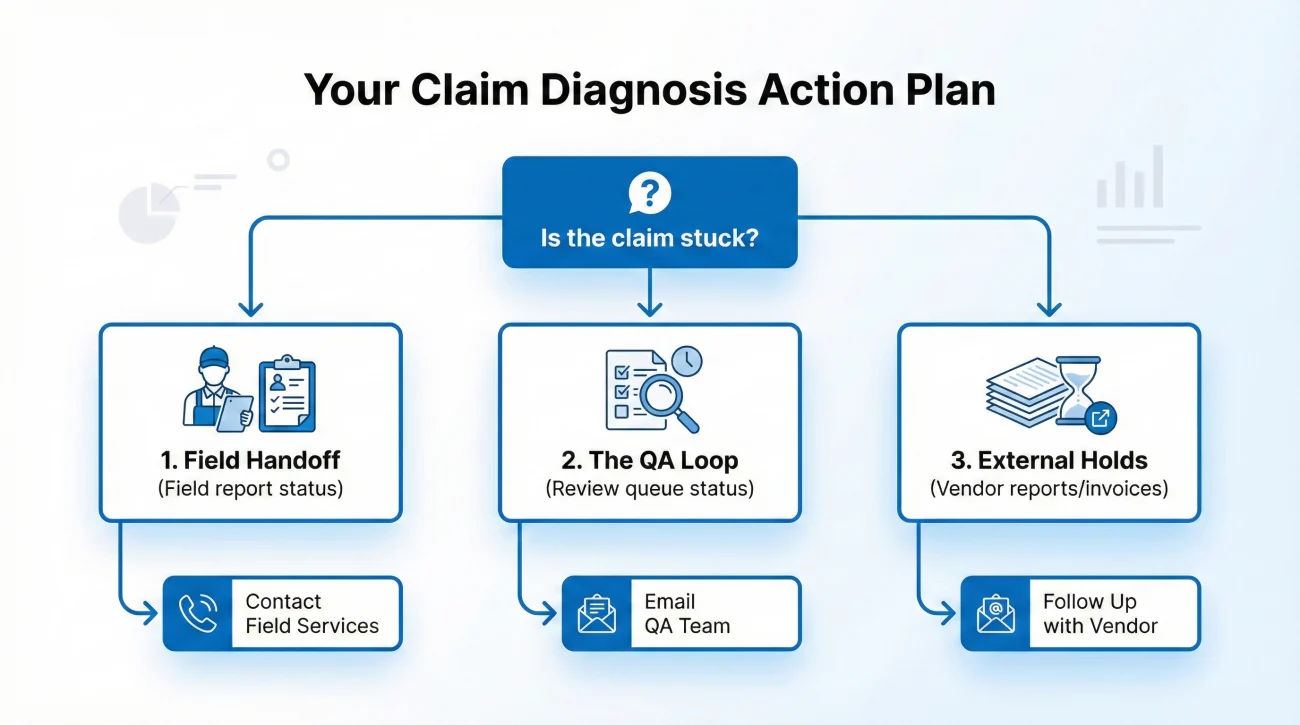
You cannot simply sit and wait. A stalled claim rarely unsticks itself without a nudge from the owner. You need a systematic approach to finding the bottleneck that focuses on stages, not just dates.
This aligns with the broader insurance claim follow-up system which emphasizes identifying the stall point before applying pressure. In my experience, the person who knows why a file is stuck is the one who gets it moved first.
The “Diagnosis” Email Script:
It has been [Number] days since the inspection. I have not received the estimate yet. To help me update my contractor on the timeline, please clarify which stage the file is in:
1. Has the field report been successfully uploaded to the system?
2. Is the file currently in a QA or supervisor review queue?
3. Are we waiting on a specific vendor report or invoice (like the engineer or mitigation bill)?
Please let me know which of these is the current hold so I can see if I can assist with any missing information.”
Final Thoughts
Operational delays are frustrating, but they are almost always solvable when you change your approach. Shifting your language from complaining about the delay to troubleshooting the process signals to the adjuster that you understand how their job works. You stop being a “pest” and start being a project manager. When you find the missing piece of paper or the stuck review, the estimate usually follows within 24 to 48 hours. Don’t let your file stay in digital limbo.
❓ FAQ
⏳ How long does it typically take to get an insurance estimate?
In many cases, it commonly takes between 7 and 14 business days after the inspection. However, simple claims can be done in a few days, while complex losses involving engineers can take 30 days or more. These timelines often fluctuate depending on the carrier’s current backlog.
📞 Why is my insurance adjuster not responding to my calls?
Adjusters often avoid calls when they have “no news” to report. They may be waiting for a document from a third party or their supervisor. While it is poor service, it is often a sign the file is stalled at a specific stage, not that they are ignoring you personally.
👷 Can I get my own estimate if insurance takes too long?
Yes, and you should. Do not wait for their numbers to start your process. Get a detailed estimate from your contractor and submit it. Sometimes providing your own numbers forces the adjuster to respond because they have to compare your data to their own file.
🔄 What happens if the insurance estimate is missing items?
You can file a supplemental estimate. If the initial estimate is low or missing damage, you can accept the “undisputed” amount to start work and then submit additional proof (photos/contractor notes) to request the difference later.
🛑 Why does the portal say my claim is “Closed” but I have no check?
Some carriers close a file “administratively” once the initial inspection is done, even if payment hasn’t been sent. This is often a system setting. Call immediately and ask if a payment has been authorized or if the “Closed” status was an error.
📤 How do I know if they received the photos I sent?
The only way to know is to ask for a written confirmation. When you send emails, always include the claim number in the subject line. If you don’t hear back, follow up specifically asking, “Can you confirm the [Date] photos were successfully linked to my claim file?”
⚖️ Is there a legal deadline for the insurer to send the estimate?
Many states have fair claims handling laws that require a decision within 15 to 40 days of filing. However, the deadline for “sending the estimate” can often be extended if they are still investigating. Always check your state’s specific consumer bill of rights.
📝 Should I ask for an advance payment while I wait?
Yes. If the repair estimate is delayed due to a complex issue, you can ask for an “undisputed payment” for the parts that are clear, such as the initial water mitigation bill or temporary living expenses, to keep your cash flow moving.
🔎 What is a desk review exactly?
A desk review is when an inside adjuster (who never saw your house) checks the work of the field adjuster. The field adjuster is the “eyes,” but the desk adjuster holds the “checkbook.” Delays often happen during the handoff between these two people.
📧 Why is email better than calling to check on an estimate?
Email creates a timestamped record of your follow-up. If you call, the adjuster might say they will look into it and forget five minutes later. If you email with a claim number, your question usually gets saved directly into the claim file for anyone to see.
⚠️ Disclaimer: PropertyClaimChecklist.com provides practical guidance, process checklists, and example follow-ups to help you organize a property claim and move it forward. It is not policy language, claim documentation, legal content, or a substitute for your insurer's instructions. Always rely on your carrier's requirements and your actual policy terms for what must be submitted and how decisions are made.