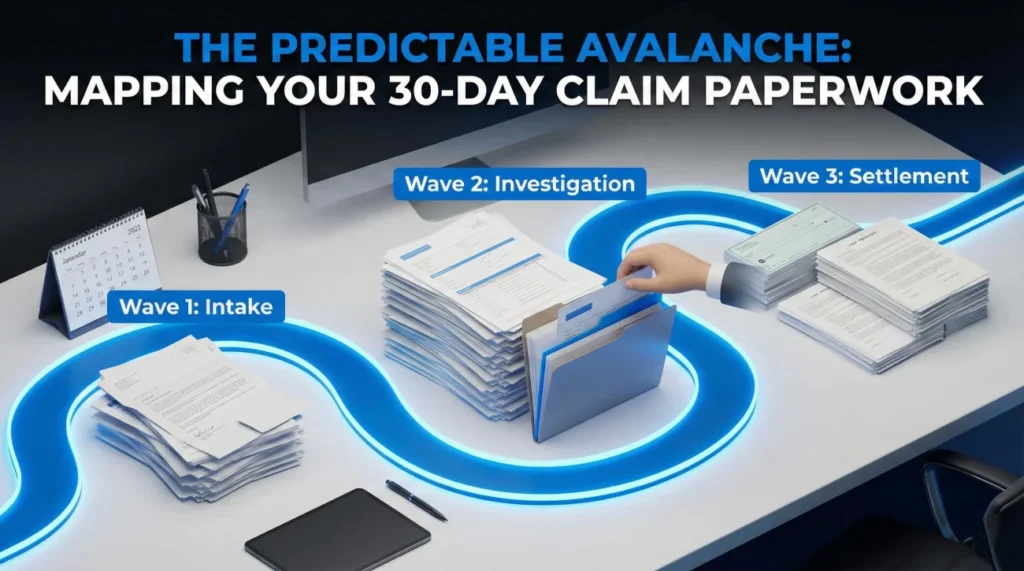
- The Pattern: Paperwork is not random. It follows a predictable “Three Wave” cycle: Intake, Investigation, and Settlement.
- Day 1 to 3 (Intake): Expect administrative forms like Acknowledgement Letters and Privacy Notices. These confirm the claim is open.
- Day 7 to 14 (Investigation): This is when the heavy documents arrive, including the “Reservation of Rights” and the initial Estimate.
- The Trap: The “Sworn Statement in Proof of Loss” often has a hard deadline (e.g., 60 days). Missing this specific document can become grounds for denial.
- Action Item: Use the timeline below to anticipate what is coming next so you don’t accidentally ignore a critical legal request.
The Predictable Avalanche
When you file a property claim, the sheer volume of mail can feel overwhelming. You receive emails from the claims department, letters from the privacy officer, and packets from the field adjuster. It feels like chaos, but in the claims operations world, it is a highly scripted sequence.
Adjusters do not send forms for fun. Every document is triggered by a specific event in the claim lifecycle. Understanding this insurance claim paperwork timeline helps you distinguish between “routine notices” you can file away and “action items” that require your immediate signature.
In many property claim workflows across major carriers, homeowners who get stressed are the ones who try to read every word of the privacy policy but ignore the Reservation of Rights letter. By mapping out the standard 30-day flow, you can focus your energy on the documents that actually affect your payout.
The 30-Day Snapshot (Scan This First)
If you are in a hurry, this table breaks down the typical flow of documents. Note that timelines can vary by carrier and catastrophe volume.
| Day Window | Document Name | Your Action | Deadline Risk |
|---|---|---|---|
| Day 1-3 | Acknowledgement Letter | Verify “Date of Loss” is correct. | Low |
| Day 7-14 | Reservation of Rights (ROR) | Read to see what coverage is in doubt. | Medium |
| Day 7-14 | Estimate (Scope of Loss) | Compare against contractor bid. | High (Financial) |
| Variable | Proof of Loss Request | Must sign/return or ask for extension. | Critical |
| Day 30+ | Release of Claims | Do not sign unless job is 100% done. | High (Legal) |
Phase 0: The Pre-Claim Prep (Before Day 1)
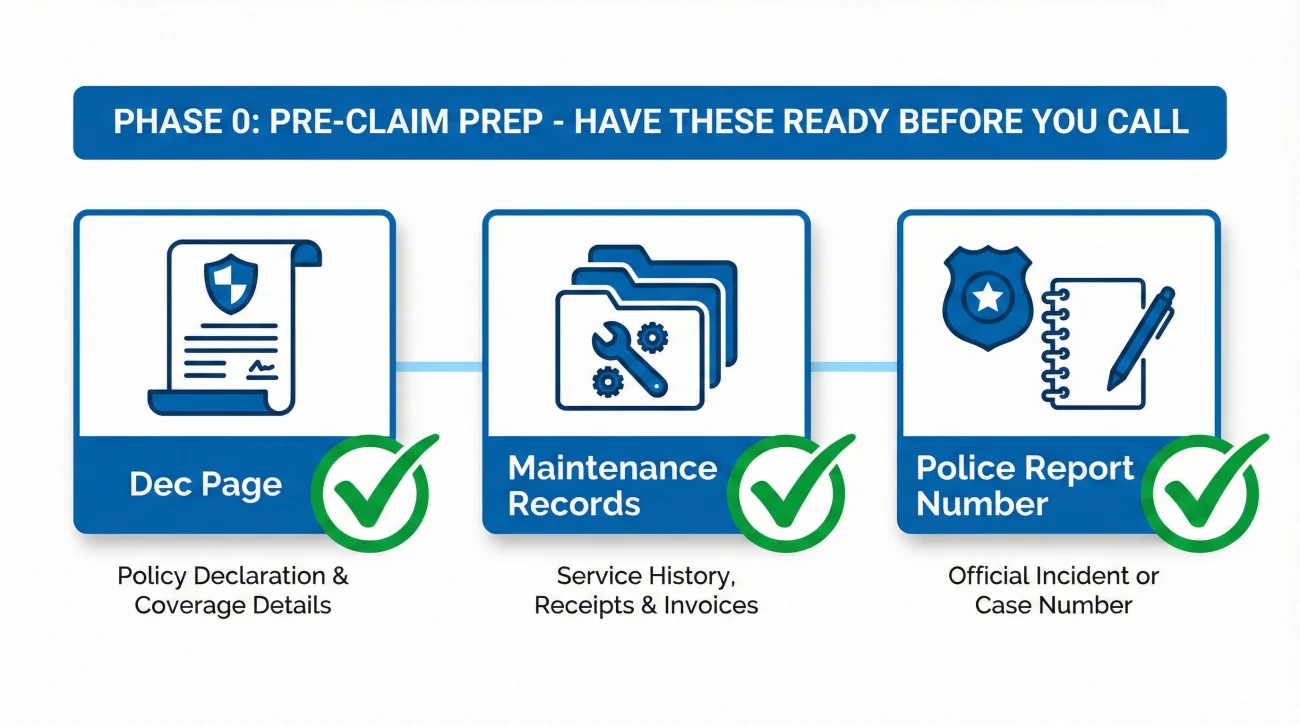
Before the avalanche starts, there are documents you should pull from your own files. Having these ready before you make the first call speeds up the entire intake process.
- 📄 The Policy “Dec Page”: This is the Declaration Page showing your coverage limits and deductible. You need to know your deductible before you file.
- 📄 Maintenance Records: If the damage involves a roof or HVAC, find the last invoice for repair or installation. This proves the item wasn’t already broken.
- 📄 Police Report Number: If the loss involves theft or vandalism, you cannot start the claim without at least the case number from the police.
Wave 1: The Intake Phase (Days 1 to 3)
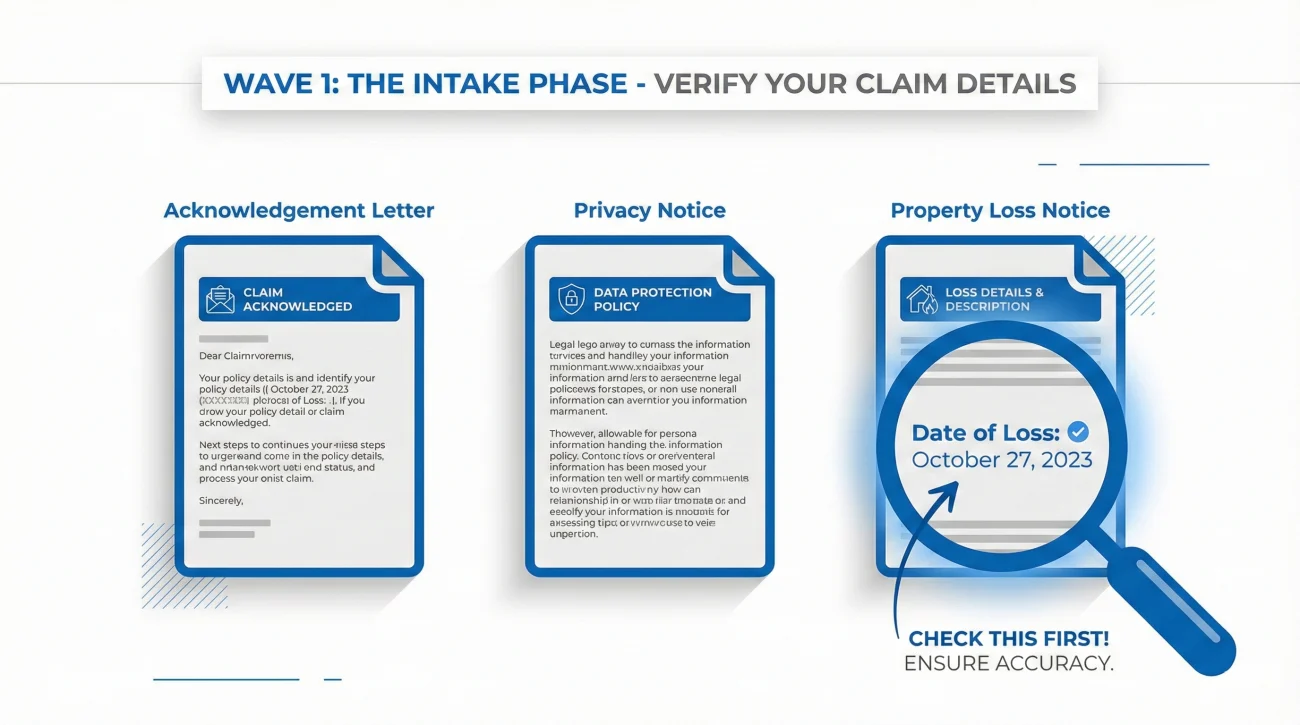
Immediately after you call to report the loss, the carrier’s system automatically generates a batch of administrative documents. These are mostly about compliance and setting up the file.
What to Expect?
- 📄 Acknowledgement Letter: This confirms they received your claim. It contains your Claim Number and the name of your adjuster.
- 📄 Privacy Notice: A standard legal disclosure about how they handle your data.
- 📄 Property Loss Notice: A form summarizing what you told them on the phone.
Your Action: Review the Acknowledgement Letter to ensure the Date of Loss is correct. A typo here (e.g., listing the wrong year) can cause coverage issues later. File the rest in your “Correspondence” folder.
Wave 2: The Investigation Phase (Days 7 to 14)
This wave hits after the field adjuster has visited your property. This is the most critical phase because the documents here define what the insurance company thinks they owe you.
The Critical Documents
The Estimate (Scope of Loss):
This is the line-by-line calculation of repairs. It is not a check; it is their offer. You must compare this against your contractor’s bid immediately.
Reservation of Rights (ROR):
A letter stating “We are investigating, but we might deny you later.” It sounds scary, but it is standard procedure when the cause of loss isn’t 100% clear yet. Do not panic, but do read it to see what they are questioning.
👉 This is when you build your counter-evidence. If their estimate misses items, you respond with your contractor’s bid. Managing this phase is the core of our property insurance claim documents checklist strategy, as this is where the financial value is determined.
Field Note: The “Proof of Loss” Trap
I worked on a file where the claim dragged on for months. The homeowner was negotiating the estimate back and forth with the adjuster. Suddenly, the claim was closed without payment. The reason? Failure to submit a “Sworn Statement in Proof of Loss.”
The carrier had sent a formal request for this document on Day 15. The letter stated: “Please submit a signed Proof of Loss within 60 days.” The homeowner thought this was just another generic form and ignored it, focusing instead on the estimate. In many policies, if the carrier formally requests a Proof of Loss and you do not provide it within the deadline (often 60 days), they can technically deny the entire claim for non-cooperation. It is a procedural trap. If you receive a document with “Sworn Statement” in the title, prioritize it above everything else.
How to Spot a Hard Deadline in 15 Seconds
Not every letter has a deadline. To filter the noise, scan every letter for these specific “trigger words”:
- “Must”
- “Within [Number] Days”
- “Failure to comply”
- “Sworn”
- “Requested” (in the context of “We have requested…”)
If you see these words, put the document on top of the pile. Everything else is likely just information.
Wave 3: The Settlement Phase (Days 30+)
Once you agree on a number (or at least a partial number), the settlement paperwork arrives. These documents trigger the release of funds.
What to Expect
- 📄 Payment Explanation Letter: Breaks down the check amount, deductible, and depreciation.
- 📄 Release of Claims Form: A legal contract saying “I accept this money and promise not to sue you.”
- 📄 Recoverable Depreciation Form: A form you use later to claim the holdback money once repairs are done.
Release Form Sanity Check
Before you sign any release, run this 5-point check. Once signed, you often cannot go back.
- Is this a “Partial Release” (for this check only) or a “Full and Final Release”?
- Does it explicitly close my right to claim “Hidden Damage” later?
- Does it mention “Supplemental Claims”?
- Is the dollar amount exact to the penny?
- If I sign this, do I forfeit my right to “Recoverable Depreciation”?
⚠️ Warning: If you are unsure, send a written inquiry: “Does signing this document prevent me from filing a supplement for hidden damage discovered during repairs?” Get the answer in writing.
Where to File Each Document
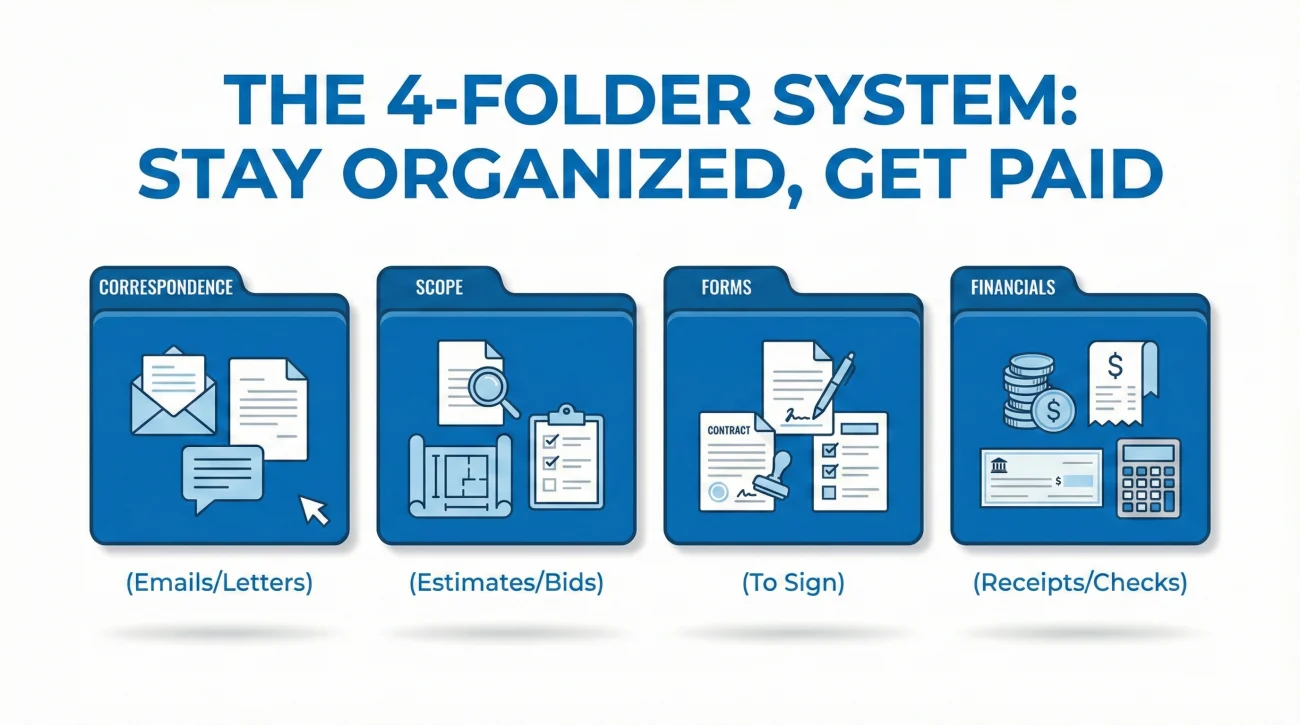
To keep from drowning in paper, set up 4 simple physical or digital folders immediately:
- Correspondence: Letters, emails, privacy notices, acknowledgements. (Chronological order).
- Estimates & Scope: Carrier estimates, contractor bids, engineering reports. (Version order).
- Forms to Sign: Proof of Loss, Non-Waiver Agreements, Releases. (Action items).
- Financials: Copies of checks, payment explanations, depreciation logs. (Money trail).
When the Timeline Breaks
If you hit Day 30 and you still haven’t seen an Estimate or a Reservation of Rights letter, the timeline is broken. This silence is an operational red flag.
In this scenario, send a formal status request. Do not just ask “Any updates?” Be specific about the missing document. Use this script to get a reply.
Subject: Status Request – Missing Estimate – Claim [Number]
Hello [Adjuster Name],
It has been [Number] days since the field inspection on [Date].
Standard protocol suggests the Estimate should be available for review by now. I have not received it, nor have I received a delay notification letter.
Please confirm when I can expect to receive the Scope of Loss document so I can provide it to my contractor.
Regards,
[Your Name]
Final
The paperwork timeline is your map of the claim. If you know that Wave 2 involves the Estimate, you won’t stress when it doesn’t arrive on Day 3. If you know Wave 3 involves the Release Form, you will be careful not to sign it too early. Watch the mail, identify the phase you are in, and keep your eyes peeled for that “Sworn Statement” request. It is the one document that keeps a strict clock.
❓ FAQ
📅 How long does the insurance company have to send the estimate?
Timelines vary by state and carrier, but a common operational standard is 7 to 14 business days after the inspection. It can be longer during catastrophe events. If it takes longer, they should send you a letter explaining the delay.
✍️ Should I sign the Proof of Loss form immediately?
Only sign it if you agree with the numbers. If their number is too low, you may need to submit a “Partial” Proof of Loss (“undisputed amount”) or ask for a written extension to negotiate the estimate first.
🛑 What is a Reservation of Rights letter?
It is a formal letter stating that the insurance company is investigating your claim but has not yet decided if it is covered. It protects them from being sued for “waiving” their rights while they gather facts.
📨 Why do I get so many duplicate letters?
Automated systems often trigger letters at set intervals (e.g., every 15 days) until a task is marked complete in their software. If you get duplicates, it usually means a human adjuster hasn’t updated the file status yet.
🏚️ Do I need to keep the envelopes?
Yes. The postmark date on the envelope proves when the notice was actually mailed, which can be different from the date printed on the letter. This is useful if timelines are later disputed.
📝 Does the timeline restart if I get a new adjuster?
Officially, no. The deadlines usually stick to the original claim dates. However, practically, a new adjuster often needs a “grace period” of a few days to get up to speed. You should remind them of pending deadlines.
💸 When do I get the depreciation check?
This comes at the very end, often months later. You typically trigger it by submitting the “Certificate of Completion” or final invoices showing the work is done and you incurred the full cost.
🚫 What happens if I miss the Proof of Loss deadline?
It can be grounds for claim denial or closure for non-cooperation. If you need more time, ask for a written extension before the deadline expires. Most carriers will grant an extension if you are communicating.
📂 Should I fill out the personal property inventory right away?
Start early, but don’t submit it until it is complete. Once you submit it, the adjuster starts processing it. Sending 10 different versions confuses the process. Compile one master list.
🔐 Is the “Release of Claims” final?
Usually, yes. If it says “Full and Final Release,” signing it closes your claim forever. Be very careful and consider asking the adjuster to clarify if this closes supplemental rights.
⚠️ Disclaimer: PropertyClaimChecklist.com provides practical guidance, process checklists, and example follow-ups to help you organize a property claim and move it forward. It is not policy language, claim documentation, legal content, or a substitute for your insurer's instructions. Always rely on your carrier's requirements and your actual policy terms for what must be submitted and how decisions are made.