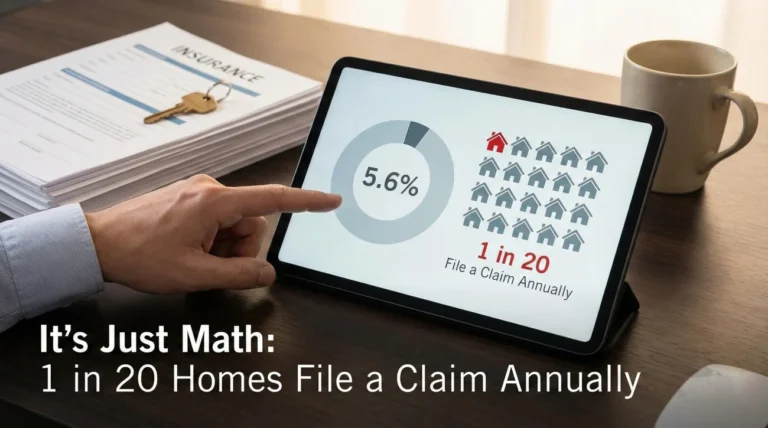

- The Market Has Changed: With premiums rising 24% (CFA) and climate risks increasing (Treasury), insurers are tightening their review processes.
- Scrutiny is High: The era of getting the “benefit of the doubt” on vague claims is over. Files must be precise to pass through the system.
- Evidence Over Story: Shift your mindset from telling a sad story to building a reviewable file. Adjusters need proof, not paragraphs of text.
- Preparation is Key: A clean paper trail, specifically a timeline log and mitigation records, is your best defense against delays.
The Era of “Easy” Claims is Over
If you feel like your home insurance claim is harder to manage, taking longer to process, or facing more pushback than you expected, you are not imagining it. You are experiencing the downstream effects of a massive shift in the global insurance market.
In my years working in claims operations, I have seen the industry cycle through soft markets and hard markets. We are currently in a very hard market. The “benefit of the doubt” that adjusters used to have the discretion to apply is disappearing. It is being replaced by strict algorithmic risk management and rigid documentation requirements.
You are not just asking for money to fix your roof or dry out your kitchen. You are entering a system that is actively trying to reduce its risk exposure. In this environment, a disorganized file is not just a nuisance. It is a red flag.
To navigate this, you need to understand what is happening behind the desk and, more importantly, how to present a file that survives this new level of scrutiny.
Why the System is So Tense Right Now
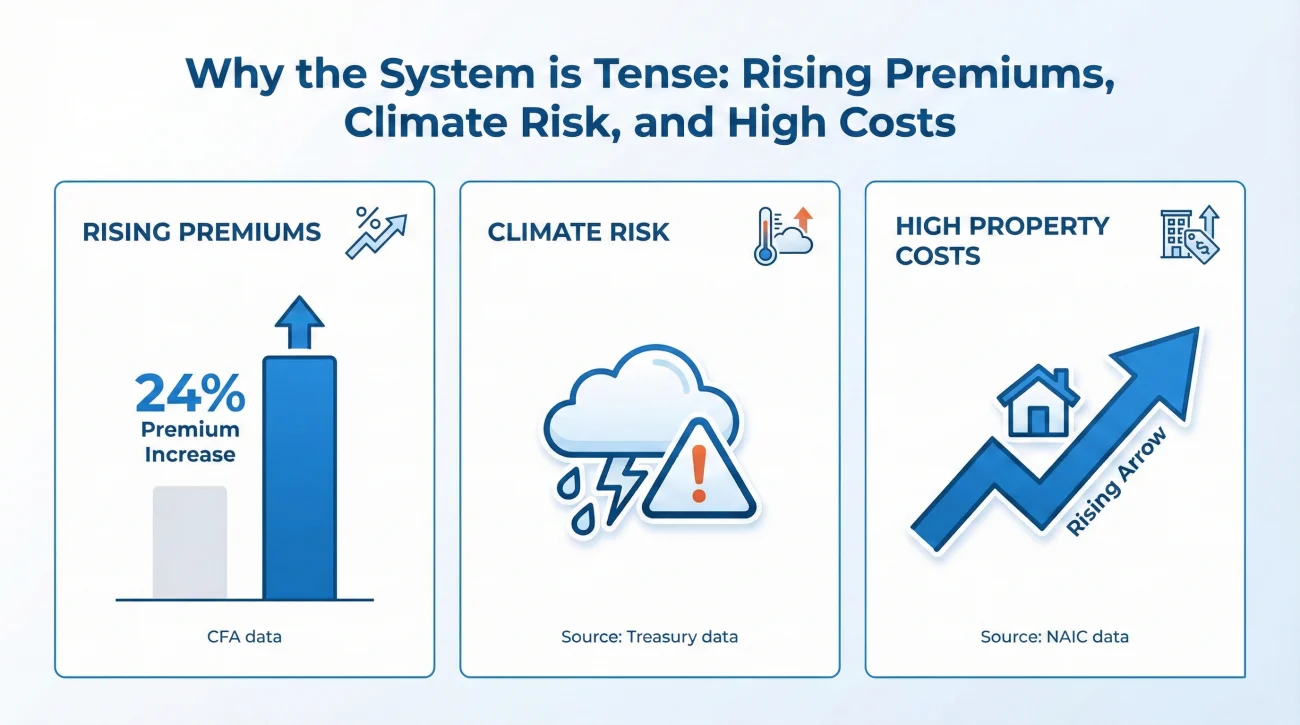
Before we look at your paperwork, it helps to understand why the person on the other end of the phone sounds so stressed or rigid. It is not personal. It is driven by data that is putting immense pressure on insurance carriers.
Recent reports paint a clear picture of the strain the industry is under. According to a report by the Consumer Federation of America (CFA), homeowners insurance premiums increased by an average of 24% between 2021 and 2024. That is a massive jump in a very short period.
Furthermore, the U.S. Department of the Treasury’s Federal Insurance Office (FIO) has highlighted that climate-related risks are making insurance less available and more expensive in many regions. When you combine this with the National Association of Insurance Commissioners (NAIC) analysis showing rising costs in property and casualty insurance, the result is a tighter, tougher environment for everyone.
Key Point: When insurers are under financial pressure, their tolerance for vague or poorly documented claims drops significantly. They cannot afford to overpay, so they double-check everything.
This macro-economic pressure flows down to the desk adjuster handling your file. They are likely handling a higher volume of claims with stricter guidelines on what they can approve without supervisor sign-off. If your file is messy, they often cannot help you even if they want to.
Field Notes: 3 Files That Get Flagged Immediately
In claims operations, we see thousands of files. Certain patterns trigger an immediate “stop and review” reaction. In today’s strict market, these mistakes can cause significant delays. Here are the three most common types of files that get stuck in the mud.
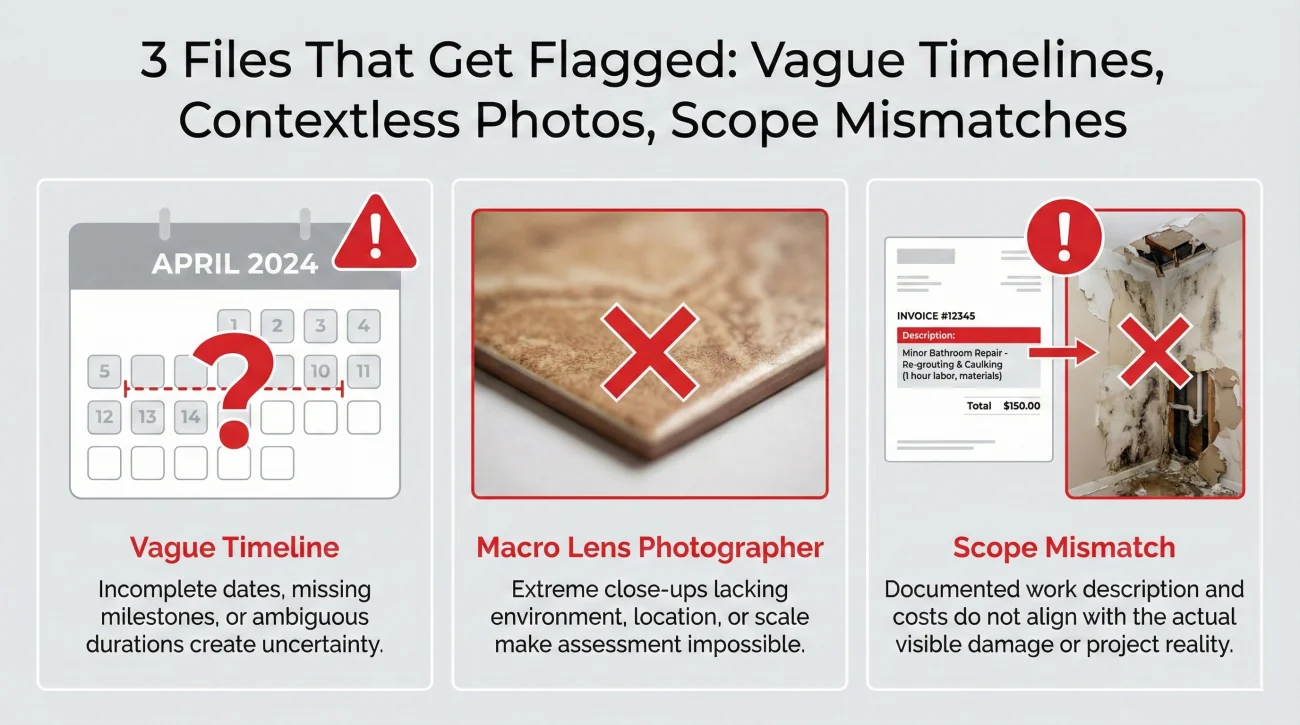
1. The “Sometime Last Week” File
This file has a vague Date of Loss. The homeowner says the damage happened “sometime last week” or “after the storm.” In a risk-averse market, insurers are cautious about paying for old damage or damage that occurred outside the policy period. If you cannot pin down the exact date and time of the occurrence, the adjuster has to investigate whether coverage applies at all.
2. The Macro Lens Photographer
This file contains twenty close-up photos of water stains or cracked tiles but zero photos of the room itself. I see this constantly. Without “establishing shots” (photos taken from a doorway showing the whole room), the adjuster cannot determine the scale of the damage or verify that these photos belong to your house. It looks suspicious, even if it is innocent.
3. The Scope Mismatch
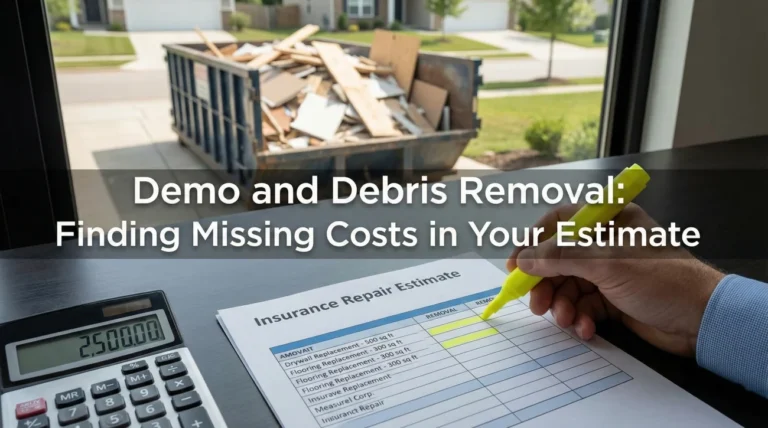
This happens when the contractor’s invoice does not match the visible damage. For example, the photos show a 4×4 patch of drywall cut out, but the invoice charges for replacing the entire wall. In the past, an adjuster might have called to clarify. Now? They will likely reject the line item entirely and ask for a revised invoice, adding weeks to your process.
❌ Note: Never assume the adjuster will “figure it out.” If the documents do not match the photos perfectly, the claim often stops moving.
Shift Your Mindset: Proof Over Story
The single biggest change you can make is to stop thinking of your claim as a story you are telling and start thinking of it as a case you are proving. Many homeowners write long, emotional emails explaining how stressful the event was. While I empathize deeply with that stress, the claims system does not have a field for “stress.” It has fields for “Cause of Loss,” “Date of Loss,” and “Scope of Damages.”
“This has been a nightmare. The water ruined everything in the basement and we need it fixed fast because my mother is moving in. Please help us.”
“Please find attached the timeline of events for the water loss on [Date]. Also attached are photos 1 through 10 labeled by room, and the mitigation invoice from [Company Name] for the drying equipment placed on [Date].”
The second approach gives the adjuster exactly what they need to tick boxes in their software and release a payment. The first approach just adds to their email backlog.
A Tale of Two Claims
To see how this plays out in reality, consider two water damage claims I saw recently with nearly identical damage: a burst pipe in the kitchen cabinet.
Claim A (Delayed 4 Months):
The homeowner sent 5 photos of wet wood and an invoice for $15,000 titled “Kitchen Repair.” The adjuster had to send a Request for Information (RFI) asking for the breakdown of labor, the drying log, and photos of the source of the leak. The homeowner took 2 weeks to reply. The adjuster then had to re-open the file, found the new photos blurry, and requested an inspection. The back-and-forth consumed months.
Claim B (Paid in 14 Days):
The homeowner sent a PDF evidence pack. Page 1 was a timeline. Page 2 was the plumber’s invoice stating “Replaced burst braided supply line.” Page 3 contained photos of the burst line, the water on the floor, and the mitigation fans running. The contractor’s estimate was itemized by square footage. The adjuster reviewed it, ran it against their pricing software, and issued the check.
The difference wasn’t the policy; it was the packaging.
The Minimum Viable Paper Trail
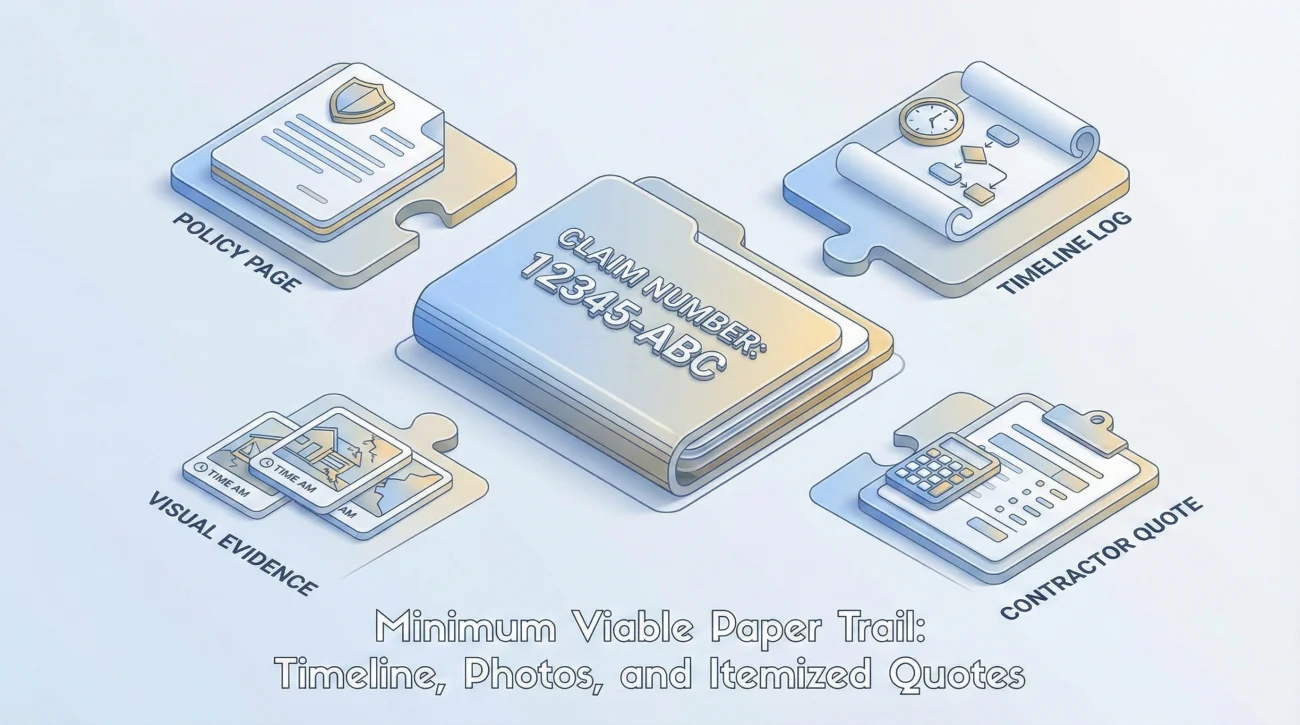
To survive in this high-scrutiny market, you need a solid paper trail. This is not about hoarding every receipt from 1990. It is about keeping the specific documents that answer the questions an adjuster is required to ask.
For a deep dive on exactly what to keep, look at our core guide on the Property Claim Documents Checklist. However, right now, ensure you have these pillars covered:
- ✅ Policy Declarations Page: This is the front page of your policy showing your coverage limits. Keep it handy so you know your caps.
- ✅ Proof of Ownership: Deeds or lease agreements are basic, but often asked for upfront now to prevent fraud.
- ✅ Claim Number Document: Start a physical or digital folder. Write the Claim # on the front. Every email subject line must have this number.
- ✅ The Timeline Log: A simple text file listing what happened and when (e.g., “Oct 12, 2pm: Discovered leak”).
- ✅ Visual Evidence: Photos of the damage, the source of damage, and the room context.
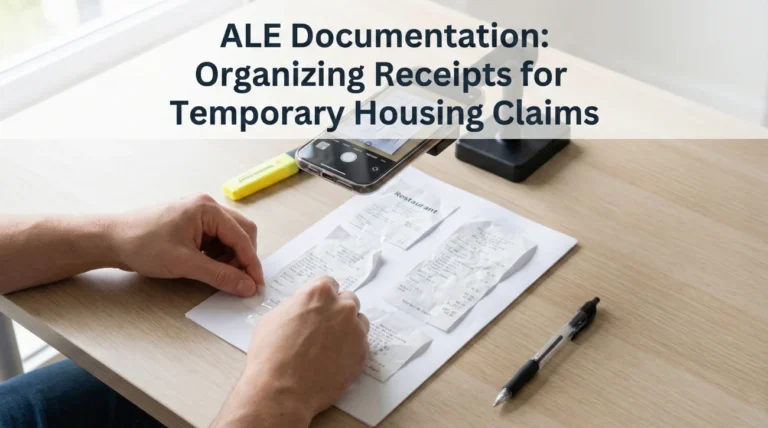
- ✅ Mitigation Daily Log: If you have drying fans running, log the dates they were placed and removed.
- ✅ Contractor Scope of Work: A detailed quote describing what will be done, not just the price.
- ✅ Communication Log: Who you spoke to, when, and what they promised.
⚠️ Warning: If you receive a Reservation of Rights (ROR) letter, do not panic, but do pay attention. It means the insurer is investigating but has identified a potential coverage issue (like a late report or excluded cause). It is not a denial yet, but it signals that your documentation needs to be precise.
Communication Scripts for a Strict Market
When you communicate with your adjuster, you want to sound organized and professional. In my experience, expressing anger usually slows things down because it forces the adjuster to act defensively. Being hyper-organized, however, forces the process to move.
The Portal vs. Email Reality
Most insurers now push you to use their online portal. While convenient, portals have flaws. They often compress images (making receipts unreadable) or fail to notify the adjuster that a new file has been uploaded.
💡 Pro Tip: Use the portal, but always back it up. After uploading, send a short email: “Just uploaded the mitigation invoice to the portal. Please confirm it is legible on your end.” This creates a timestamped proof that you provided the info.
Script: Confirming Receipt of Documents
In a high-volume environment, files get lost. Never send a document without asking for confirmation.
Subject: Claim #[Number] – Confirmation of Documents Sent
Hello [Adjuster Name],
I have just uploaded the photos of the kitchen damage and the plumber’s invoice to the portal.
Could you please reply to confirm you can view these files clearly? I want to make sure the file format works for your system.
Thank you,
[Your Name]
Script: Asking for Requirements in Writing
If an adjuster tells you on the phone that they need “some more info,” stop them. Vague requests lead to claim denials. Make them be specific.
Subject: Claim #[Number] – Clarification on Next Steps
Hello [Adjuster Name],
Following our call today, could you please list the specific documents or evidence you still need to move the claim forward?
I want to ensure I provide exactly what you need so we avoid any back-and-forth. Please send that list here so I can get to work on it immediately.
Best regards,
[Your Name]
Common Mistakes That Cost You Time
Even smart homeowners make mistakes that hurt them in this tight market. Here is a quick comparison of how to handle common issues.
Throwing away damaged items (like a burnt carpet or soaked drywall) because they smell bad, before the adjuster sees them.
Keep a 12×12 inch sample of the damaged material in a Ziploc bag if you must dispose of the rest, and take 50+ photos of it before removal.
Another major mistake is relying on phone calls. In operations, if it is not written down, it did not happen. If you agree to a settlement amount on the phone, follow it up immediately with an email summarizing the conversation.
Final Thoughts
The insurance landscape has shifted. The data from the Treasury and the CFA confirms that we are in a period of high costs and high scrutiny. You cannot change the market, and you cannot change the insurance company’s internal guidelines.
However, you can control your output. By presenting a clean, organized, and evidence-based file, you make it easy for the adjuster to say “yes.” In a world where they are looking for reasons to say “no,” being the easiest file on their desk is your greatest advantage.
❓ FAQ
📉 Why is my insurance claim taking so long?
In the current hard market, adjusters have higher caseloads and stricter review requirements. If your file is missing specific details like dates or clear photos, it gets paused while they work on “cleaner” files. Organized evidence is the best way to speed this up.
📸 Do I really need to keep damaged items?
Yes. The adjuster needs to verify the quality and type of material to pay you correctly. If you throw it away, they cannot prove it existed. At a minimum, keep clear samples and extensive photos before disposal.
📝 What if I don’t have the original receipts?
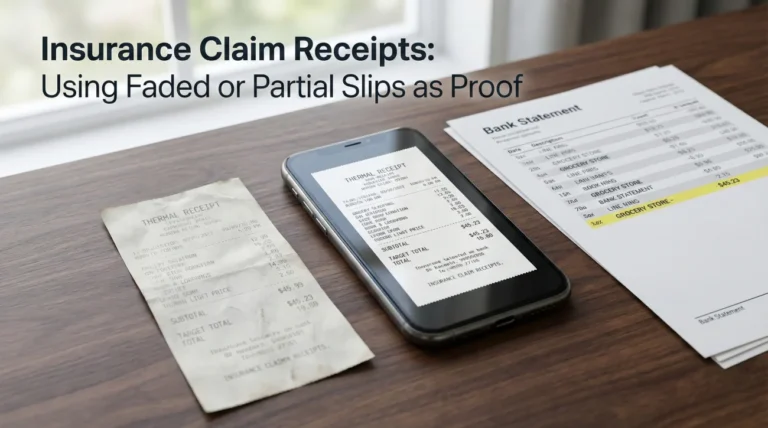
You do not always need original receipts for older items. You can use credit card statements, photos of the item in your home, or even affidavits in some cases. The goal is to prove ownership and value through whatever evidence exists.
📞 Should I talk to the adjuster on the phone?
Phone calls are fine for building rapport, but you should confirm every important detail in writing immediately after. This prevents “he said, she said” disputes later in the process.
💰 Will filing a claim raise my premiums?
Claims history is a major factor in premium pricing. While rules vary by location, filing claims generally signals higher risk to insurers. In this expensive market, many experts suggest reserving insurance for catastrophic losses rather than small repairs.
Sources & Data Context
This article relies on data regarding the “hard market” shift in property insurance. Key reports used for context include:
- On climate risk and insurance availability: The U.S. Treasury’s Federal Insurance Office (FIO) highlights how climate-related financial risks are impacting insurance supervision. See the FIO Report on Insurance Supervision and Regulation.
- On the 24% premium increase: The Consumer Federation of America (CFA) analyzed premium data from 2021 to 2024, providing the benchmark for the rising costs homeowners face. Read the CFA Report on Homeowners Insurance Premiums.
⚠️ Disclaimer: PropertyClaimChecklist.com provides practical guidance, process checklists, and example follow-ups to help you organize a property claim and move it forward. It is not policy language, claim documentation, legal content, or a substitute for your insurer's instructions. Always rely on your carrier's requirements and your actual policy terms for what must be submitted and how decisions are made.