- The Reality: Adjusters miss dates constantly. Getting angry rarely speeds them up. Resetting the timeline does.
- The Fix: Do not just ask “where is it”. Instead, restate the missed promise, ask what specific roadblock caused the delay, and demand a new specific date.
- The Trap: Letting a deadline slide without comment teaches them that your file lacks urgency.
The “Silent Slide” of Claim Deadlines
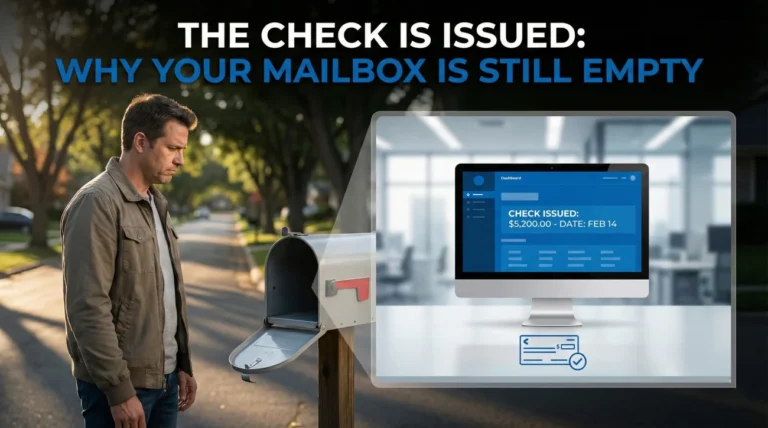
In claims operations, we have a term for what happens when a promised date passes without a word. We call it the “Silent Slide”. The adjuster promised you the estimate by Tuesday. Tuesday comes and goes. Wednesday morning arrives, and your inbox is empty.
Your instinct might be to fire off an angry email accusing them of lying. I understand the frustration. However, in my experience, anger usually triggers a defensive reaction. The adjuster stops working on your file to write a defensive email back to you. We want them working. We do not want them typing apologies. The goal of this phase is not to punish them for missing the date. It is to force them to set a new one and stick to it.
When you allow a deadline to slide silently, you are inadvertently training the adjuster. You are teaching them that deadlines on your file are soft suggestions rather than firm commitments. You must break this cycle immediately, but you must do it with professional coldness rather than heat.
The Portal-First Checklist (Check Before You Chase)
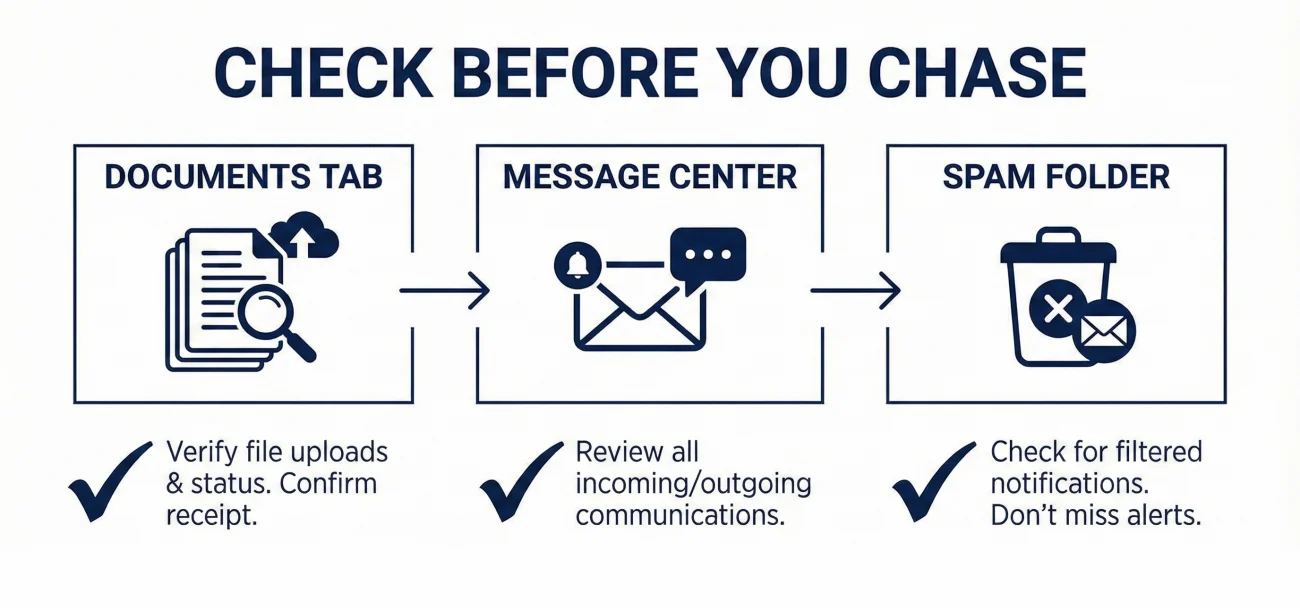
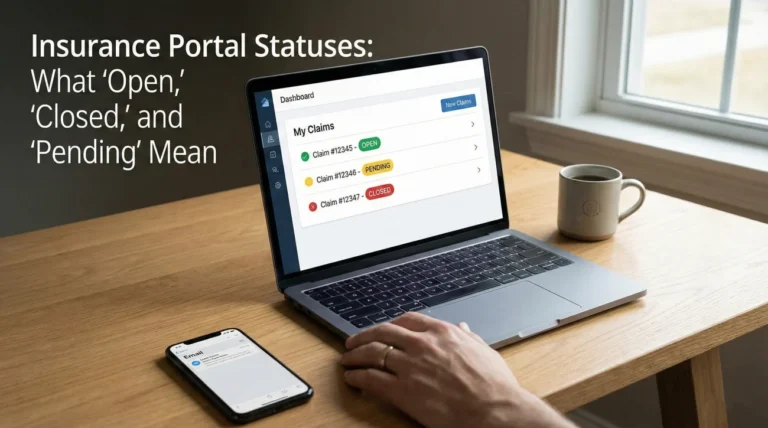
Before you send any follow-up, spend 5 minutes checking the digital trail. Half the time, the document you are angry about is already there, but the notification system failed to email you.
- ✅ Check the “Documents” Tab: Log into the carrier portal. Is there a new PDF uploaded in the last 24 hours?
- ✅ Check the “Message Center”: Did they send a secure message inside the portal instead of an email?
- ✅ Check Spam/Junk: Automated insurance emails often trigger spam filters.
- ✅ Verify Claim Number: Ensure you are looking at the right file if you have duplicate claim numbers.
Why Adjusters Miss Dates (It Is Not Usually Malice)
To fix the problem, you need to understand the person on the other side. Most adjusters do not miss dates because they are ignoring you on purpose. They miss dates due to “Optimism Bias”.
On Monday, they honestly believed they could finish your estimate by Tuesday. But then a house fire claim came in on Monday afternoon. Or a supervisor called an emergency meeting. Their schedule got wrecked. They didn’t call you to cancel the deadline because they kept hoping they could squeeze your file in late at night. They failed.
Knowing this changes your strategy. You are not fighting a villain. You are managing a disorganized project manager. Your job is to help them re-prioritize your file in their messy queue.
Step 1: The 24-Hour Grace Period (Rule of Thumb)
Before you hit send on a follow-up, apply a practical operational filter. Adjusters often work odd hours. I have seen estimates uploaded at 9:00 PM or reports submitted at 6:00 AM the next morning. If the deadline was “Tuesday”, I recommend waiting until Wednesday around noon as a practical rule of thumb before flagging it.
This strict “grace period” serves a strategic purpose. When you send the email at noon on Wednesday, you look reasonable. You gave them extra time. It makes your request for a new date feel professional rather than pestering. It removes their ability to say “I was just about to send it”.
Step 2: The “Reset” Protocol
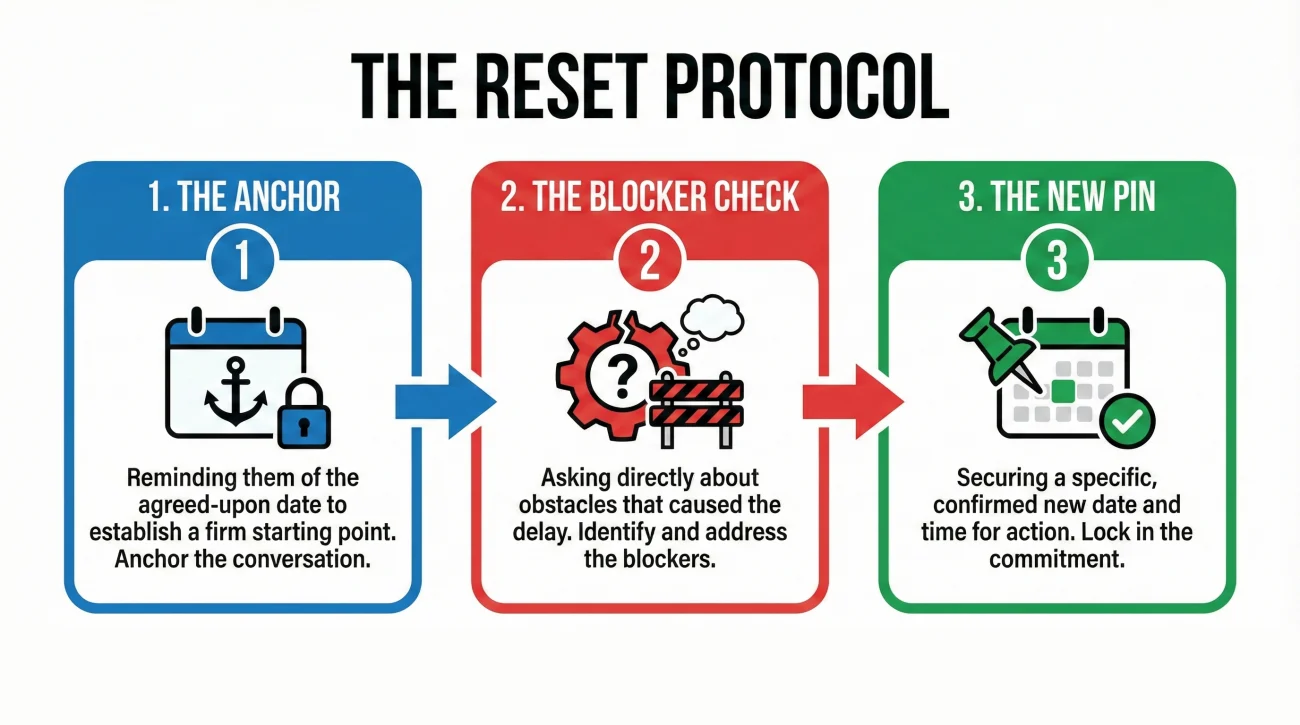
When you confirm the date is missed, you need to “reset” the timeline. A generic “checking in” email is useless here. You need a structured communication that corners them into a new commitment.
This protocol involves three specific components:
- 1️⃣ The Anchor: Remind them of the specific date they promised (e.g., Tuesday). This establishes the failure without being rude.
- 2️⃣ The Blocker Check: Ask if a missing item caused the delay. This gives them a graceful exit ramp while also checking for real issues.
- 3️⃣ The New Pin: Ask for a specific new date. Do not accept “soon”.
The Clean Reset Template
Use this format to address a missed promised date insurance claim timeline. It is neutral. It is firm. It is impossible to ignore.
Hi [Adjuster Name],
Checking in on the estimate we discussed last week. Our last note showed a target date of yesterday (Tuesday).
Since I haven’t received it yet, I wanted to check:
1. Is there any document or photo missing from my end that is blocking you?
2. If it is just backlog volume, when is the new target date I should look for it?
Please let me know so I can update my contractor.
Thanks,
[Your Name]
Notice what this email does NOT do. It does not accuse them of lying. It asks “Is something blocking you?”. This forces them to either say “No, I’m just behind” (which admits fault) or “Yes, I need X” (which unblocks the claim).
Subject Line Variations
If you need to adjust the tone, choose one of these subject lines:
- 🔹 Neutral (First Miss): “Status Check – Claim #[Number]”
- 🔹 Firm (Second Miss): “Missed Deadline Follow-up – Claim #[Number]”
- 🔹 Urgent (Blocking Repairs): “ACTION NEEDED: Past Due Estimate – Claim #[Number]”
The “Friday Deadline” Trap
One specific pattern I see constantly is the Friday Promise. An adjuster will tell you “I will get this to you by Friday”. In the insurance world, Friday is often where deadlines go to die.
If they promise you a Friday delivery, they are gambling that they will clear their desk by 5:00 PM. Often, a crisis hits on Friday afternoon. They leave the office. Now it is the weekend. They come back Monday to a full inbox. Your file gets buried. You don’t hear back until Tuesday or Wednesday.
⚠️ Warning: If an adjuster offers a Friday deadline, immediately reply: “If you can’t make Friday, please just let me know. But I will look for it Monday morning at the latest.” This sets a mental backup pin for them.
Step 3: Log the Miss
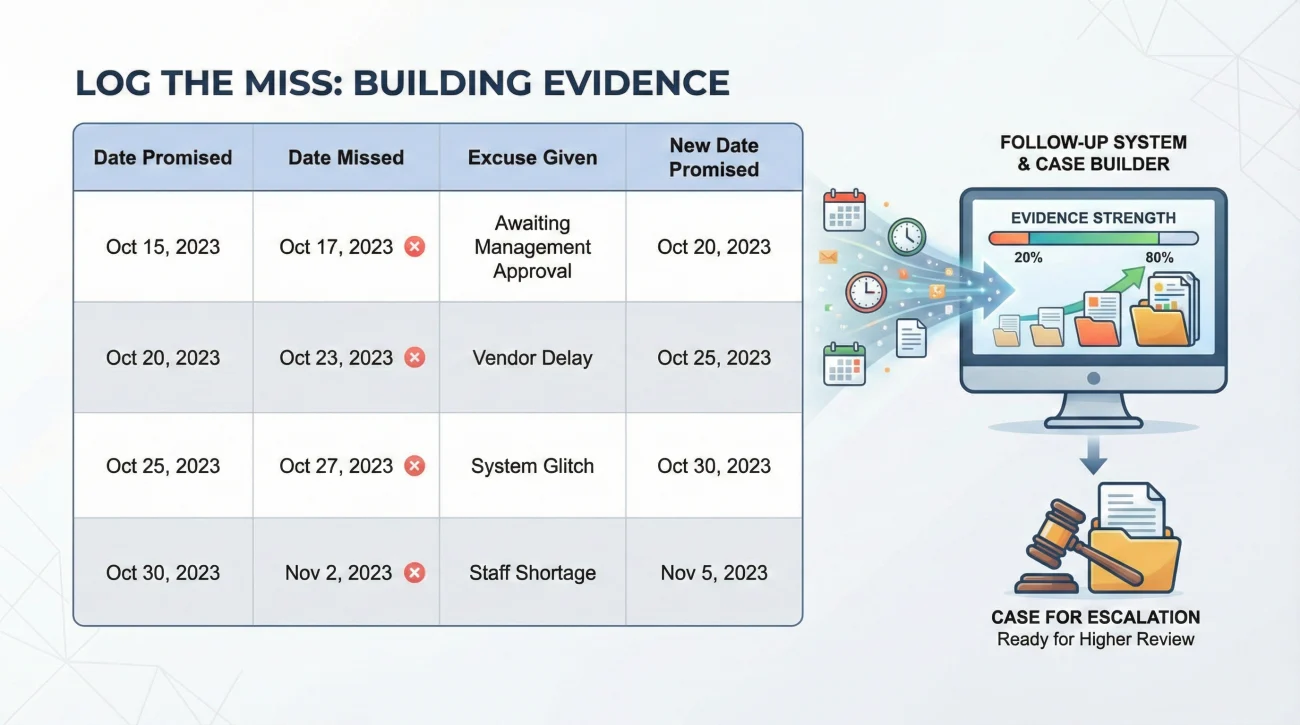
Once you send that email, go immediately to your claim follow-up system. You need to record this “miss” formally. This is not just for your memory. It is building a case file. If an adjuster misses four deadlines in a row, you have a strong case to request a supervisor review. But you can only escalate if you have the dates.
| Date Promised | Date Missed | Excuse Given | New Date Promised |
|---|---|---|---|
| Oct 12 | Oct 13 | Volume / Backlog | Oct 15 |
| Oct 15 | Oct 16 | No response yet | [Pending] |
When you eventually need to escalate, you will not say “He is slow”. You will say “He missed deadlines on Oct 13, Oct 16, and Oct 20”. That data is undeniable.
The Second Miss Escalation Ladder
If they set a new date (Step 2) and miss that one too, the “Reset” protocol changes. You are no longer just asking for a date; you are asking for resources.
Your next move:
- 1️⃣ Reply to the same email chain (keep the history attached).
- 2️⃣ Copy (CC) their supervisor if you have the email.
- 3️⃣ Use this specific phrasing: “This is the second missed deadline on this estimate. Is there a supervisor or team lead I can loop in to help remove whatever blockers are delaying this file?”
Reset Protocol v2: When They Don’t Reply
Sometimes you send the Reset email and get silence. If 48 hours pass with no reply, do not just send another “Checking in” email. Use the “Bumping” technique:
- 1️⃣ Forward your own sent email to them (so they see the timestamp of your first attempt).
- 2️⃣ Change the subject line to: “Bumping this – Update Needed – Claim #[Number]”.
- 3️⃣ Add a single line of text: “Resending this as I haven’t heard back. Please advise on the new timeline.”
- 4️⃣ Call the Main Line: If that email fails, call the carrier’s main 1-800 number. Ask the operator to “add a note to the file” that you are waiting on a response from [Adjuster Name]. This creates a permanent system note that the adjuster cannot delete.
The “Why” Matters (Decoding the Excuse)
When they reply, pay close attention to the reason. Their excuse tells you your next move.
Valid Operational Delays
If they say “I am waiting on the engineer’s report”, that is a valid delay. You cannot force them to write an estimate without the engineer’s data. In that case, your next question shifts: “Understood. When is the engineer’s report due to you?”
Weak Workload Delays
If they say “I am just slammed”, that is an honest but weak excuse. Accept it once. Everyone gets busy. But if it happens twice, you need to ask if the file can be reassigned to someone with capacity. For the first miss, accept the new date and hold them to it.
Phone vs Email for Missed Deadlines
Should you call or email? For a missed deadline, email is superior. A phone call vanishes into thin air unless you record it. An email leaves a permanent timestamp that proves they missed the date.
However, if you have sent two emails with no response, switching to the phone is a good “pattern interrupt”. If you get their voicemail, leave a message that references your email:
Managing Your Contractor During Delays
The person most annoyed by these delays is often your contractor. They are waiting on the scope to start work. When the adjuster misses a date, it makes you look bad to the contractor.
Be transparent with them. Forward the “Reset” email you sent to the adjuster to your contractor (or Bcc them). This shows the contractor that you are actively chasing the carrier. It proves that the delay is not your fault. It keeps the contractor on your team rather than letting them drift away to another job.
Common Mistakes When Deadlines Slide
I see policyholders lose leverage by reacting emotionally rather than operationally.
1. The “Just Checking In” Email
Sending an email that just says “Any update?” is weak. It allows the adjuster to reply with a vague “Working on it”. Always reference the specific missed date. “You said Tuesday” creates accountability. “Any update?” creates a casual chat.
2. Accepting “Soon” as a New Date
If they reply to your reset email with “I’ll get it to you soon”, do not accept it. Reply immediately: “Thanks. Does ‘soon’ mean by end of this week or next week? I need to give my contractor a date.” Pin them down to a window. Even a wide window is better than “soon”.
3. Threatening a Lawyer on the First Miss
This is the nuclear option. If you use it on a simple missed deadline, you look unreasonable. Save the escalation threats for when they have ignored you for weeks. Do not use it when they are one day late.
Final
Deadlines are missed in many property claims. It is an unfortunate standard of the industry. The difference between a stalled claim and a moving one is how you handle the miss. If you stay silent, the claim drifts. If you attack, the adjuster hides. If you use the Reset Protocol to acknowledge the miss, check blockers, and set a new date, you keep the file moving without burning the bridge.
❓ FAQ
📅 How long should I wait after a missed deadline to call?
Give them a “Grace Period” of about 24 hours (or until noon the next day). This accounts for late-night uploads or time zone differences and makes you look reasonable when you do follow up.
📧 Is it better to call or email about a missed date?
Email is better for missed deadlines because it creates a timestamped proof that the date was missed. If you call, follow up with a text or email: “Just recapping our call, you missed Tuesday’s date but will have it to me by Friday.”
🛑 What if they miss the second deadline too?
Two misses is a pattern. After the second miss, your email should cc their supervisor (if you have the contact) or ask: “Since this is the second missed date, is there a supervisor I should loop in to help remove any blockers?”
🤔 What if they say they are waiting on approval?
Ask specifically: “Who is the approval waiting with? Is it a manager or an external expert?” Knowing who has the file helps you understand if the delay is real or just a stalling tactic.
😡 Should I file a complaint if they are late?
Not for a single missed deadline of a few days. Complaints are for gross negligence or month-long delays. Filing a complaint for being two days late will likely just get your file flagged as “difficult” without speeding anything up.
📝 Does a text message count as a written deadline?
Yes. Text messages are excellent evidence. Screenshot them and save them to your evidence folder.
🔄 What if they just ignore my follow-up?
If they ignore the Reset email for 48 hours, switch to the “Loop” technique: forward your own email to them again with the subject “Bumping this – Update needed”. If that fails, call the main claim line.
📉 Can missing a deadline affect my payout amount?
No, a delay in paperwork does not change your coverage limits or the value of your loss. It just delays when you get the money.
🤷 What if they say “I don’t know when I’ll get to it”?
Do not accept “I don’t know”. Ask for a “worst-case” date. “I understand you are busy. Can we agree that if I haven’t heard by next Friday, I should call you back? Or is that too soon?” Force a bracket.
🛠️ Can I start repairs while waiting?
Only do emergency mitigation to prevent further damage. Do not start permanent repairs until you have the estimate approved, even if they are late. Starting early can compromise your coverage.
⚠️ Disclaimer: PropertyClaimChecklist.com provides practical guidance, process checklists, and example follow-ups to help you organize a property claim and move it forward. It is not policy language, claim documentation, legal content, or a substitute for your insurer's instructions. Always rely on your carrier's requirements and your actual policy terms for what must be submitted and how decisions are made.