Insurance Claim Receipts: Using Faded or Partial Slips as Proof
Receipt Quality For Insurance Claim

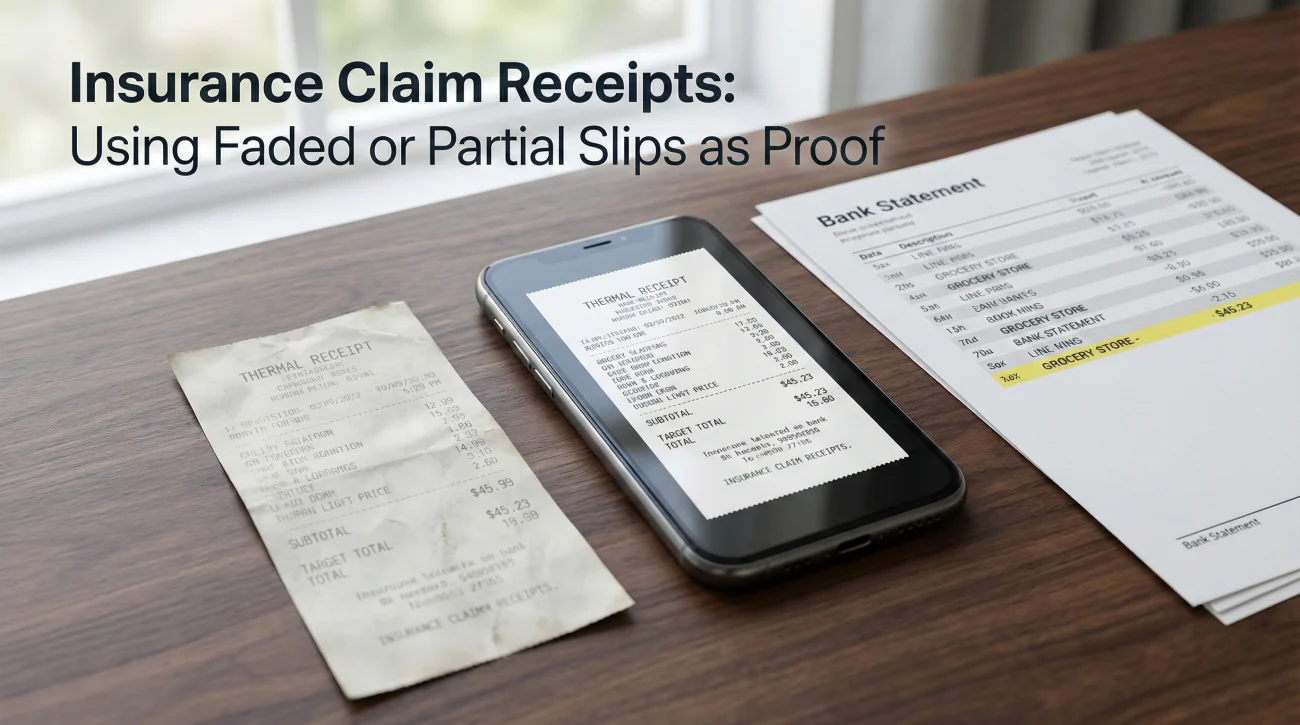
Faded, ripped, or partial receipts can still be used as valid proof if you contextualize them correctly before submitting. It is best to avoid writing over the faded ink of an original receipt. Write your notes on a separate piece of paper and scan them together instead. A credit card statement alone is not a … Read more

Proof of Ownership Examples: Strong vs. Weak Evidence for Claims

Proof Of Ownership Examples For Insurance Claim

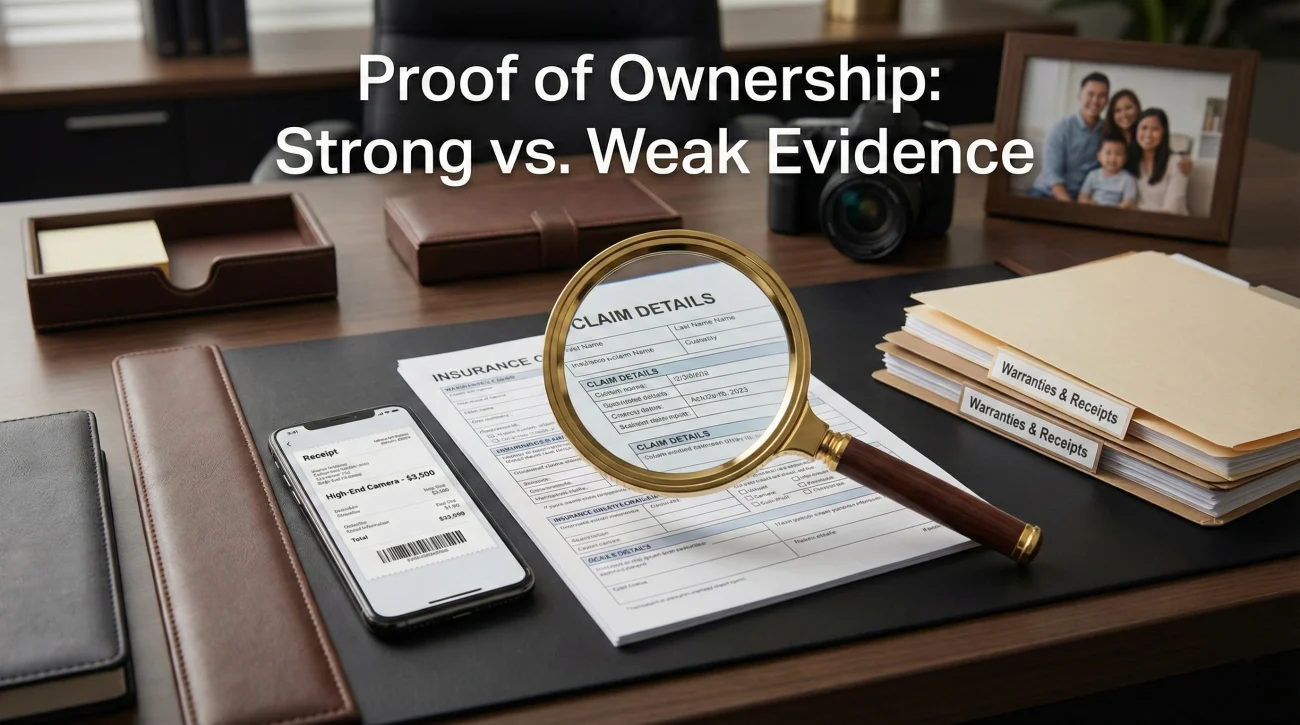
When you lose your belongings in a disaster, proving that you actually owned them is often one of the most stressful parts of the recovery process. I frequently see adjusters categorize proof into three levels. Strong evidence includes itemized receipts or appraisals. Medium evidence includes personal photos showing the item in your home. Weak evidence … Read more

No Receipts for Insurance Claim? How to Prove Ownership

Prove Ownership Without Receipts Insurance Claim

Losing paper receipts is incredibly common in property claims. Insurance companies process claims without original store receipts every single day. You can establish ownership through alternative financial trails, such as credit card statements, bank records, and digital purchase histories. Visual evidence is highly effective. Background elements in old family photos or video walkthroughs often serve … Read more

Insurance Inventory Cover Sheet: Summarize Your Loss in One Page

Inventory Index For Insurance Claim

The Goal: Turn a chaotic list of items into a navigable map for your adjuster. The Method: Create a “Cover Sheet” or “Master Index” that links every item to its specific photo and receipt file. The Result: Faster review times because you remove the guesswork of “which receipt goes with which sofa.” The Difference Between … Read more

Home Inventory for a Claim: What to List and How Detailed It Needs to Be

Home Inventory For Insurance Claim

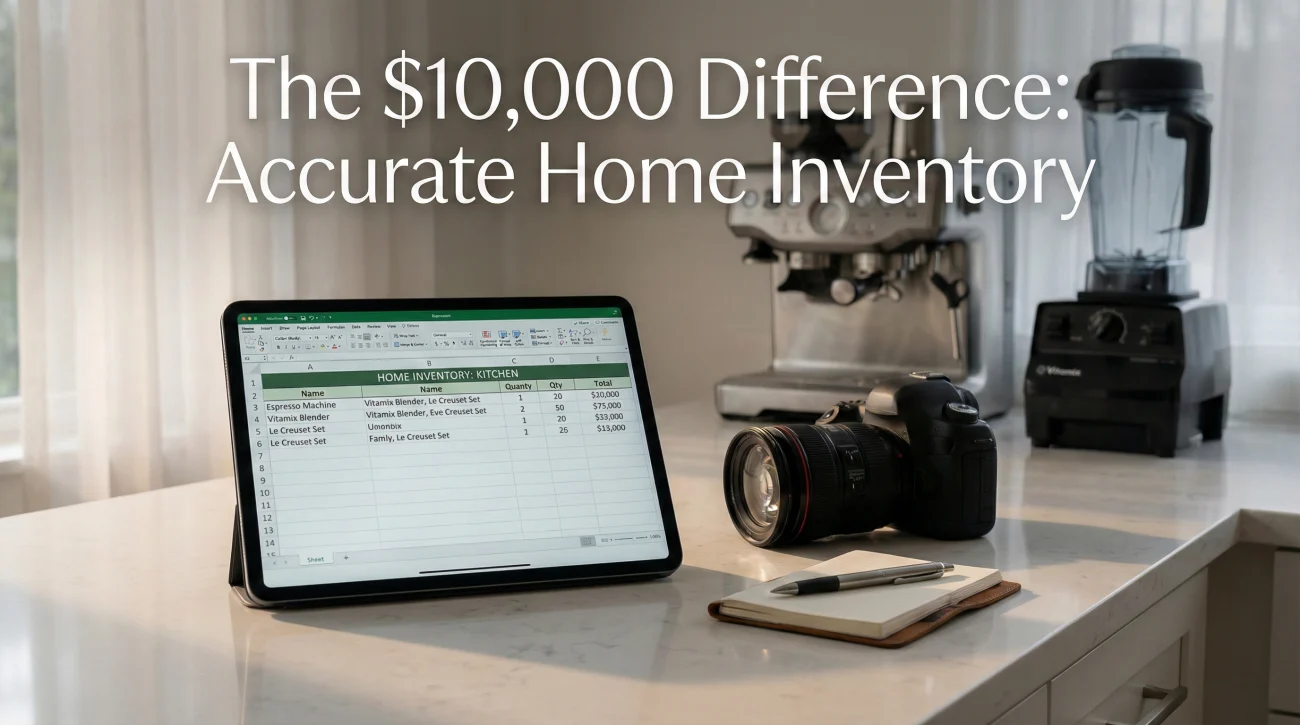
The “Specifics” Rule: “Toaster” gets you $20. “Breville Die-Cast 2-Slice Smart Toaster” gets you $180. Specificity is the difference between a partial payment and a full replacement. Digital Forensics: You don’t need memory alone. Use your Amazon order history, old credit card statements, and even photos in the background of your phone to reconstruct your … Read more

Photo Index: Turn Evidence Into Something Reviewers Can Read

Insurance Claim Photo Index

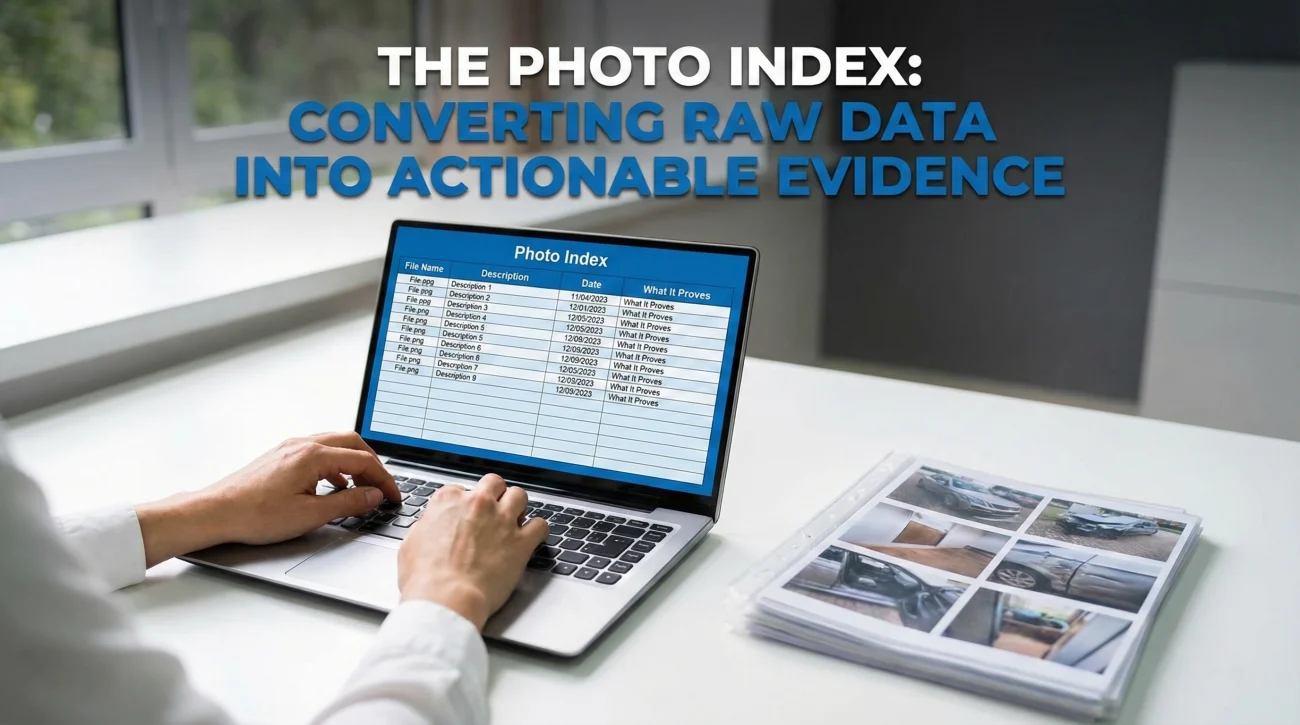
The Problem: Adjusters often review hundreds of photos a day. If you send a batch of 50 unnamed photos, they will likely miss the subtle details that prove your claim. The Solution: A Photo Index is a simple document (usually a spreadsheet) that acts as a “Table of Contents” for your evidence. Key Columns: It … Read more

Organize Evidence: A Folder Structure You Can Maintain Under Stress

Organize Photos And Documents For Insurance Claim

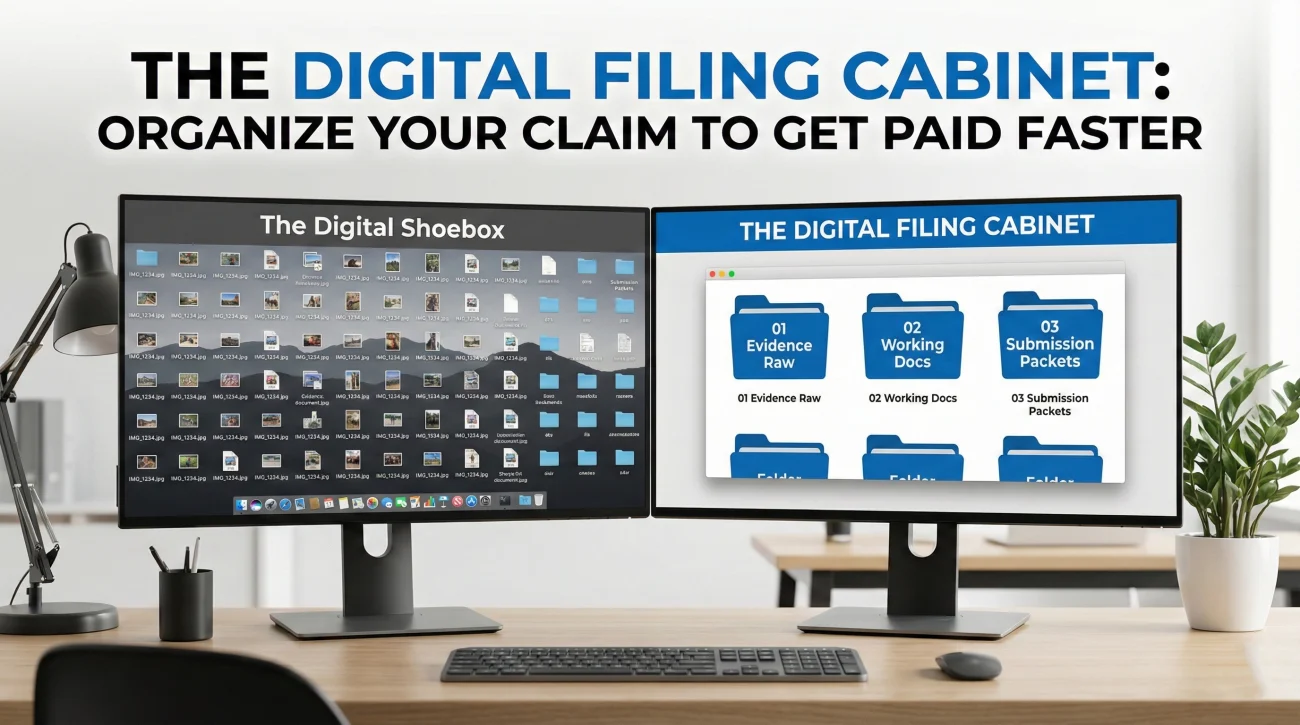
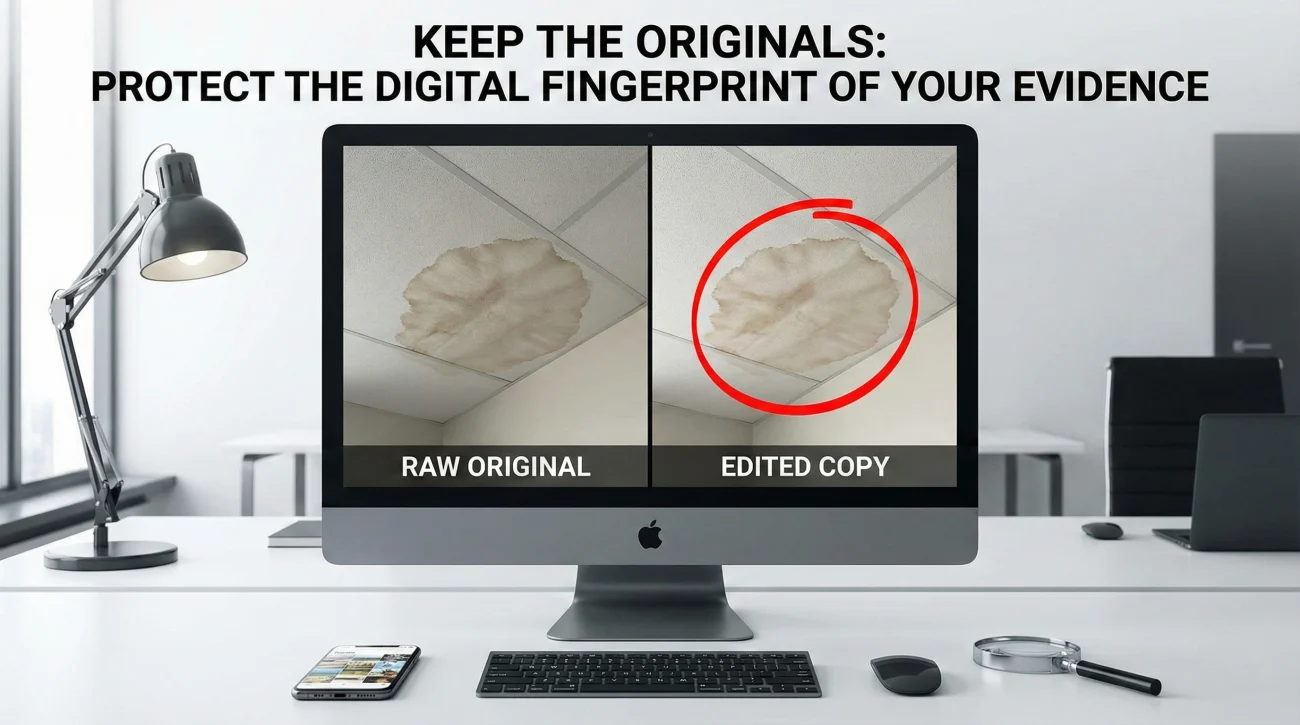
The Trap: Dumping 500 photos into a single folder named “Claim” creates chaos for the adjuster and delays your payment. The “3-Bucket” System: Divide everything into three master folders: “01_Evidence_Raw,” “02_Working_Docs,” and “03_Submission_Packets.” Naming Rule: Never rename files in the Raw folder. Only rename the copies in your Working folder to describe the content (e.g., … Read more

Video Walkthrough for a Claim: What to Record So It Counts

Video Walkthrough For Insurance Claim

Audio matters more than you think: Narrate what you see, state the date, and point out specific damage sources while recording. Do not edit the file: Never trim, filter, or combine clips. The metadata in the original file proves when the video was taken. Slow down the pan: Move the camera half as fast as … Read more

Labeling Claim Photos: Stop the Adjuster from Guessing

How To Label Photos For Insurance Claim

Uploading hundreds of unnamed photos from your phone often destroys the context of your evidence. Without a clear naming system, your photos can become disorganized the moment they enter the estimating software. Rename your image files before uploading them. Use a simple, three-part naming convention: Room, Damage Type, and a two-digit Sequence Number. Estimating software … Read more

Room-by-Room Damage Documentation: Don’t Miss Hidden Issues

How To Document Damage Room By Room

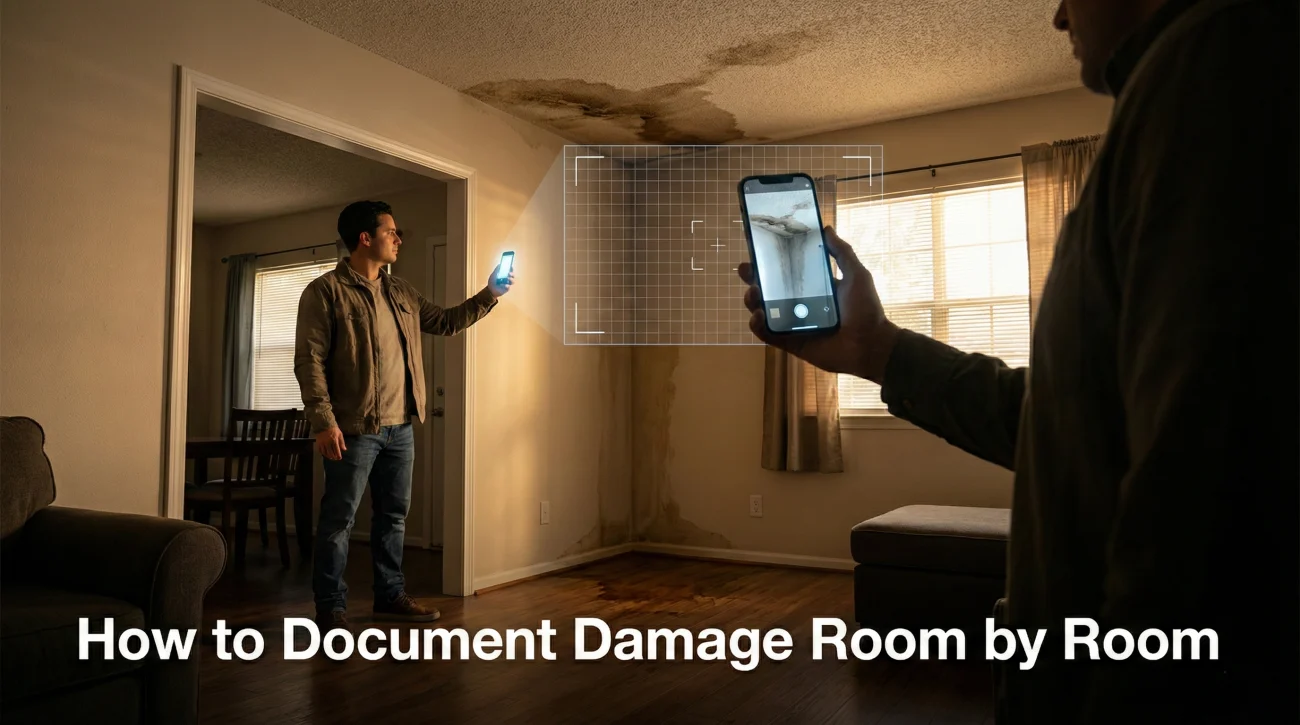
Follow the “Clockwise Rule” to create a continuous visual map of the room so reviewers never have to guess where they are looking. Use the “Wide, Medium, Tight” sequence for every point of damage to provide necessary context, scale, and material detail. Track the vertical path of water or smoke from the floor up to … Read more

Damage Photo Checklist for a Property Claim: What to Capture Before Cleanup

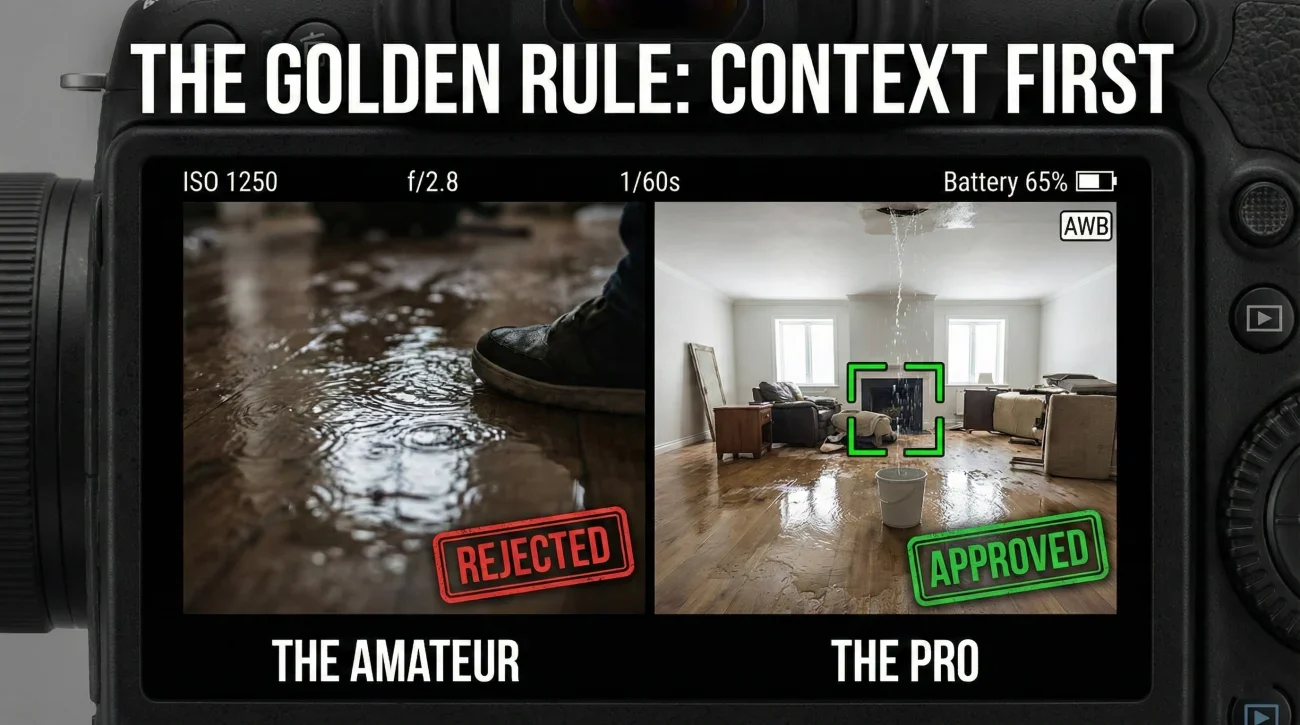
Damage Photo Checklist For Insurance Claim

The “4-Corner” Rule: Stand in each corner of the room to capture the layout first. Adjusters need to see the “Before” context before they zoom in on the damage. Source vs. Result: Photograph the cause (the burst pipe) separately from the effect (the wet floor). These are two different proof points. Don’t Move Debris Yet: … Read more