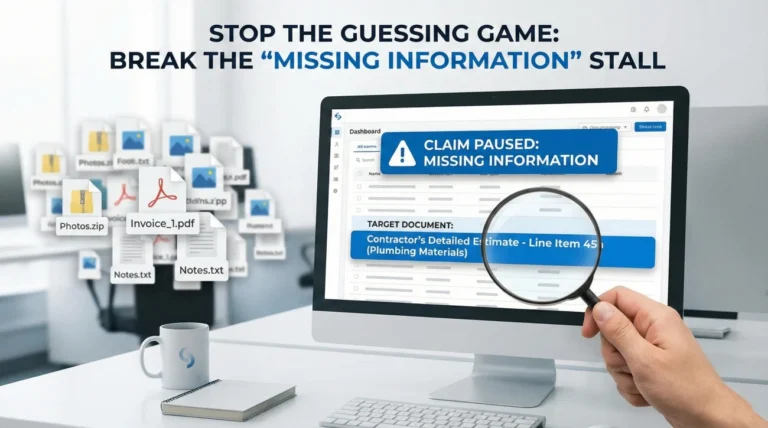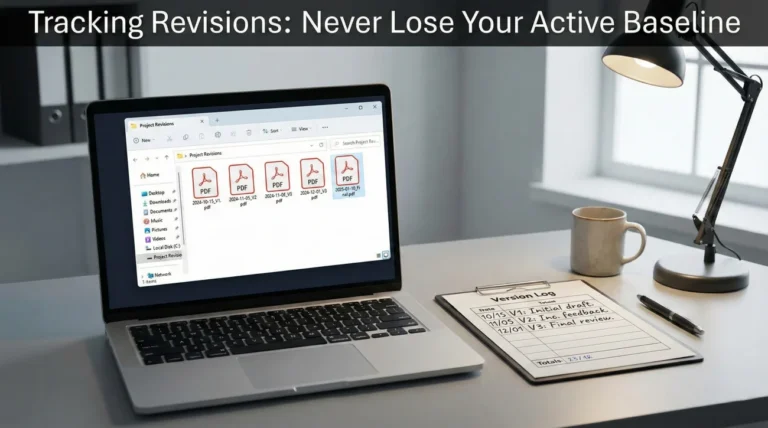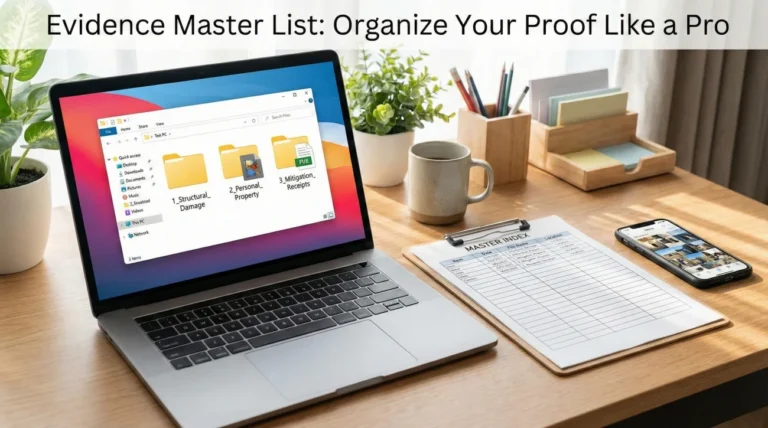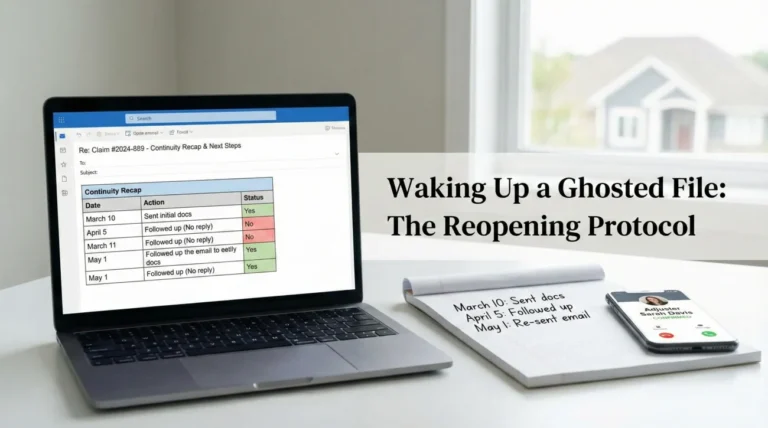
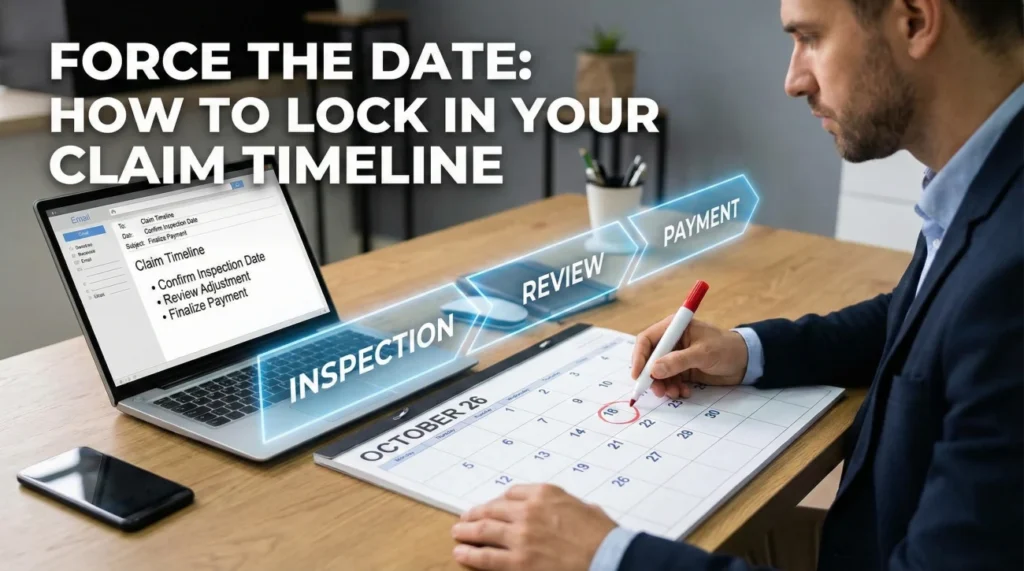
- Never accept “we are processing it” as a timeline; a real milestone requires a specific action, an assigned owner, and an exact date.
- Use targeted, polite questions to force the adjuster to commit to a date, then immediately log that date in your records.
- Always follow up a phone conversation with a short email confirming the dates discussed to create a verifiable paper trail.
The Reality of Vague Claim Schedules
When you are dealing with property damage, waiting for the next step can feel incredibly frustrating. You check your email, you log into the portal, and you make phone calls, only to hear the same phrase: “Your file is currently under review.” In my daily work managing claims operations and file hygiene, I see this exact scenario play out constantly. The homeowner is stressed because they do not know what is happening, and the adjuster is moving quickly through a massive stack of files, offering generic updates instead of concrete dates.
I have learned that the gap between a stalled file and a moving file often comes down to how you ask for information. If you simply ask for an update, you will get a vague status. To actually move things forward, you have to request an insurance claim timeline using questions that force specific dates, identify clear owners for the next step, and establish concrete milestones.
This is not about being aggressive or demanding. It is about applying calm, structured communication. Adjusters are human. When they handle dozens or sometimes hundreds of files, a file with a vague “pending” status can easily drift to the bottom of the pile. While the exact process and strict deadlines vary by carrier and state regulations, the operational logic remains the same: a file moves forward when it has a clear next action date. In this guide, I will walk you through the exact questions to ask, how to handle evasive answers, and how to document the timeline so that your claim keeps moving forward.
The Magic of the “Diary Date” (Next Touch)
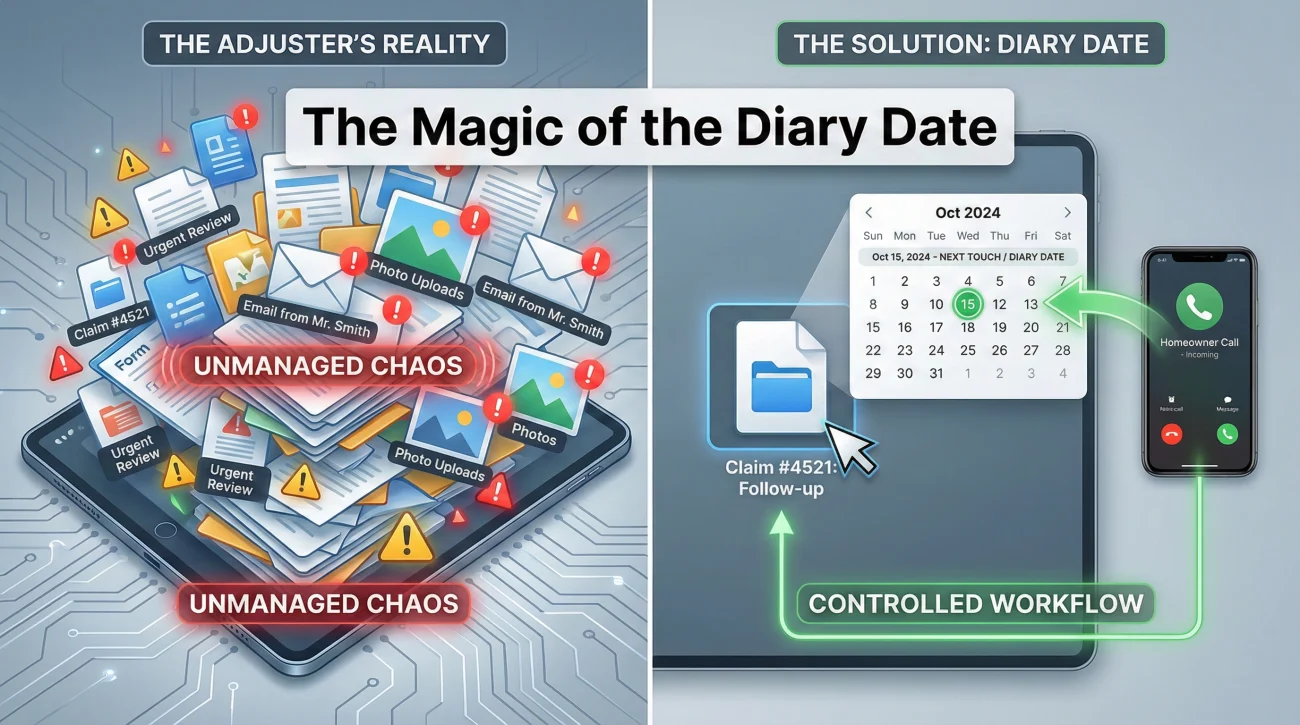
In claims operations, adjusters manage massive workloads using a “diary” system. When they finish looking at your file today, they must set a “diary date” (or “next touch” date) for when the software will remind them to open it again. If a file moves forward, it is usually because it has an active next touch date scheduled.
If you ask a vague question, the adjuster might not check their diary. But if you ask, “What is the next action on your diary for this file, and what date is it set for?”, you are speaking their operational language. You immediately pull up the exact milestone driving your claim.
Why “We Are Processing It” Is Not a Timeline
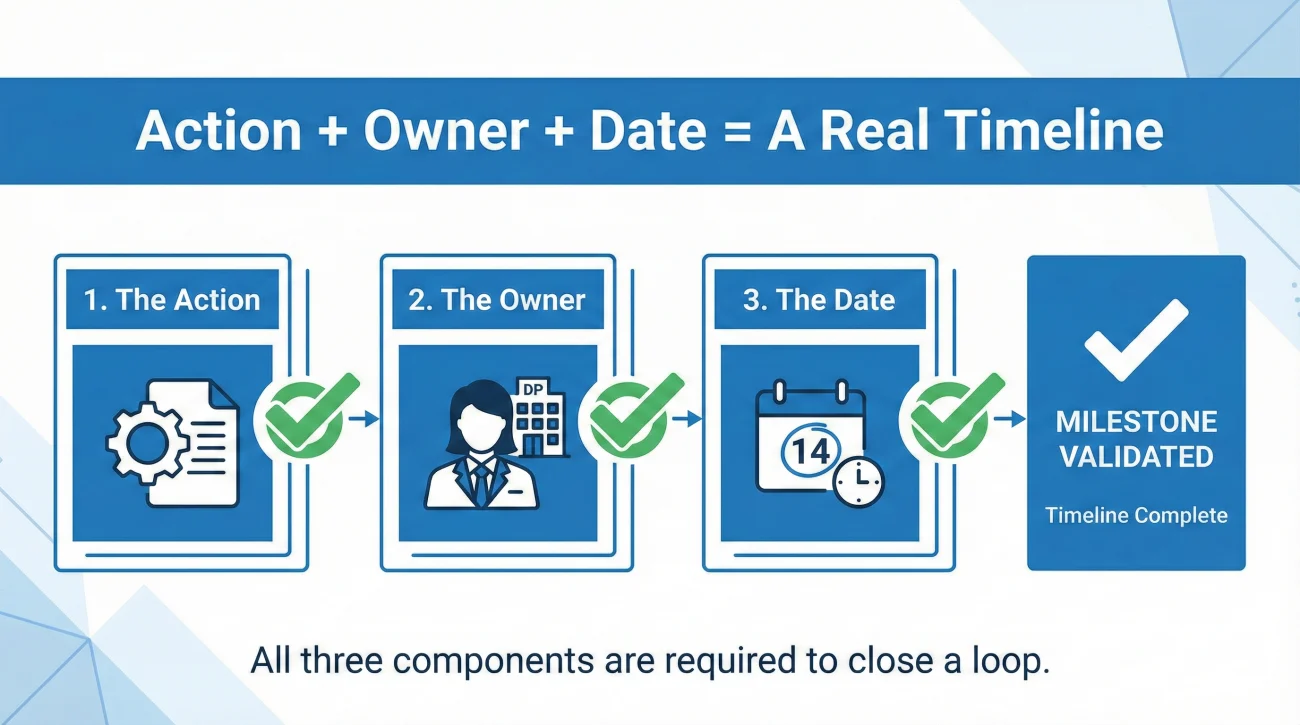
Before we look at the specific questions to ask, we need to clarify what a timeline actually is. A common mistake I see people make is accepting a general activity description as a timeline. “We are waiting on the field report” is a status. “The field report will be submitted by Tuesday at 5 PM” is a timeline milestone.
In operations, a real timeline requires three specific components to be useful. If any of these three are missing, you do not have a timeline; you just have an open loop.
- ✅ The Action: Exactly what is happening next (e.g., writing the estimate, reviewing the photos, issuing the paperwork).
- 👥 The Owner: The specific person or department responsible for completing that action (e.g., the field adjuster, the desk adjuster, the management review team).
- 📅 The Date: The exact day (and sometimes time) when that action is expected to be completed.
When I review communication logs for disorganized files, the most glaring issue is usually the absence of dates. The notes will say that the homeowner called and the adjuster said they were working on it. There is no trigger for a follow-up because there was no deadline established. You cannot hold someone accountable to a vague promise.
Key Point: Every time you communicate with your insurance representative, your primary goal should be to walk away with at least one concrete date for the very next action item on your file.
3 Common Delay Phases and What to Ask
To get specific dates, you have to ask specific questions. Broad questions invite broad answers. Instead of a generic update request, tailor your approach to the specific bottleneck where your file is stuck. Here is how to handle the three most frequent administrative hurdles I see in the field.
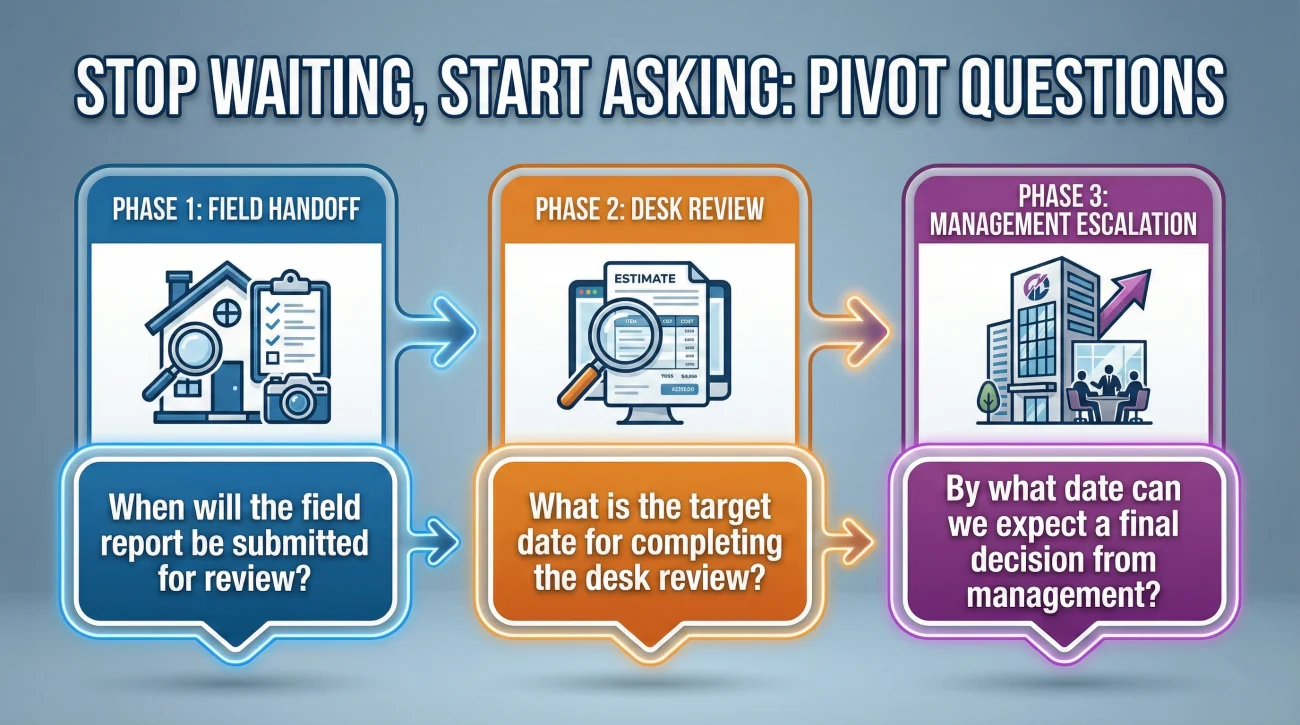
1. The Field Report Handoff
Often, an inspector visits your property, days pass, and the desk adjuster simply tells you they are “waiting on the vendor.” This is a classic handoff gap. Instead of accepting the delay, politely force a timeline for this exchange:
“By what specific date is the field inspector scheduled to submit their final report to you?”
2. The Desk Review Queue
In another common scenario, your documents are successfully uploaded, but the file sits in an “under review” status for weeks without movement. To break this silence, you need to define the boundaries of their internal process.
The Pivot: “Now that the report is submitted, what is the exact date I should expect you to complete your review and share the itemized estimate?”
3. The Management Escalation
Prolonged silence often means the file was kicked up to a manager for approval with no clear end in sight. When your primary contact says they are waiting on someone else, you need to know who that someone else is.
“Can you please provide the name of the department reviewing the file, and what date their review is scheduled to be completed?”
Real-World Cases: Pinning Down the Next Step
Let’s look at how this plays out in reality. These are common patterns where applying the “owner plus date” formula changes the outcome.
Case 1: The Stalled Vendor Report
A homeowner had a water mitigation team dry out their house, but two weeks later, the insurance company still had not issued payment. The adjuster kept saying, “We are waiting on the mitigation invoice.” Instead of waiting another week, the homeowner emailed both the mitigation vendor and the adjuster on the same thread: “Vendor, by what exact date will you send the invoice? Adjuster, once received, how many days will your review take?” The vendor committed to Tuesday, and the adjuster committed to Thursday. By forcing specific owners and dates, the homeowner closed the administrative gap, and the file moved.
Case 2: The Silent Reassignment
A policyholder’s file went completely silent for a month. When they finally called the main queue, they learned their original adjuster had left the company, and the file was unassigned. Instead of just complaining, the policyholder asked: “Who is the specific supervisor handling this unassigned queue, and by what date will a new adjuster be formally assigned to my file?” Getting that supervisor’s name and a Thursday deadline gave the homeowner a concrete target for their next follow-up, preventing the file from sitting in limbo.
Logging Prompts: Translating Talk into a Paper Trail
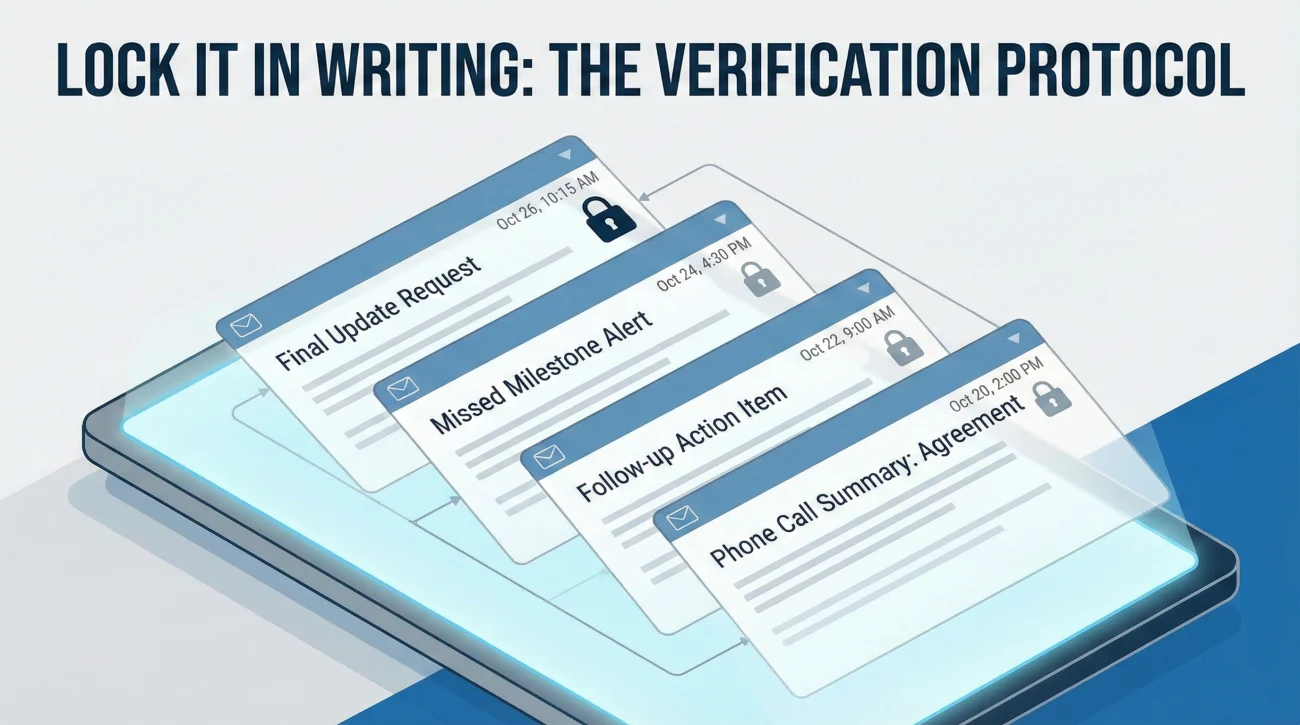
Getting a date on the phone is only the first half of the job. The second half is locking that date into the written record. If it is not in writing, it is incredibly hard to verify later. Maintaining a clear record is a foundational rule of documentation hygiene.
Immediately after you end a phone call where a date was discussed, you must log it. But more importantly, you must confirm it with the other party. I cannot stress this enough: sending a confirmation email takes two minutes, but it prevents weeks of potential delays later on.
Here is a safe, polite script you can use to cement the timeline you just discussed.
Hello [Adjuster Name],
Thank you for taking the time to speak with me on the phone today at [Time]. I am writing to quickly confirm my understanding of our conversation for my records.
Based on our call, you noted that the field inspection report is currently pending. You mentioned that the inspector is scheduled to submit their notes by [Date], and that you will complete your initial review by [Date].
If I do not hear from you regarding the next steps by [Follow-up Date], I will reach out again to check the status.
If anything in this summary is incorrect, please reply so I can update my notes. Otherwise, I will look forward to hearing from you soon.
Best regards,
[Your Name]
This email does a lot of heavy lifting. It acts as a polite summary, it documents the timeline, and it clearly outlines what will happen if the deadline is missed. If the adjuster disagrees with the timeline, they have to reply and correct it. By ending your email with a request to correct any mistakes, you show professionalism while locking in the facts.
To ensure you have everything you need to support this process, you must keep your paperwork highly organized. If you are unsure how to structure your files, I highly recommend reviewing our master property claim documents checklist. A clean file makes it much easier to track which documents belong to which timeline milestones.
Common Mistakes When Adjusters Dodge Timeline Questions
Even when you ask perfect questions, you will sometimes encounter an adjuster who absolutely refuses to commit to a date. They might say, “I really cannot give you a timeframe right now, we are very backed up.” It is important to know how to handle this without losing your cool or accepting defeat.
Here are the common mistakes people make when faced with evasion, and how to pivot instead.
Mistake 1: Accepting “I Do Not Know”
If they say they do not know when something will happen, do not just accept it. Pivot to process. If they cannot give you a date, they can at least give you the sequence of events.
[Acknowledge the delay] + [Ask for the process steps] + [Ask for average timeframes]
You can say: “I understand things are backed up. Can you walk me through the specific internal steps that have to happen between now and the final decision, and what the typical timeframe is for each of those steps under normal circumstances?”
Mistake 2: Making Threats
When timelines slip, frustration peaks. A massive mistake is shifting into aggressive or legal language, such as threatening to hire a lawyer or file a formal complaint just because a date was missed. In my operational experience, doing this early in a claim usually makes the representative shut down. They stop taking your calls and push all communication to formal, slow written letters. Keep it strictly administrative.
Mistake 3: Failing to Set Your Own Deadline
If the adjuster genuinely cannot or will not give you a date, you must assign one yourself. You do this by setting a follow-up target. You say, “Since we do not have a firm date today, I will put a note in my file to reach out to you again next Wednesday for a progress check.” You have now created a timeline milestone for yourself. However, avoid daily pings. Setting a deadline does not mean spamming their inbox every 24 hours. A professional follow-up cadence keeps you taken seriously; daily pings mark you as a nuisance.
❌ Note: Never end a conversation with “Okay, call me when you know something.” That leaves the timeline entirely out of your control.
Follow-Up Timing: When to Trigger the Next Request
Having a timeline request strategy only works if you actually follow through when the dates arrive. Consistency is key. You cannot ask for a date, get one, and then wait three weeks after it passes before you follow up.
Your follow-up should be tied strictly to the milestones you agreed upon. If they say a task takes five business days, you log it and follow up on day six. If they refuse to give a date and you set a weekly check-in, you follow up exactly one week later. Reply to your previous email (the one where you documented the dates) so the history is attached.
Your follow-up should be brief and reference the missed timeline milestone directly: “Hello, following up on my email below. As we discussed, I was expecting the estimate review to be completed by last Friday. Can you please provide an updated target date for this step?”
This creates a compounding paper trail. Anyone reviewing the file later will clearly see that you have been proactively managing the timeline, while the other side has been missing established target dates.
Final Thoughts on Timeline Discipline
Requesting an insurance claim timeline is not a one-time event; it is a continuous habit. Every interaction must result in a documented next step. By using targeted questions to force specific dates and clearly identifying the owners of each action, you strip away the vagueness that causes claims to stall.
Remember, your goal is to be the most organized person involved in your claim. When you apply calm, relentless consistency to your communication, you make it much easier for the adjuster to move your file forward simply because it is easier to give you an answer than to keep dodging your structured follow-ups. Keep your notes detailed, always confirm in writing, and never settle for vague updates.
❓ FAQ
🕰️ How do I ask my insurance adjuster for a timeline?
Do not ask for a general update. Instead, ask specifically: “By what exact date should I expect the next action to be completed, and who is the person responsible for completing it?” Always ask for the next immediate step, not the final outcome.
📱 What should I say when insurance keeps saying my claim is pending?
Acknowledge their statement, but pivot to process. Ask them to list the specific internal steps remaining before the pending status is resolved, and ask for an estimated timeframe for each of those individual steps.
📅 Can I force my insurance company to give me an exact date?
You cannot legally force them on a phone call, but you can force accountability. If they refuse to provide a date, tell them what date you will follow up, and send a written confirmation stating that they were unable to provide a timeline at this stage.
🤝 How do I ask for a timeline without sounding hostile?
Keep your tone collaborative, not accusatory. Frame your questions around organizing your own schedule. Saying, “I am trying to plan my week, what date should I expect the next update?” is highly effective and polite.
📝 Should I ask for claim timeline updates in writing or over the phone?
Both. It is often faster to get an initial date during a phone call, but you must always follow up immediately with a brief email summarizing the dates discussed so you have a verifiable paper trail.
🗓️ What is a reasonable follow-up cadence if they miss a date?
If a specific agreed-upon date is missed, wait 24 to 48 hours to account for administrative delays, then send a polite written follow-up. If no date was ever given, checking in once every 5 to 7 business days is a professional cadence.
📥 What do I do if the adjuster ignores my timeline request email?
Wait until your established target date has passed, then reply directly to your original email. Keep it brief, reference the attached history, and ask again for a specific date for the next action item.
📁 Do I need to track every time the insurance company changes a date?
Yes. Every time a deadline shifts, log the new date and the reason provided. This creates a clear history of delays, which is vital if the process stalls completely later on.
👥 Who do I ask for a timeline if my claim gets passed to a new adjuster?
When a file changes hands, immediately email the new adjuster. Ask them to confirm they have received your file, and ask them for a specific date by which they will complete their initial review of the existing documents.
📌 What is a reasonable timeframe to expect a reply about next steps?
Under normal circumstances, you should expect a reply acknowledging your email within 24 to 48 business hours. If you hear nothing after that period, trigger your next polite follow-up.
⚠️ Disclaimer: PropertyClaimChecklist.com provides practical guidance, process checklists, and example follow-ups to help you organize a property claim and move it forward. It is not policy language, claim documentation, legal content, or a substitute for your insurer's instructions. Always rely on your carrier's requirements and your actual policy terms for what must be submitted and how decisions are made.