- Desk adjusters block their days into specific tasks; unannounced calls usually go straight to voicemail because they are not actively taking inbound calls.
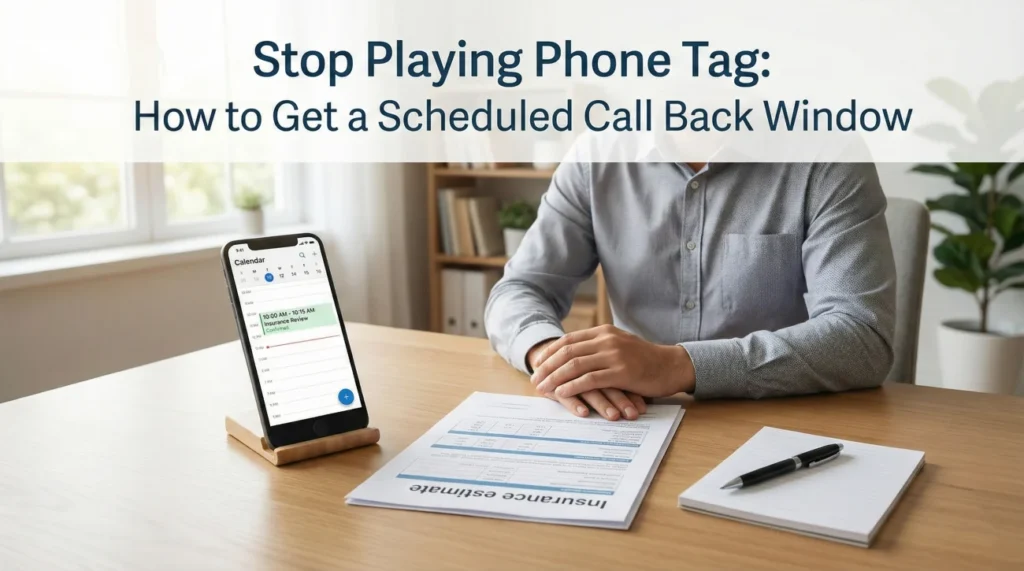
- Shift your strategy by requesting dedicated 15-minute callback windows with a strict, single-item agenda so the adjuster can prepare.
- Provide two specific time blocks with exact time zones via the online portal to force a scheduling decision and create a documented paper trail.
The Voicemail Black Hole (And Why You Are In It)
When I was actively managing a desk in claims operations, the first thing I saw every single morning was a blinking red light on my phone. Behind that light were often dozens of voicemails left overnight or during the previous day’s meetings. Half of those messages were homeowners saying the exact same thing: “Hi, it’s John, claim number 1234. Give me a call back when you have a minute.”
If you are currently playing phone tag with your insurance company, you know exactly how maddening this loop is. You leave a message. Two days later, they call while you are driving or in a work meeting. You miss it, they leave a voicemail, and you are right back where you started. Weeks burn away, your house is still damaged, and you have not had a single productive conversation.
The hard operational truth is that “call me when you have a minute” is the least effective phrase in property claims. Desk adjusters do not have “a minute.” Their days are ruthlessly scheduled just to survive the volume of files they manage. If you treat their direct line like a casual phone number, you will constantly hit their voicemail barrier.
We are going to completely dismantle that approach today. I will show you how to stop chasing them and start booking them. By treating your claim communication like a formal business meeting and requesting structured callback windows, you can bypass the phone tag game entirely and force the system to give you the dedicated time you need.
The Reality of the Adjuster’s Calendar
To break the cycle of missed calls, you have to understand why the person on the other end is not answering. Many homeowners assume the adjuster is ignoring them on purpose or prioritizing other people. While poor customer service certainly exists, the most common culprit is simply how insurance carriers require their staff to manage time.
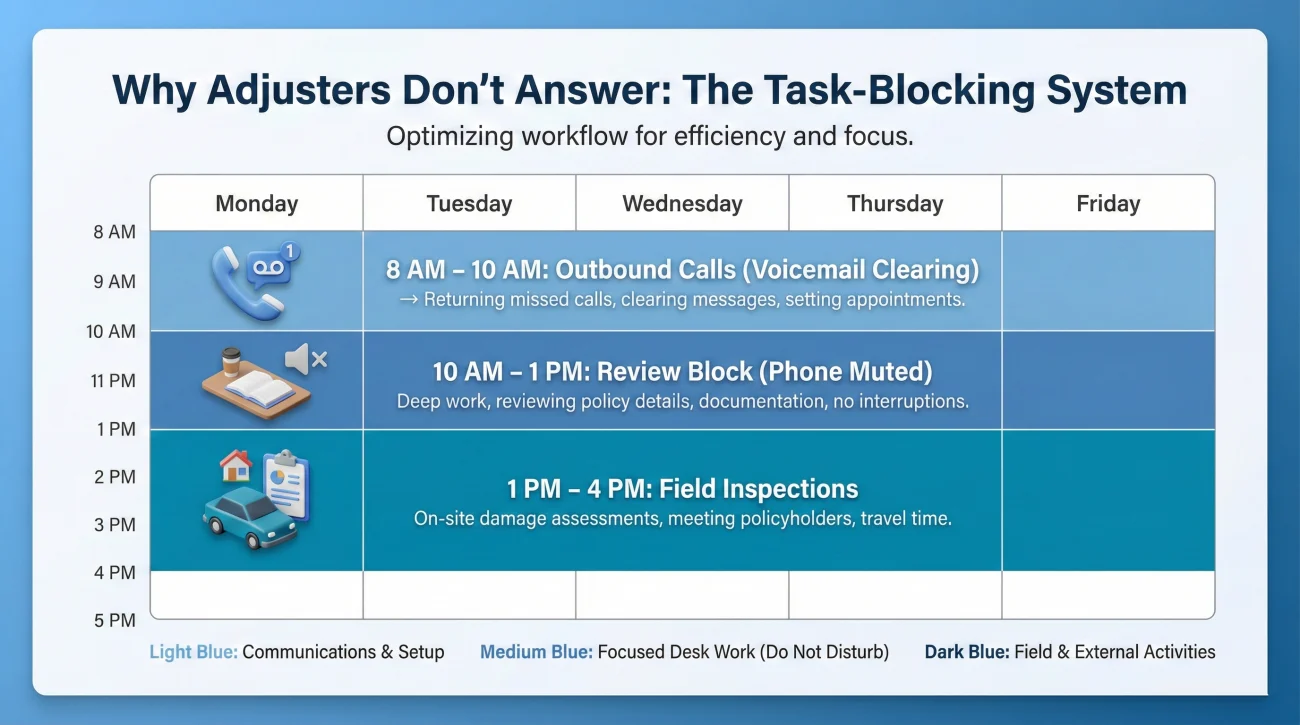
A standard property adjuster typically carries a heavy load, often managing a hundred or more active claims at once. If they answered the phone every time it rang, they would literally never process a single piece of paperwork. They would never read an engineering report, write an estimate, or issue a payment check. To get their actual job done, they utilize a system called task blocking.
- 📞 The Call Block: They dedicate specific hours (for example, 8:00 AM to 10:00 AM) purely for dialing out to return voicemails. They are not taking inbound calls during this time; they are just clearing their queue.
- 📝 The Review Block: They mute their phones entirely for three-hour stretches to review complex estimates and write reports without interruption.
- 🚗 The Field Constraint: If you are calling a field adjuster, they are physically driving between houses, climbing on roofs, or inspecting damage. They cannot safely answer the phone, nor do they have your digital file open to answer questions accurately.
When you call at 11:30 AM on a Tuesday, you are almost certainly calling during a review block. The phone rings, hits the automated system, and dumps you into the queue. Understanding this is your biggest advantage. It means you stop fighting their schedule and start working within it.
The “Appointment-Only” Mindset Shift
Once you realize how their calendar works, the solution becomes obvious: you have to get on the calendar. You must stop viewing the adjuster as someone who is “on call” for you, and start viewing them as a busy vendor whose time must be reserved.
When you send a message asking to schedule a specific window, you instantly lower the operational anxiety for the adjuster. You are signaling that you respect their workload and that you are an organized partner in this process, not a chaotic interruption.
Calling three times a day, leaving frustrated voicemails demanding an immediate callback, and answering the phone unprepared when they finally return the call three days later.
Sending one portal message requesting a 15-minute call on Thursday morning, providing a clear agenda, and sitting at your desk with your documents ready when the phone rings at the exact scheduled time.
This shift also protects you. When they catch you off guard at the grocery store, you do not have your notes, you forget your most important questions, and you might accidentally agree to something verbally without reviewing the facts. A scheduled call guarantees you are in a quiet room with your file open.
The Three Pillars of a Bulletproof Scheduling Request
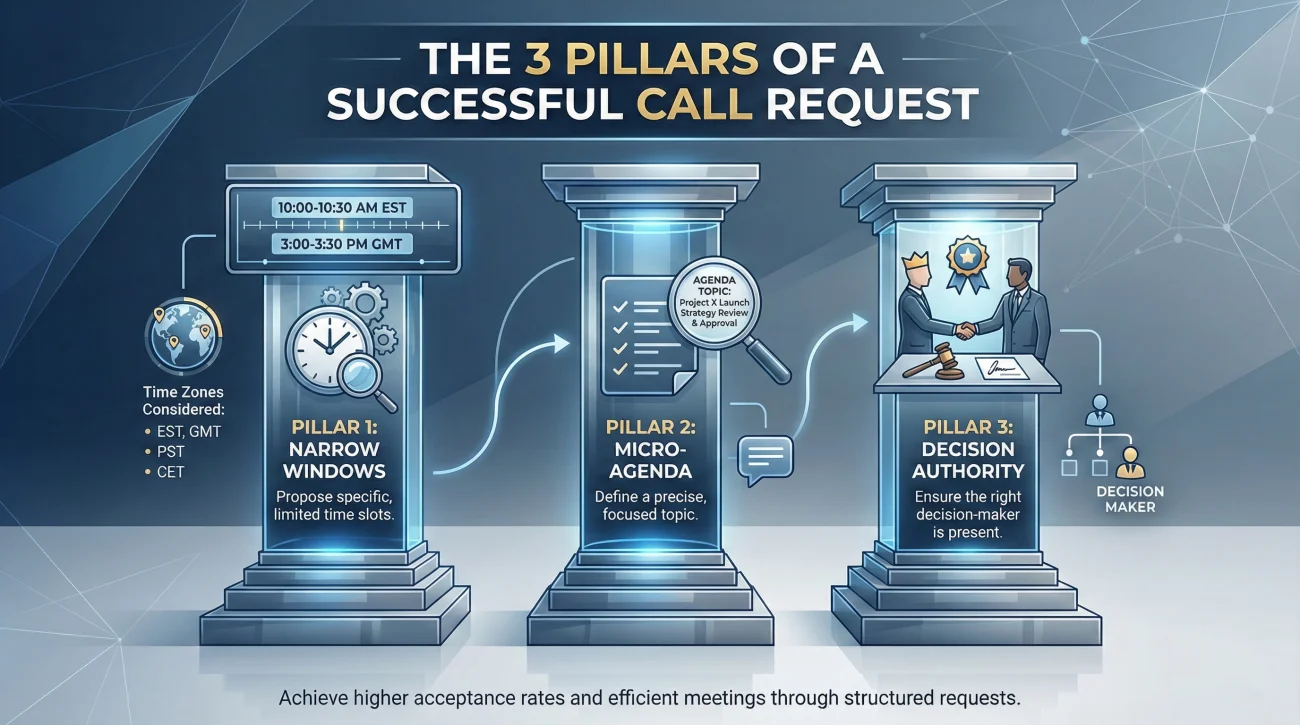
You cannot simply write, “Let’s schedule a call.” That still puts the mental burden of figuring out the logistics on the adjuster. A highly effective scheduling request removes all guesswork. It forces a simple “yes” or “no” decision. To do this, your request must contain three specific operational pillars.
Pillar 1: Narrow Windows with Hard Time Zones
Never offer an open-ended day. “Call me anytime Friday” guarantees they will call you at the exact moment you step into the bathroom. Instead, you must offer two distinct, narrow blocks of time. More importantly, you must state the time zone. Centralized claims operations mean your adjuster might be sitting three states away. Your 10:00 AM might be their lunch hour.
Pillar 2: The Micro-Agenda
Adjusters dread open-ended calls with frustrated homeowners because those calls often turn into 45-minute venting sessions that derail their entire day. If they do not know what the call is about, they will push it to the bottom of their list.
You must provide a “micro-agenda”: a single, highly specific item you want to discuss. This tells the adjuster exactly what document to open before they dial your number, allowing them to prepare in two minutes and keeping the call efficient.
- 🚫 Bad Agenda: “I need an update on my claim and I want to talk about my payout.”
- ✅ Micro-Agenda: “I need a 10-minute call to review the missing mitigation line items on page 4 of the revised estimate.”
Pillar 3: Target the Decision Owner
If your claim is stuck in a general queue or being handled by a team rather than an individual, you must specify who you need to speak with. Requesting a scheduling block with “someone on the team” usually results in a call from an entry-level representative who can only read the file notes to you but cannot approve a payment. State clearly that the call must be with an adjuster who holds the authority to decide on your micro-agenda.
Executing the Strategy: Which Channel Works Best?
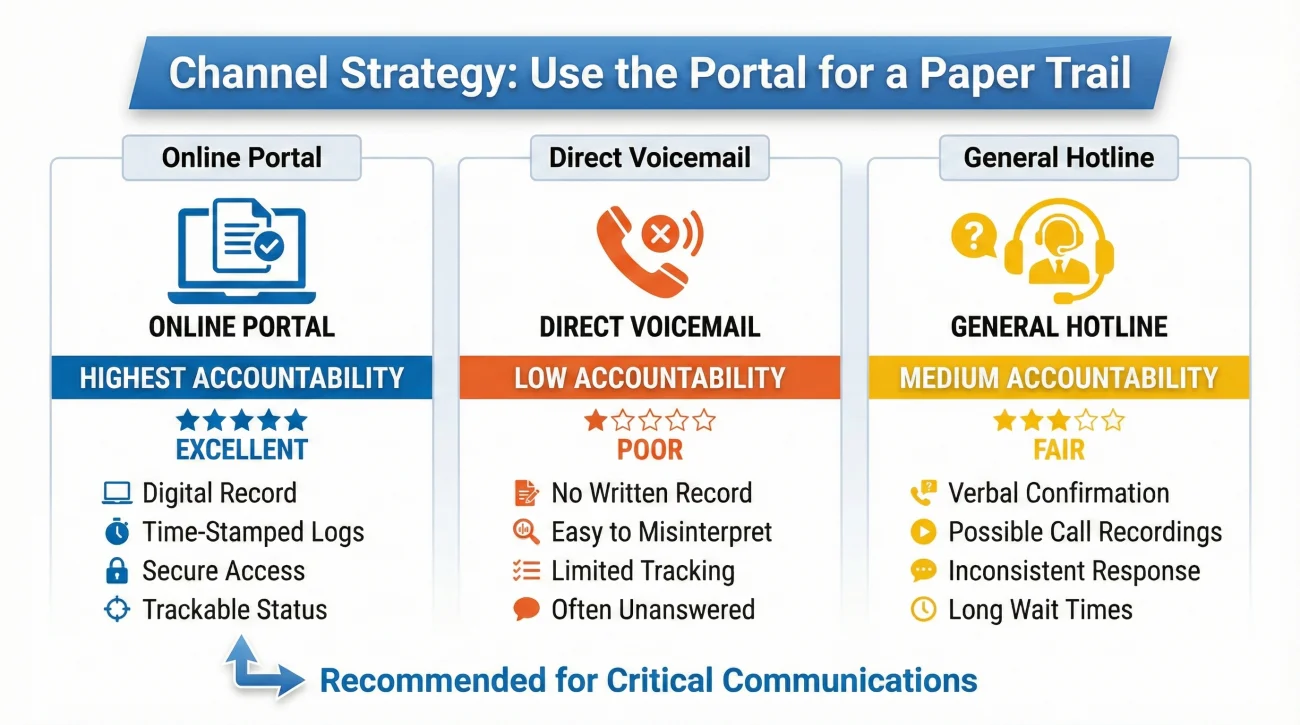
Knowing the components of the request is only part of the process. How you deliver that request dictates how seriously it is taken. In modern claims environments, the method of communication is deeply tied to accountability.
You generally have three options: a portal message (or email), a direct voicemail, or calling the general hotline. If your goal is to lock down a scheduled time, they are not created equal.
| Communication Channel | Accountability Level | Effectiveness for Scheduling |
|---|---|---|
| Online Portal / Official Email | Highest. Creates a permanent, timestamped paper trail that managers can audit. | Excellent. Allows the adjuster to read the request during an admin block and quickly reply to confirm a time. |
| Direct Voicemail | Low. Often transcribed poorly by automated systems; nuance and time zones get lost in text blocks. | Poor. Forces the adjuster to listen to audio while trying to check their calendar simultaneously. |
| General Hotline Rep | Medium. The rep will type a note into your file, but they cannot access the adjuster’s personal calendar. | Fair. Good as a last resort to have a system note added, but you cannot secure a firm “yes” on the spot. |
Always default to the written word via the carrier’s official portal. It is asynchronous, meaning neither of you has to be available at the exact same moment to set the meeting. It also provides irrefutable proof of your professionalism if you ever need to escalate the file later.
Hello, I need a brief 10-minute call to discuss [Micro-Agenda: e.g., the missing flooring measurements on page 4].
Please let me know if you can call me at either of these times:
– Tuesday between 1:00 PM and 3:00 PM (EST)
– Wednesday between 9:00 AM and 11:00 AM (EST)
If neither works, please reply with two windows that fit your calendar.
If You Must Leave a Voicemail
If you do not have portal access and are forced to leave a voicemail, keep it strictly structural so the automated transcription catches your details accurately:
- State your name and claim number slowly.
- State your one-item micro-agenda clearly.
- Provide your two time windows and your time zone.
- Ask them to confirm the chosen time via the portal or a return message.
The No-Show: Handling Missed Windows Without Losing Leverage
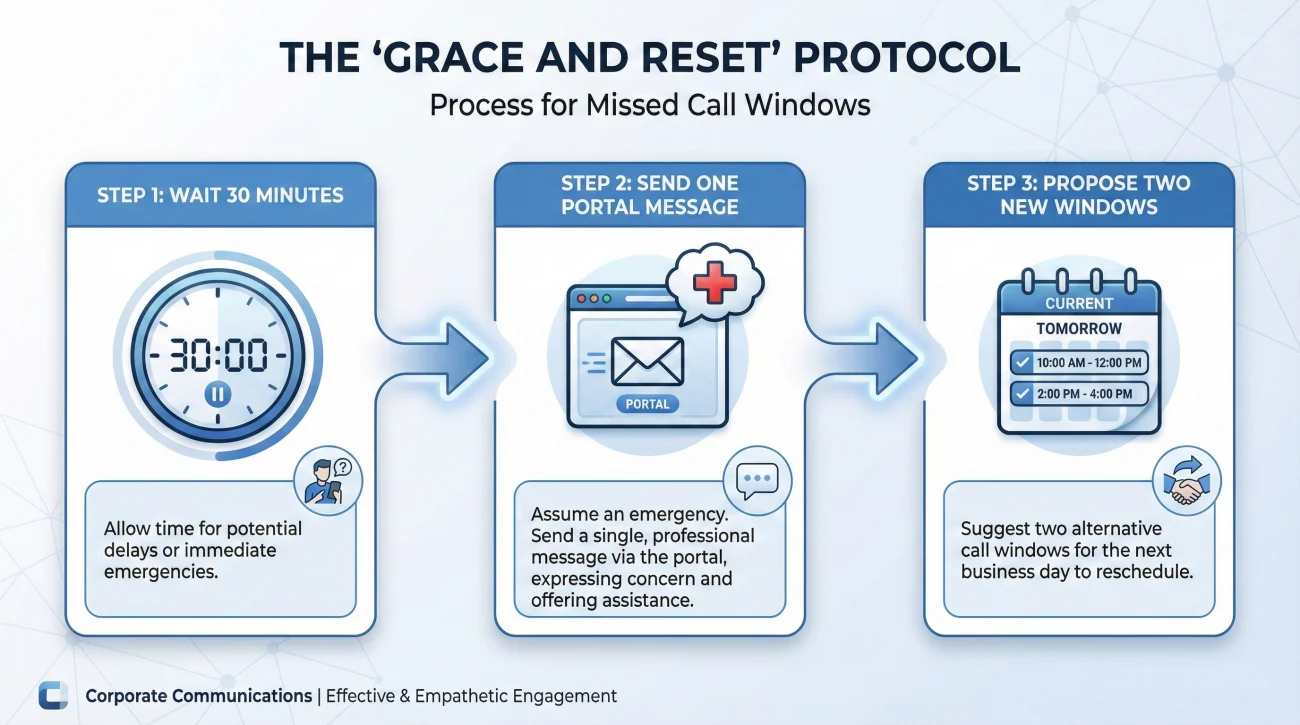
Let’s talk about the reality of the job: emergencies happen. A catastrophic house fire takes precedence over a scheduling block. A previous call with an angry contractor might run 40 minutes over time. Even with a perfectly executed request, the adjuster might miss your scheduled window.
How you react in the first 30 minutes after a missed window defines the power dynamic of the claim moving forward. I have audited files where a missed 2:00 PM call resulted in the homeowner calling six times in twenty minutes, leaving furious voicemails. This accomplishes nothing except making the homeowner look erratic and giving the adjuster an excuse to avoid them further.
Instead, use the “grace and reset” fallback protocol. If they miss the window, you send exactly one portal message. You politely assume they had an operational emergency, note that the window was missed, and instantly provide two new time blocks for the following day. You do not complain. You just reset the boundary.
Key Point: By staying completely calm and immediately offering new times in writing, you maintain a position of calm, documented authority. If a manager ever reviews why the claim is delayed, they will see an adjuster repeatedly missing appointments and a homeowner acting with perfect professionalism.
Hello, it looks like we missed each other during the 2:00 PM window today. I assume an emergency came up on your end.
I still need 10 minutes to review [Micro-Agenda]. Let’s reset for tomorrow. I am available:
– Thursday between 10:00 AM and 12:00 PM (EST)
– Thursday between 3:00 PM and 5:00 PM (EST)
Please let me know which block works for you.
Preparing for the 15-Minute Sprint
Fighting for a scheduled call is useless if you waste the time once they actually get on the line. When that phone rings at the exact time you agreed upon, you must be ready to run a highly efficient business meeting.
Fifteen minutes before the call, clear your physical space. Open your computer. Pull up the exact estimate, photo, or invoice related to your micro-agenda. If you have been keeping a solid claim follow up system, have your log open so you can immediately record the answers you receive.
When you answer the phone, take control of the pacing immediately. Thank them for making the time, acknowledge that their schedule is tight, and state that you want to jump right into the agenda item so they can get back to their day. This opening is incredibly disarming. It shows you respect their time, which makes them far more willing to actually answer your questions rather than rushing you off the phone.
⚠️ Warning: Resist the urge to bring up five other minor complaints during this scheduled window. If you stray from the micro-agenda, the call will devolve into confusion, and the adjuster will be hesitant to ever schedule another block with you.
Reclaiming Your Timeline
You cannot control the adjuster’s caseload, and you cannot force them to pick up the phone when they are buried in files. What you can control is how you inject yourself into their workflow. Phone tag is a game played by homeowners who do not understand the rules of claims operations.
By abandoning the idea of spontaneous phone calls and moving to a strict appointment-only model, you regain control over your days. You eliminate the anxiety of waiting for the phone to ring. Use narrow time windows, define a strict agenda, keep it in writing, and always be prepared to pivot if they miss the slot. This is how you stop chasing your claim and start managing it like a professional.
❓ FAQ
🕒 How long should a scheduled callback window be?
Offer a two-hour block of availability (e.g., “between 1:00 PM and 3:00 PM EST”) for the adjuster to call, but state that you only need a 10 to 15-minute conversation. This gives them flexibility while keeping the commitment low.
📧 What if my adjuster simply ignores my portal requests for a call?
If two documented scheduling requests are ignored over a span of four business days, you have a paper trail of unresponsiveness. You can then call the general hotline and request a supervisor review the unanswered portal messages.
🗣️ Is it rude to tell the adjuster what the agenda of the call is?
Not at all. It is highly professional. Adjusters appreciate knowing exactly what the call is about so they can review the file notes beforehand. It prevents them from looking unprepared on the phone.
📅 Can I use a calendar link (like Calendly) to schedule with them?
No. Insurance corporate networks have strict firewalls and security policies. Adjusters cannot click on external scheduling links or integrate their internal outlook calendars with third-party homeowner apps.
💬 Should I try texting the adjuster’s cell phone instead?
Unless the adjuster specifically initiated a text message thread with you first, avoid texting. Texts do not always sync to the official claim file, meaning your scheduling requests won’t be documented if a manager needs to review the file.
🛑 Should I refuse to talk if they call me unannounced outside my requested window?
If you are entirely unprepared or driving, it is okay to answer and politely say, “I am not at my desk with the file. Can we confirm the 2:00 PM block we originally set?” If you are ready, take the call.
🏢 Can my local insurance agent schedule the call for me?
Your local sales agent cannot manage the adjuster’s calendar. They can sometimes send an internal ping to the desk, but you still need to be the one requesting the specific time block from the claims department.
📝 What if they agree to a time but do not call?
Do not call them repeatedly. Send a polite portal message noting the missed window, assume they had an emergency escalation, and provide two fresh time blocks for the next day to reset the clock.
🌍 Do I really need to include my time zone every time?
Yes. Many insurance carriers route claims nationally. An adjuster sitting in a Texas call center might be handling your claim in California. Always specify your local time zone to prevent missed connections.
⚖️ Can my insurance claim be closed if we keep missing each other’s calls?
Yes. If an adjuster leaves multiple voicemails asking for information and you only return calls when they are unavailable, the system may eventually auto-close the file for “lack of pursuit.” This is why written scheduling is critical to prove your engagement.
⚠️ Disclaimer: PropertyClaimChecklist.com provides practical guidance, process checklists, and example follow-ups to help you organize a property claim and move it forward. It is not policy language, claim documentation, legal content, or a substitute for your insurer's instructions. Always rely on your carrier's requirements and your actual policy terms for what must be submitted and how decisions are made.