Repair Completion Proof: What to Save So Final Review Does Not Stall

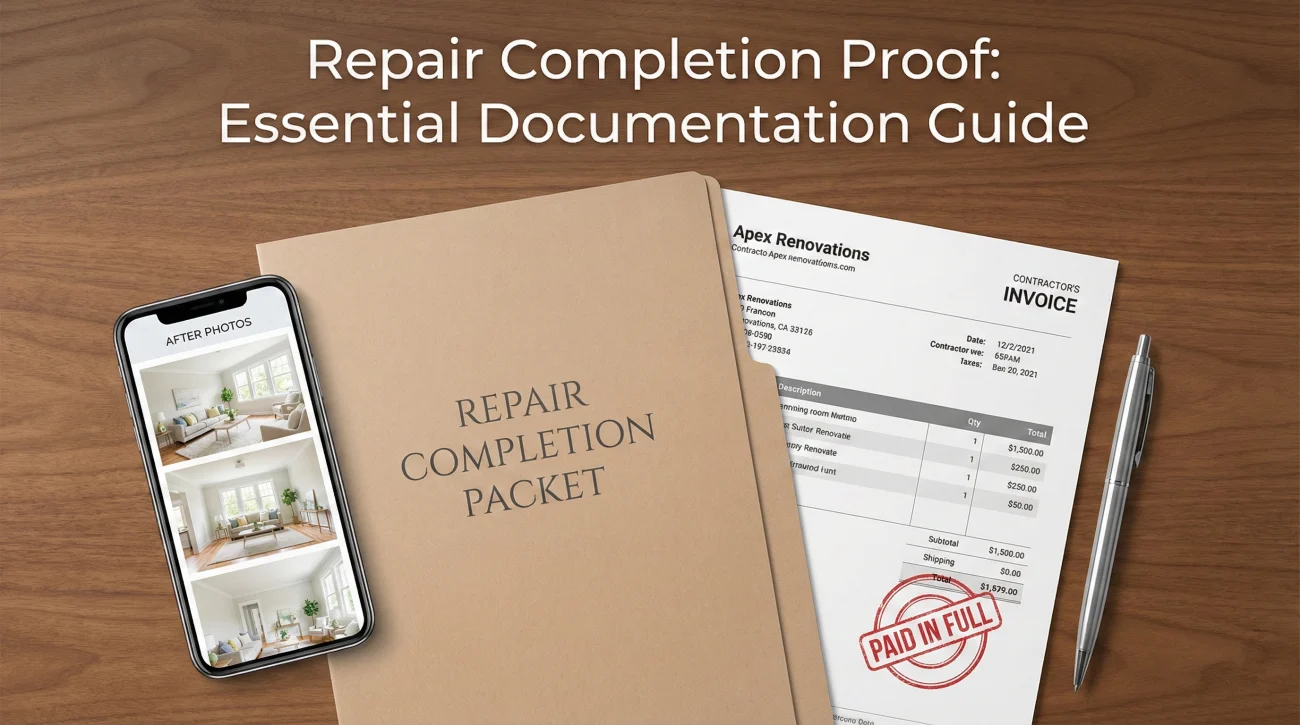
Repair Completion Proof For Insurance Claim

The goal: Provide verifiable documentation that repairs are finished so the adjuster can complete their final review without delays. The holdback: Insurance policies often withhold a portion of your settlement (recoverable depreciation) until you prove the work is done. Your completion packet unlocks these final funds. The method: Combine final contractor invoices, clear “after” photos, … Read more

Requesting an Itemized Estimate: How to Get Line-Item Details

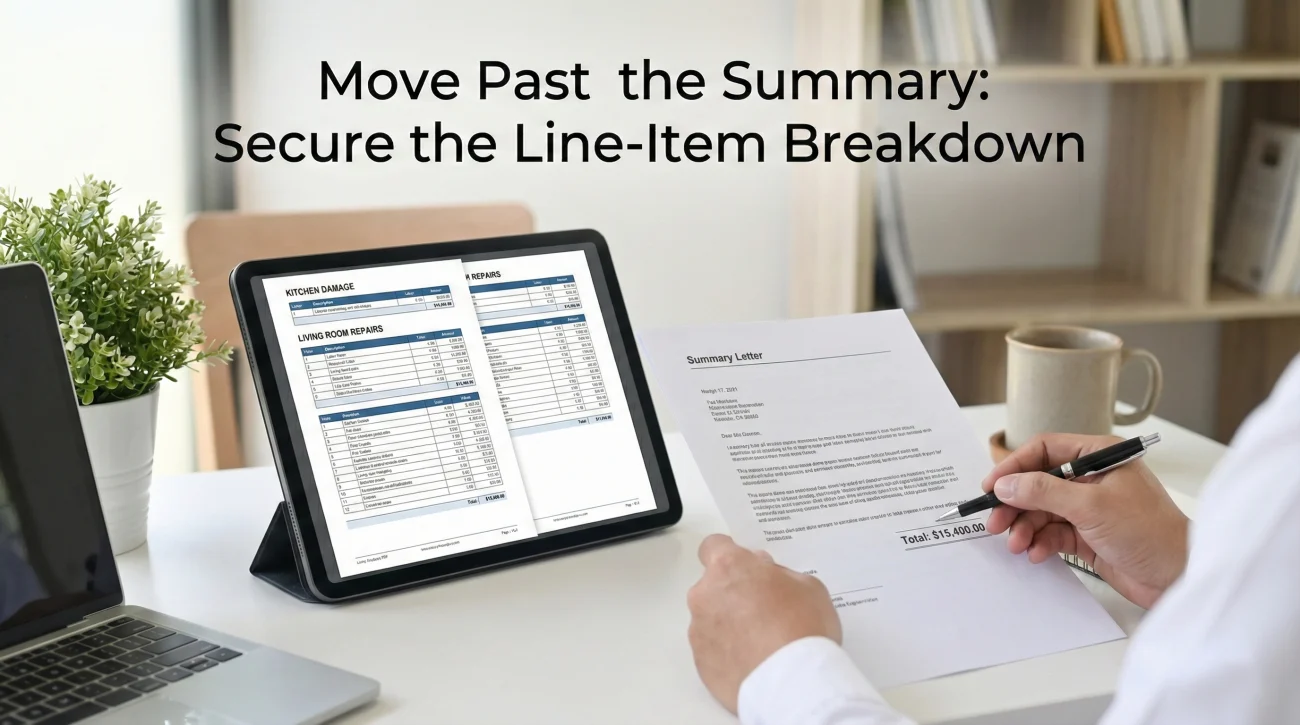
Requesting An Itemized Estimate

✅ The goal: Move past the vague “lump sum” summary and secure the multi-page, line-by-line breakdown of your claim. ✅ The method: Send a polite, specific written request asking for the “complete, line-item adjuster estimate including the detailed scope of work.” ✅ The verification: When received, check for room dimensions, specific material quantities, and unit … Read more

Contractor vs. Adjuster: How the Insurance Supplement Workflow Works

Contractor Submits Supplement Workflow

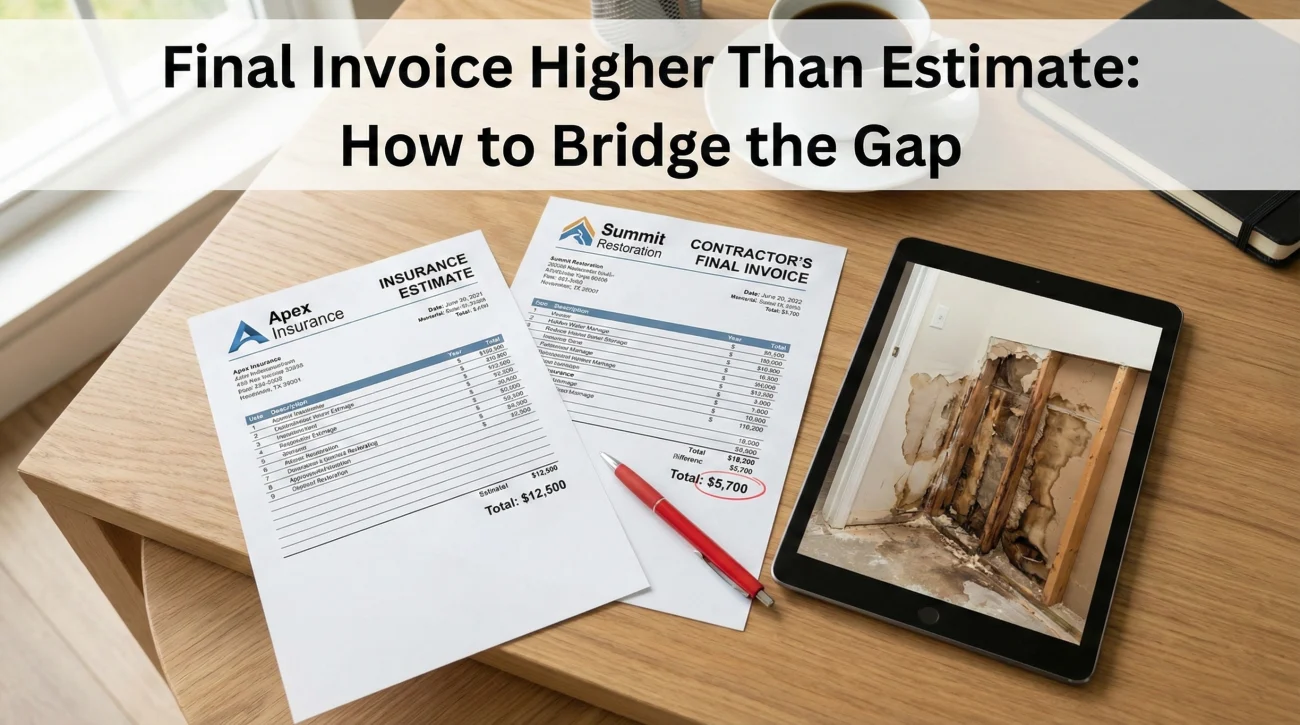
An insurance supplement is a routine operational process, not a penalty. It is simply the formal workflow used to request funds for damage that was hidden or missed during the initial inspection. Adjusters and contractors speak different languages. A major cause of delayed supplements is when a contractor submits a standard lump-sum business invoice instead … Read more

Duplicate Claim Numbers: Consolidating Your Insurance File Safely

Duplicate Claim Number

A duplicate claim number acts as a parallel digital bucket, meaning your uploaded evidence might go to one file while the adjuster is looking at another, causing significant delays. Do not ignore the second claim number hoping the system will figure it out automatically. You must explicitly request a consolidation to choose one master file. … Read more

Insurance Recorded Statements: Trap or Routine? (How to Handle)

Recorded Statement Insurance Claim

A recorded statement is a routine system requirement for the adjuster, but it creates a permanent record of your claim details that you cannot easily change later. You do not have to give the statement the exact second the adjuster calls; you have the right to schedule it for a time when you have your … Read more

Contractor Quotes for Insurance: Documents Your Adjuster Needs

Contractor Quote Documentation For Insurance Claim

A standard “lump-sum” contractor quote is often not enough for a claim file; reviewers need detailed line items. Your contractor quote documentation for an insurance claim must clearly separate labor, materials, and scope of work room-by-room. Always ask contractors to include their license number, business details, and specific measurements on the written estimate. Use clear, … Read more

Insurance Release Forms: Checklist Before You Sign Away Your Rights

Insurance Claim Release Form

An insurance claim release form is a critical document that typically signals the end of a specific payment loop or the entire claim. Never sign automatically. You must verify four core elements: the exact date of loss, the correct parties, the scope of the release (partial vs. full), and the payment details. Always establish a … Read more

Mapping Insurance Scope: Linking Line Items to Specific Rooms

Map Estimate Line Items To Rooms

Estimates are often organized in ways that make it difficult to spot missing items, grouping disparate repairs into confusing categories. A room-by-room map translates the insurer’s line items into a physical checklist, making missing scope visually obvious. By explicitly linking missing line items to existing photo IDs, you remove the guesswork for the desk adjuster … Read more

Insurance Claim Closed Unexpectedly? How to Reopen It Immediately

Insurance Claim Closed Unexpectedly

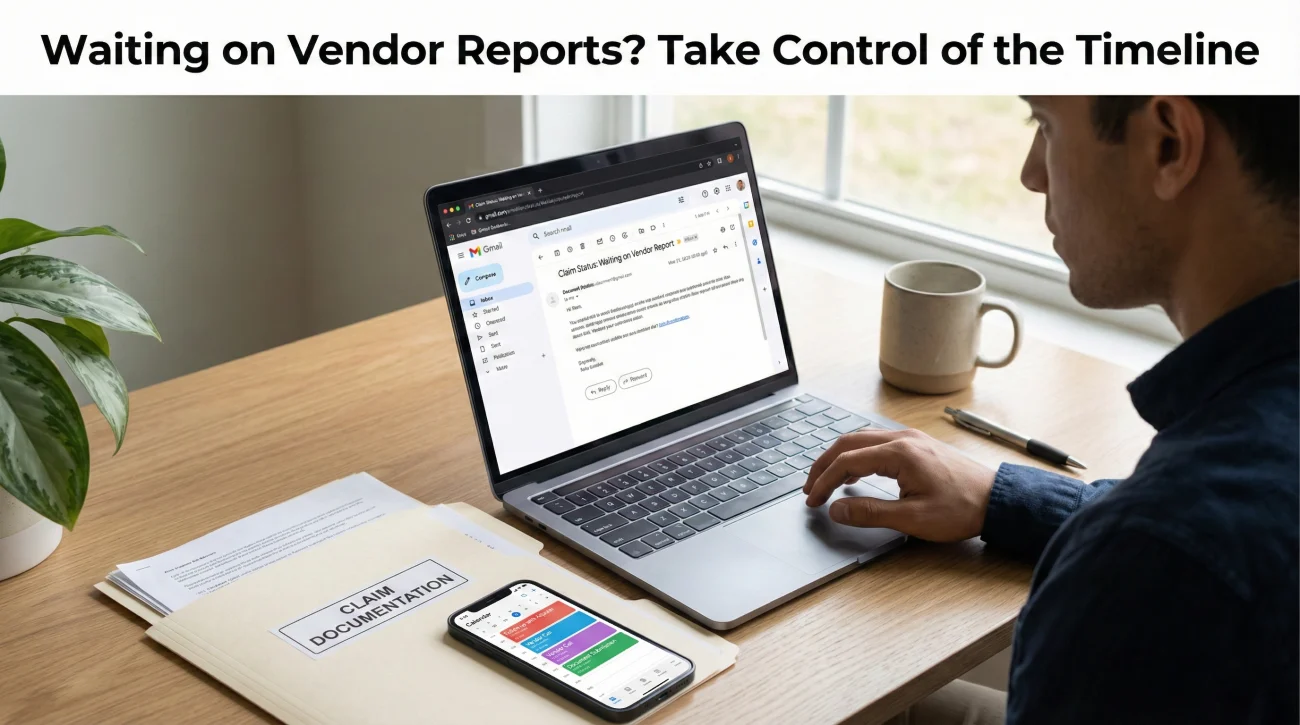
A “closed” status often means an automated system paused your file due to inactivity or missing paperwork, not a final denial. Before panicking, audit your claim file to check for unreturned vendor reports, pending estimates, or missed correspondence from the adjuster. Do not call the hotline to complain; instead, send a polite, trackable email asking … Read more

Calling Your Insurance Agent First: The “Off-the-Record” Chat

Call Agent Before Filing Claim

Calling your agent to ask questions is often smart, but you must control the phrasing to avoid accidentally opening a formal claim before you are ready. Insurance systems track “inquiries” and “claims” differently. Once you state a specific date of loss and cause of damage, a claim record is usually triggered automatically. Always prepare a … Read more

Measuring Property Damage: Recording Dimensions for Insurance Claims

Damage Measurements For Insurance Claim

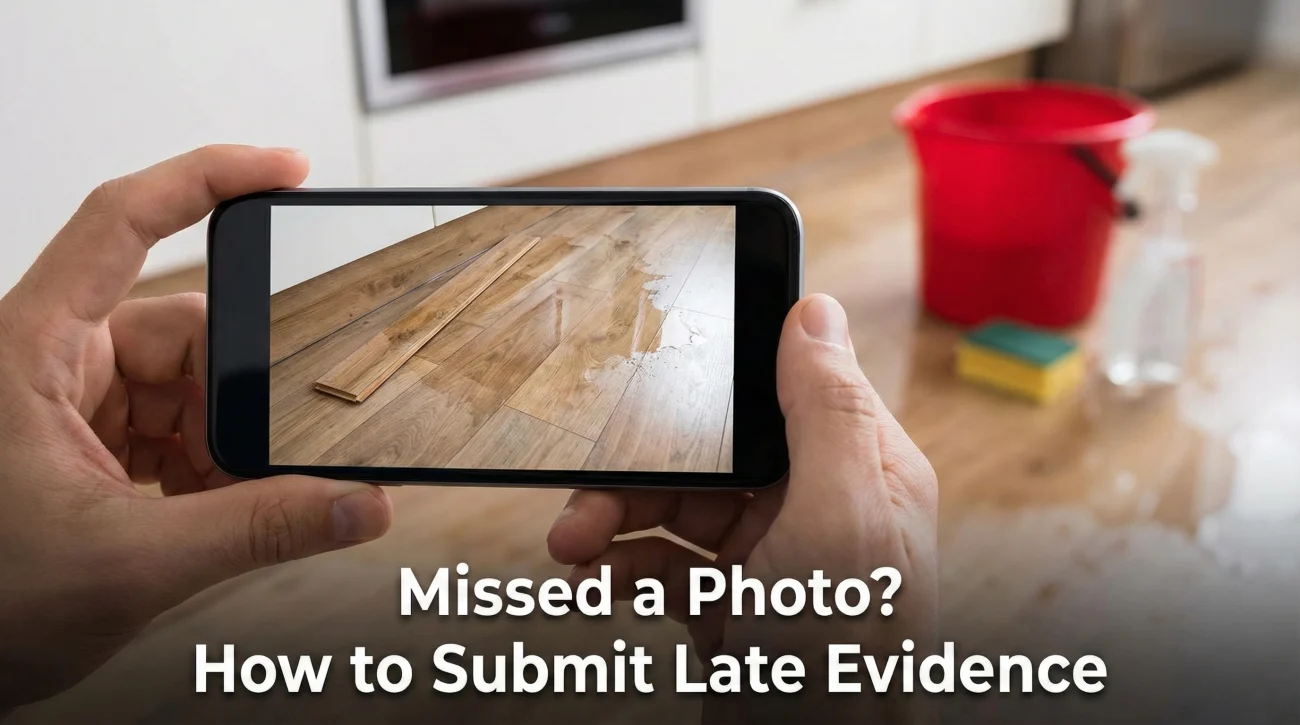
Photographs alone cannot provide the exact scale needed to build an accurate claim estimate. You must record specific dimensions of the affected areas. Always record two sets of numbers: the overall dimensions of the entire room and the specific measurements of the damaged area itself. Use the “link-to-photo” rule by physically placing a piece of … Read more

Sworn Statement in Proof of Loss: A Guide to Avoiding Errors

Sworn Statement In Proof Of Loss

A sworn statement in proof of loss is a formal, notarized document that creates a locked-in record of your claim details at a specific point in time. Never cross out mistakes or use correction fluid on this form. Always request a clean, updated version in writing before you sign. Before visiting a notary, verify that … Read more

Insurance Estimate Notes: Hidden Assumptions That Lower Your Payout

Insurance Estimate Notes And Assumptions

An insurance estimate is not just numbers; the text notes and assumptions often dictate why your payout is lower than expected. Common hidden assumptions include guessing the quality of materials, assuming items are salvageable, or leaving out dimensions entirely. Do not argue about the final dollar amount first. Instead, systematically address the incorrect assumptions by … Read more

Insurance Claim File Setup: Organizing Your “Day 1” Folder

Insurance Claim Intake File Setup

Your insurance claim file setup on day one determines how smoothly your entire process will go. Relying on memory or a single email inbox is a major cause of delays. Create exactly four folders to start: Intake Notes, Contacts, Appointments, and Requests. This prevents document scatter and keeps your facts straight. Log your claim number … Read more

Mitigation Logs: Tracking Dry-Out Costs for Insurance Reimbursement

Mitigation Receipts And Logs Insurance Claim

Never accept a lump-sum invoice for emergency dry-out or mitigation; always request a daily breakdown of equipment, labor hours, and materials used. Keep your own daily log of how many fans and dehumidifiers are running in your home and take photos of them as secondary proof. Keep mitigation expenses strictly separated from permanent repair quotes … Read more